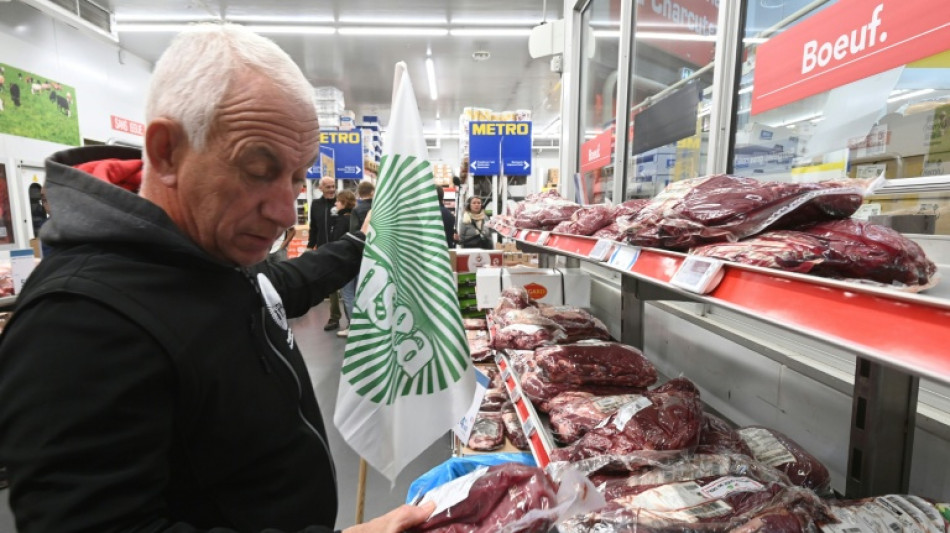
Eat less meat, France urges, for sake of health, climate / Photo: © AFP

 IR-MED and Dice Technologies Announce collaboration to Evaluate and Advance Pressure-Injury Prevention Platform in Japan

 Watts, Pitt, Cruz to light up Spain's top film festival
 Sweden expels Iran embassy employee over anti-Jewish threats

 Toogood Gold's Table Mountain Sits in the Shadow of a Nevada Gold Rush

 MEXC July–August Security Report: 38.66M USDT in Risk Funds Intercepted, Futures Insurance Fund Hits 792M USDT

 'Breathing toxin every day': Indonesians choked by haze feel helpless

 Stocks edge higher ahead of US Fed rate call

 Philippines ex-leader Duterte makes first in-person ICC appearance

 2027 Formula One calendar includes Monaco sprint race

 Palestinians are the real victims, Thunberg tells Ed Sheeran

 Hashim Thaci: From 'George Washington of Kosovo' to Hague convict

 Amnesty says Iran committed 'crimes against humanity' in crackdown on 2022 protests

 EU to ban social media for under 13s, curb access until 15

 Philippines ex-leader Duterte makes first appearance at ICC

 EU chief pitches 'associate member' status for Canada

 English village votes to 'secede' from UK over asylum centre plan

 Wildfires push endangered Sumatran elephants to brink: Indonesian NGO

 Stocks head higher as traders prepare for Fed decision

 English village votes to 'secede' from UK over asylum centre

 Hong Kong unveils plan to align economy with China's goals

 Brazilian voters the latest to eye Bukele security model with envy

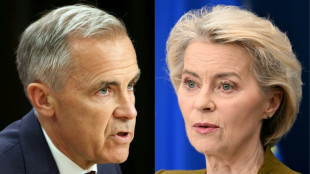 EU chief hosts Canada's Carney in push to 'deepen' alliance

 EU chief to unveil social media, gaming curbs for under-15s
 Saudi says Houthis target Mecca, warn of 'red line'

 Asian stocks stutter as traders prepare for Fed decision

The French government issued a long-awaited report Wednesday urging people to limit meat consumption for their health and also to fight climate change -- and not everyone in the country of "steak-frites" is thrilled.
The contentious decision came as part of a "National Strategy for Food, Nutrition and Climate," setting out the government's aims until 2030 on balancing a healthy diet while reducing greenhouse gas emissions.
It was supposed to be published in 2023, the culmination of a direct-democracy initiative that immediately raised the hackles of agriculture lobbies that accused the government of threatening their livelihoods.
The decisions struck a nerve in a country renowned for dishes like steak and fries and beef bourguignon -- despite evidence that meat production generates significant greenhouse gases that contribute to climate change.
It also comes a month after the US government under President Donald Trump upended decades of recommendations by touting consumption of red meat and full-fat dairy products.
Apart from the health concerns of such advice, food production overall produces one-fourth of French carbon emissions, with meat production representing two-thirds of that amount.
Hence the French government's hesitation on whether to ask people to "reduce" their meat eating, or just "limit" it.
In the end, while promoting a diet focused on fruits, vegetables and whole grains, the new guidelines call for "limited" consumption of meats overall, including cold cuts, and a "reduction" of imported meat.
"We're relieved this plan was published, we were really worried it would be dropped," said Stephanie Pierre of France Assos Sante, a patients' health association.
"But we were hoping for a much more ambitious plan," she said.
The guidelines also come just before the February 21 opening of France's annual agriculture fair, a hugely popular event in Paris where President Emmanuel Macron has often faced farmers' ire.
Farmers were already up in arms over the EU's signing of a free-trade deal with the Mercosur bloc of four South American countries, worried that a surge in beef and other agriculture imports would undercut their competitiveness.
The country's powerful FNSEA farmers' union had yet to comment on the government's new guidelines.
P.Vogel--VB