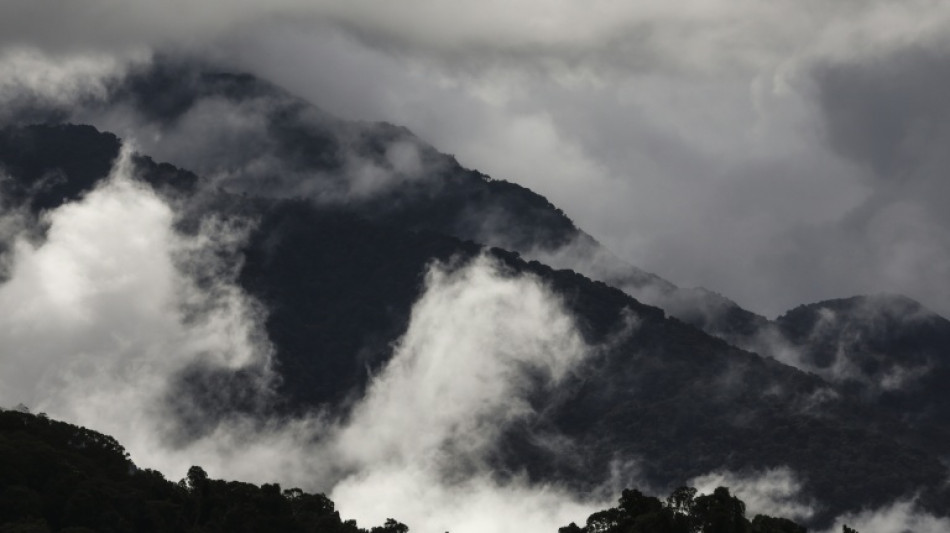
Climate-driven tree deaths speeding up in Australia: study / Photo: © AFP/File

 IR-MED and Dice Technologies Announce collaboration to Evaluate and Advance Pressure-Injury Prevention Platform in Japan
 Watts, Pitt, Cruz to light up Spain's top film festival
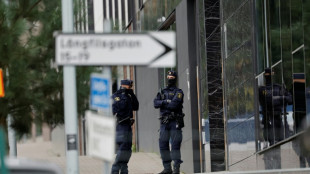 Sweden expels Iran embassy employee over anti-Jewish threats
 Toogood Gold's Table Mountain Sits in the Shadow of a Nevada Gold Rush

 MEXC July–August Security Report: 38.66M USDT in Risk Funds Intercepted, Futures Insurance Fund Hits 792M USDT

 'Breathing toxin every day': Indonesians choked by haze feel helpless

 Stocks edge higher ahead of US Fed rate call

 Philippines ex-leader Duterte makes first in-person ICC appearance

 2027 Formula One calendar includes Monaco sprint race

 Palestinians are the real victims, Thunberg tells Ed Sheeran

 Hashim Thaci: From 'George Washington of Kosovo' to Hague convict

 Amnesty says Iran committed 'crimes against humanity' in crackdown on 2022 protests

 EU to ban social media for under 13s, curb access until 15

 Philippines ex-leader Duterte makes first appearance at ICC

 EU chief pitches 'associate member' status for Canada

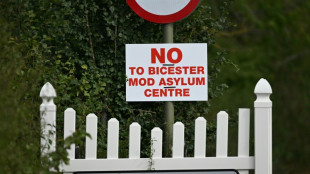 English village votes to 'secede' from UK over asylum centre plan

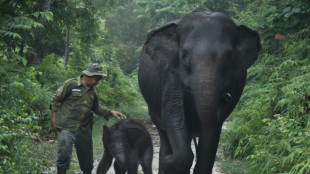 Wildfires push endangered Sumatran elephants to brink: Indonesian NGO

 Stocks head higher as traders prepare for Fed decision

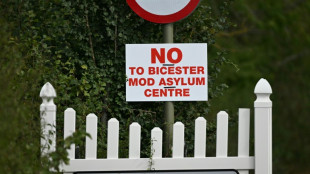 English village votes to 'secede' from UK over asylum centre
 Hong Kong unveils plan to align economy with China's goals
 Brazilian voters the latest to eye Bukele security model with envy

 EU chief hosts Canada's Carney in push to 'deepen' alliance

 EU chief to unveil social media, gaming curbs for under-15s
 Saudi says Houthis target Mecca, warn of 'red line'

 Asian stocks stutter as traders prepare for Fed decision
Australia's forests are losing trees more rapidly as the climate warms, a new study examining decades of data said Tuesday, warning the trend was likely a "widespread phenomenon".
The research used forest inventory data from 2,700 plots across the country, ranging from cool moist forests to dry savanna.
It excluded areas affected by logging, clearance or fires to examine how "background tree mortality" has changed in recent decades.
"What we found is that the mortality rate has consistently increased over time, in all of the different forest types," said Belinda Medlyn, a professor at Western Sydney University's Hawkesbury Institute for the Environment.
"And this increase is very likely caused by the increase in temperature," she told AFP.
The world has warmed by an average of nearly 1.2 degrees Celsius since the pre-industrial era. Most of this warming has occurred in the last 50 years.
The rate at which trees die off in a forest can vary in response to different types of disturbances, or as forests grow thicker and there is greater competition for resources.
But the research, published in the Nature Plants journal, excluded areas affected by fires or clearing, and also examined the stand basal area -- the sum of the cross-sectional areas of all trees in an area.
"The (mortality) trend over time remains even after we correct for basal area," explained Medlyn, who led the research.
The scale of the increase varied across the four different biomes surveyed, with the sharpest rise in tropical savannas.
There, the number of trees dying on average increased by 3.2 percent a year, from close to 15 per 1,000 in 1996, to nearly double that number by 2017.
The research found that the deaths were not being matched by tree growth, so forest stock overall is declining.
That makes it "very likely that the overall carbon storage capacity in the forests is declining over time", said Medlyn.
And given the trend was observed across four ecosystems -- tropical savanna, cool temperate forest, warm temperate forest and tropical rainforest -- it is likely to be "a widespread phenomenon, not just an Australian thing", she added.
The rising mortality rate tracks warming and drying linked to climate change, and the study found the fastest rise in hotter, dryer regions.
The research comes months after a study found Australia's tropical rainforests were among the first in the world to start emitting more carbon dioxide than they absorb.
Taken together, the findings paint a worrying picture of our continued ability to rely on forests to absorb our emissions.
"Forests globally currently sequester about one-third of anthropogenic carbon dioxide emissions," said Medlyn.
"Our study suggests their capacity to act as buffer will decline over time."
E.Burkhard--VB