To counter climate denial, UN scientists must be 'clear' about human role: IPCC chief / Photo: © AFP

 Toogood Gold's Table Mountain Sits in the Shadow of a Nevada Gold Rush

 MEXC July–August Security Report: 38.66M USDT in Risk Funds Intercepted, Futures Insurance Fund Hits 792M USDT

 'Breathing toxin every day': Indonesians choked by haze feel helpless

 Stocks edge higher ahead of US Fed rate call

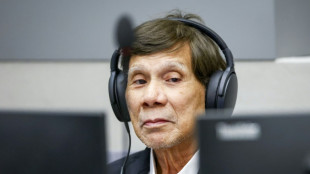 Philippines ex-leader Duterte makes first in-person ICC appearance

 2027 Formula One calendar includes Monaco sprint race

 Palestinians are the real victims, Thunberg tells Ed Sheeran
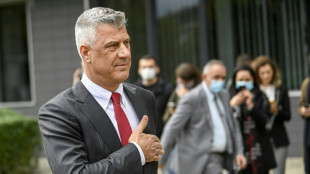 Hashim Thaci: From 'George Washington of Kosovo' to Hague convict
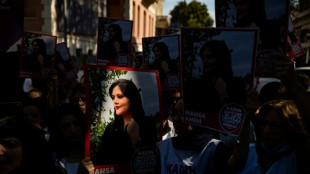 Amnesty says Iran committed 'crimes against humanity' in crackdown on 2022 protests

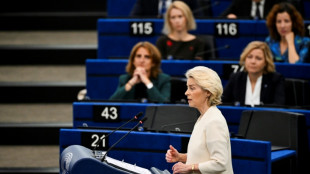 EU to ban social media for under 13s, curb access until 15

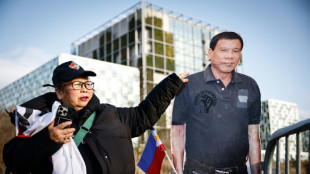 Philippines ex-leader Duterte makes first appearance at ICC
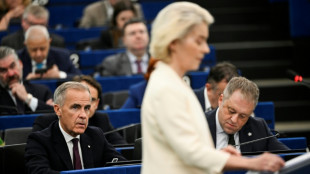 EU chief pitches 'associate member' status for Canada
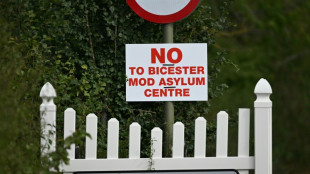 English village votes to 'secede' from UK over asylum centre plan

 Wildfires push endangered Sumatran elephants to brink: Indonesian NGO

 Stocks head higher as traders prepare for Fed decision

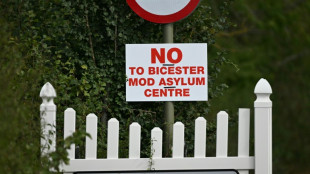 English village votes to 'secede' from UK over asylum centre

 Hong Kong unveils plan to align economy with China's goals
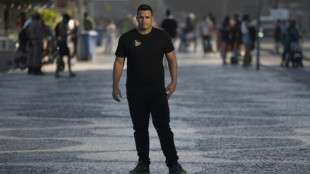 Brazilian voters the latest to eye Bukele security model with envy

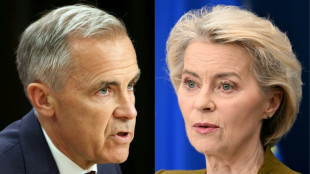 EU chief hosts Canada's Carney in push to 'deepen' alliance

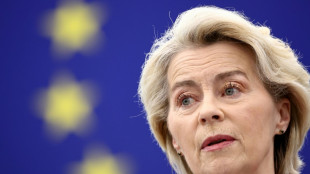 EU chief to unveil social media, gaming curbs for under-15s
 Saudi says Houthis target Mecca, warn of 'red line'

 Asian stocks stutter as traders prepare for Fed decision
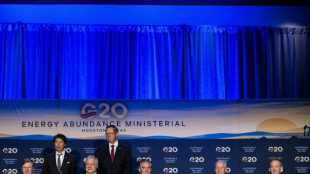 US touts its power, avoids Iran war at G20 Energy meeting
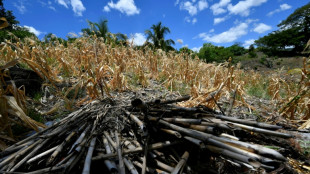 Dead animals, barren fields, and hunger - El Nino chokes Central America
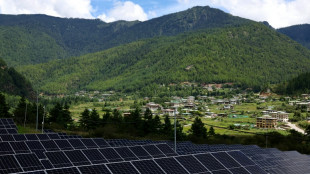 In hydropowered Bhutan, solar starts to rise

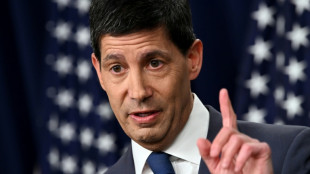
With US President Donald Trump and other sceptics calling climate change a hoax, the UN's climate science body must tell the world in a "very clear way" that humans are heating the planet, its chairman told AFP.
Jim Skea, a Scottish professor, chairs the Intergovernmental Panel on Climate Change (IPCC), which held a five-day meeting in a skyscraper outside Paris this week to begin drafting the next major UN climate assessment.
The gathering of more than 600 scientists from around the world, which ends Friday, kicked off a process that will culminate in the publication of the massive report by 2028 or 2029.
Established in 1988, the IPCC assesses global climate research and issues comprehensive reports every five to seven years to inform policymakers and guide climate negotiations.
QUESTION: You said recently it is "almost inevitable" the world will cross the 1.5C warming threshold. If this happens before the next IPCC assessment is published, what should it emphasise to remain relevant and impactful?
ANSWER: "The messages are that if we want to return global warming to 1.5C, it's quite clear what steps need to be taken. We do need very significant reductions in emissions from land use and from energy. And we also need to start thinking about removing carbon dioxide from the atmosphere at scale. And there are a lot of knowledge gaps associated with that."
QUESTION: France voiced strong support for the IPCC this week, saying it stood for its scientists in the face of rising climate scepticism. You met with President Emmanuel Macron. How important was it for the IPCC to have this kind of backing in this context?
ANSWER: "It's really important. It was really welcome to get that level of support from the French government, from multiple people. I mean, the head of state, three senior ministers, that was a significant level of support and it gave a lot of impulse to the scientists. When I talked to the scientists afterwards, they were very pleased to have that level of support. It gave them confidence and enthusiasm about moving forward."
QUESTION: How will the IPCC ensure that its findings cut through misinformation and reach the public effectively when you have people like US President Donald Trump calling climate change a hoax?
A: "We need to keep communicating the science in a very clear way. I mean, we concluded in our last report, very simple conclusion: It is unequivocal that human beings are causing the climate change that we are already seeing. And we need to keep emphasising that message and we can support it with several different types of explanation, lines of evidence."
QUESTION: The US government is absent from the IPCC and is not funding American academics participating in the process, but are you concerned that it could intervene at the approval stage to block the final report?
ANSWER: "We still have a huge US presence in IPCC. We've got nearly 50 US authors at this meeting whose travel and subsistence is being supported by US philanthropies and who were nominated by US observer organisations. ...
"The approval sessions -- when we finish the reports -- have always been difficult sessions because we need scientists and governments to agree down to the last word and comma. And I don't think it's got really substantially more difficult over time to do that.
"There's only been one occasion in IPCC history where a summary for policymakers was not approved and was passed over to the next session. And this wasn't recent, this was in 1995. So it's always been difficult. But we've always overcome these hurdles."
QUESTION: France and other countries want the IPCC assessment to be published in 2028 ahead of the COP33 climate summit in India. French diplomats say Saudi Arabia and India are pushing for 2029. Is it important for the report to be published in 2028?
ANSWER: "Whether or not it is published in time for the global stocktake is frankly, a matter for the governments. For the scientists here, what the question is, is the timetable compatible with the time needed to produce an assessment? And frankly, that time should not be too short or not be too long."
QUESTION: What is your message to governments and ordinary people as you begin this new cycle of work?
ANSWER: "Wait with bated breath for what we are going to come out with in roughly three years down the line. There are new areas of research, there are new knowledge gaps that we need to explore, including this issue of, is it possible to limit warming to 1.5C in the long term?"
N.Schaad--VB