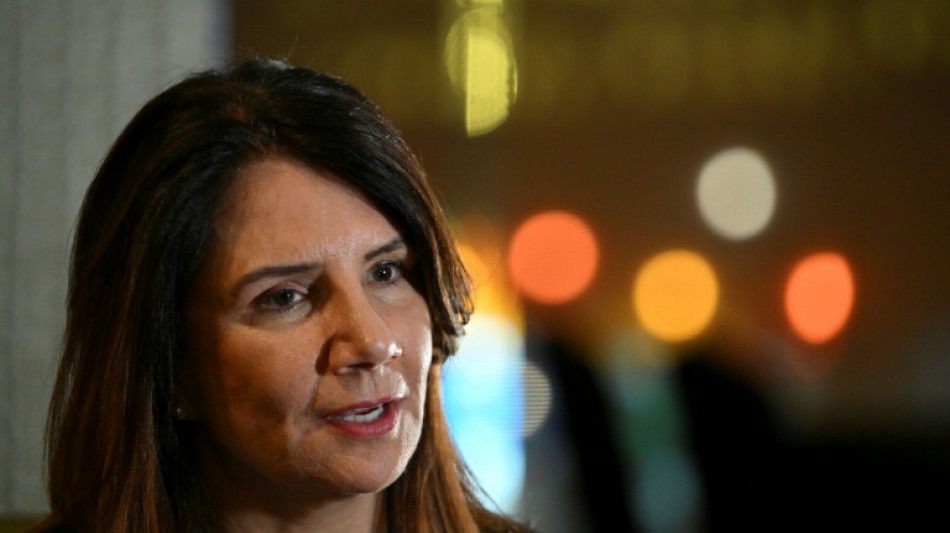
Tariff wars will hamper climate efforts: COP30 CEO / Photo: © AFP

 Kushner to meet Netanyahu after talks with Hamas on Gaza plan
 Photos, memories all that remain for Colombia's bereaved after quake

 Sabalenka squeezes out win on sixth match point in Cincinnati

 Trump says US scaling back military drills with South Korea hours before start

 Jason Arday: UK academic who died amid plagiarism storm

 Sabbath cafe clash lays bare Israel faultlines
 Top-ranked Scheffler powers to PGA St. Jude Championship victory
 Jacquet scores on Liverpool debut in friendly win over Como

 Hawaii's Big Island begins recovery efforts as Hurricane Lala downgrades, moves west

 Spidey swings high for third weekend in N. American box office

 Eagle and late birdie lift Jeeno to LPGA Portland Classic win
 Duplantis masterclass for fourth Euro pole vault title

 Records for Asher-Smith, Hunt as Britain win 4x100m mixed relay

 Barcelona reach deal with Man City to sign Rodri

 Misery for Maresca as Man City make dismal start to life after Guardiola
 Strikes kill 19 in Russia and Ukraine

 Lula and Bolsonaro court women voters as Brazil election campaign kicks off

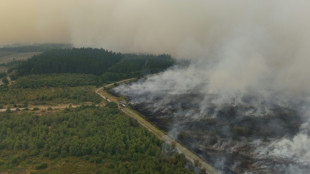 Belgium races to tame huge wildfire creeping towards Germany
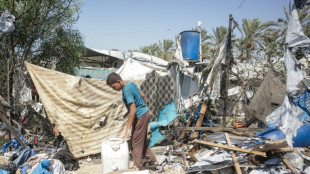
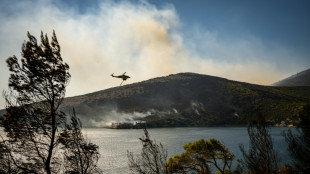 Two dead, hundreds evacuated from fires on island near Athens

 Real Madrid crush Schalke in friendly as Diomande debuts

 Calls for UK inquiry into 'hounding' of ex-Cambridge academic

 Strikes kill 16 in Russia and Ukraine

 Marchand tries for European swim gold in unfamiliar event
 India's Padikkal steals the show with 167 in first Sri Lanka Test
 Hollywood duo underline Premier League ambition for Wrexham
Tariff wars will hinder trade in green technologies such as solar panels and electric vehicles, and hamper the fight against climate change, says Ana Toni, CEO of the UN's COP30 climate conference.
COP30 will be held in November in the Amazonian city of Belem in Brazil, where Toni serves as national secretary for climate change.
She spoke to AFP at a pre-COP meeting of Latin American countries in Panama City. Here are excerpts from her interview, edited for length and clarity:
Q: Will the tariff standoff sparked by US President Donald Trump's imposition of higher import duties harm the fight against climate change?
A: Trade is a very important economic instrument and we need to use trade to help countries to mitigate or to adapt as quickly as possible (to the effects of climate change).
Many of our electric buses (in Latin America) are coming from China or other continents, so that is the good, low-carbon (technology) that we needed to foster and to support.
Q: What does it mean for the world that Trump plans to withdraw the United States from the 2015 Paris climate agreement?
A: The American people are not safer because their president has decided to leave the Paris agreement. Latin Americans are not safer because President Trump has done what he has done. We saw what happened in Los Angeles -- that fire that destroyed so many houses, we can see now what they are going through.
I think they (the US administration) will regret (it) but let us work with the American institutions and the people in the US that want to continue the action on climate change.
Climate change is a war... every day people are dying from overheating, from drought, from floods.
The molecules of carbon do not have a passport. They don't understand our geopolitical differences. We cannot say this carbon came from Panama or Brazil or China.
If we don't do this together, in a multilateral setting... we are not going to be able to fight climate change.
Q: How can the region better adapt to the fallout from global warming?
A: Latin America is not waiting for the Western countries, or developed countries, to come and help us. Our leaders know we are a very vulnerable region.
So we have to do something -- both contributing to mitigation (curbing planet-warming emissions) and also working on adaptation (to effects that can no longer be avoided) because many countries are already suffering.
For all countries in Latin America we appreciate and know that only by taking a multilateral approach... we will be able to combat climate change.
Q: What are Latin American countries doing to curb carbon emissions?
A: Only five countries in Latin America now have communicated their new targets for 2035 -- the famous NDCs (Nationally Determined Contributions or climate action plans under the Paris Agreement).
So we are hoping that all Latin American countries will come to COP30 with their national contributions, to say that: "Latin America is conscious about their problems but is also part of the solution."
It is in this region that we have an abundance of natural resources, forests, renewable energy, so we are part of the solution but we need to get that new economy going to benefit the people and benefit the planet.
Q: What does Latin America need to make this happen?
A: Latin America is already leading in many areas. For example, in Brazil we are fighting deforestation (of the Amazon) along with other countries.
But it is true that we need support, especially financial, to see if we can go faster in terms of energy transition. The issue of funding will be a very important topic for us at COP30.
W.Huber--VB