Rising wildfires spur comeback for Canadian water bomber / Photo: © AFP/File

 BASIS.pro Expands On-Chain Infrastructure with XDC Network Partnership and Zypher DAO as Auto Earn Goes Live

 Samson relishing battle with teen star Sooryavanshi for India spot

 Pickle-flavoured tart? AI inspires Japan's convenience stores
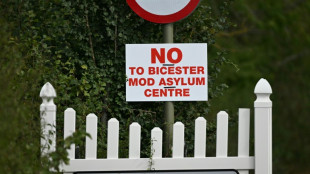
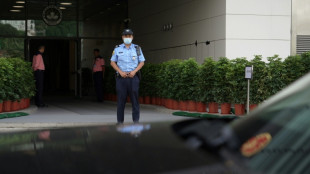 Macau holds first closed-door national security trial

 Bank of Japan set to raise rates under pressure from inflation, US

 Zverev, Shelton back on court for Davis Cup qualifiers

 Peace is a 'dangerous' word in Russian city heading to polls

 Meta chief pushes back on AI slowdown calls

 'Resident Evil' film brings video game's ethos to the big screen

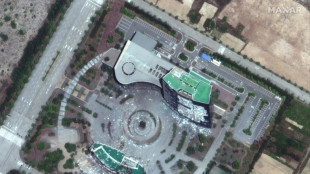 Court orders N. Korea pay Seoul $32.5 mn for blowing up office

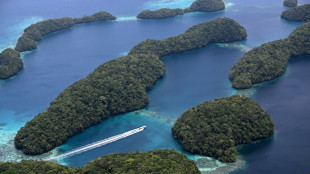 US military buildup in Palau stirs war fears
 US Fed to deliver rate decision with markets betting on hike
 Saudi, Egypt demand open Red Sea as Riyadh vows response to Houthi attacks

 Capitals say hockey star Ovechkin 'was asked' to film Putin ad

 Spurs in 'tough moment' after League Cup exit as De Zerbi says sorry

 Arteta salutes 'unbelievable' Dowman after Arsenal's teen star sinks Ipswich

 Empty seats as schools reopen in Venezuela's quake-hit Guaira

 Messi set for Argentina farewell in Benin friendly

 Ton-up Brook leads from the front as England hammer Sri Lanka in 1st T20

 AI giants pursue self-regulation as safety fears mount

 Argentina begin life after Messi with Bolivia friendly

 Helen Mirren delves into Patricia Highsmith's mind in 'A Talent for Murder'
 Sanders, Bannon warn of AI dangers in rare US left-right alignment

 US Senate crypto bill collapses amid partisan deadlock

 Raptors confirm Leonard return after Clippers salary cap scandal

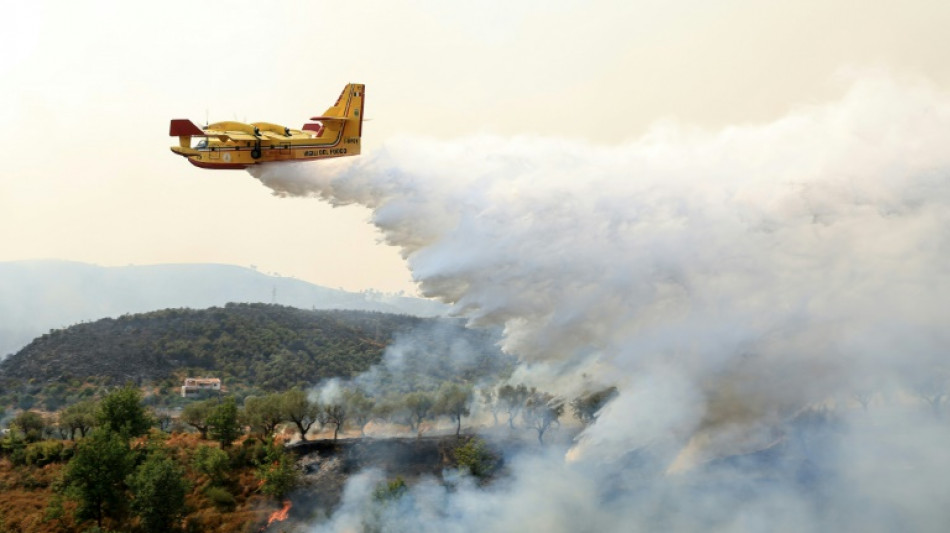
The Canadair water bomber revolutionized the fight against wildfires after it debuted in the skies decades ago.
Then demand waned and production stopped, but with major blazes intensifying globally, the water-scooping marvel is making a comeback.
At a production site in Calgary, in western Canada, workers building a next-generation version of the aircraft are busy trying to keep up with orders, which have poured in from Europe, as well as across Canada.
The amphibious plane hit the market in the late 1960s. It was the first aircraft specifically designed to scoop up and dump water on flames -- a departure from other planes that had been modified for that purpose.
Through the latter half of the 20th century, it was a pillar of firefighting efforts in many countries.
With about 160 of the aircraft in operation, governments began sharing them. That caused new sales to sag, which led aviation firm Bombardier to stop production in 2015.
The next year, Calgary-based De Havilland Canada acquired the rights to the water bomber program.
"The aircraft are getting older, the summers are getting hotter. There's more demand. So that's why we brought the aircraft back into production," Neil Sweeney, De Havilland's vice president for corporate affairs, told AFP.
France, Italy, Greece, Spain, Croatia and Portugal -- all imperiled by growing wildfire seasons -- ordered 22 next-generation Canadair planes at the Paris Air Show in June.
- Keeping what works -
De Havilland has estimated that global orders could rise to between 250 and 350 planes.
With most of the aircraft's 50,000 parts assembled by hand, producing that number of planes could take up to 10 years.
To expedite production and meet rising demand, De Havilland decided to modernize the existing Canadair design, rather than develop a new model.
"Our strategy was to leave the elements that made the aircraft successful untouched," said Jean-Philippe Cote, vice president of business improvement at De Havilland.
He said the bomber’s silhouette remains unchanged but the cockpit and electronic set-up has been completely redesigned.
John Gradek, a supply chain expert at McGill University, estimated that sustaining production to meet growing demand would likely require millions of dollars in investment.
- 'Tractor of the sky' -
Pierre Boulanger, a Canadair pilot from Quebec who travels to California to fight wildfires every summer, celebrated the resumption of production, calling the model the most "efficient" tanker aircraft on the market.
"It's the tractor of the sky," he said.
Two hydraulically-operated scoops under the fuselage allow the plane to pick up 6,000 liters of water in just 12 seconds without landing, which others must do.
"If the water source is very close, we can make a drop every two minutes," said Boulanger, 35.
He explained that the planes are extremely precise, allowing the pilot to maintain control even at very low speeds.
After the devastating European wildfire season this year and the increasing area burned annually in North America, Boulanger said it seemed as though "we will never have enough Canadairs."
F.Fehr--VB