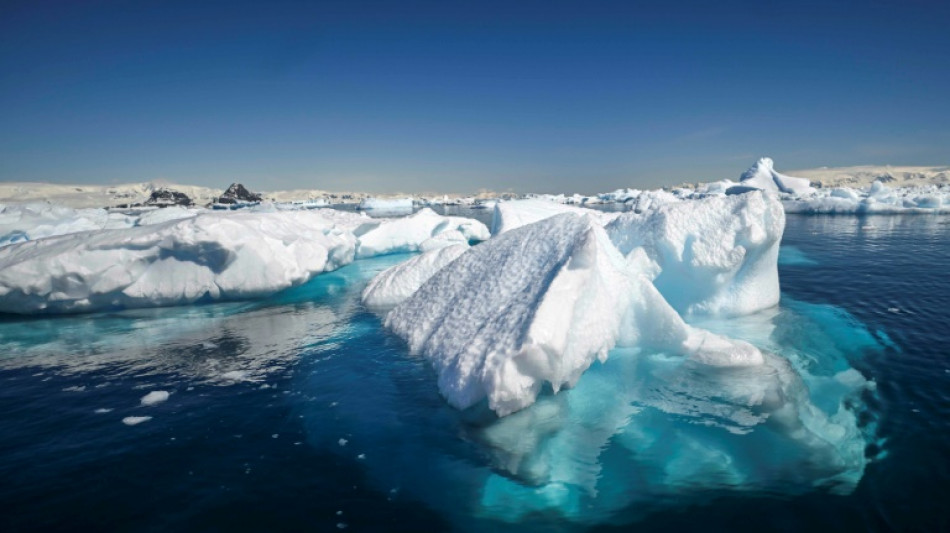
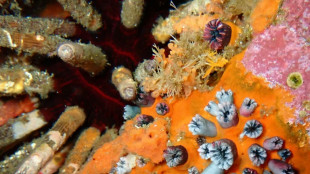
Melting ice could slow vital Antarctic ocean current: study / Photo: © AFP

 US to push economic pressure on Iran at G20 finance talks

 Kiss rotates Wallabies forwards for Argentina Test

 Guns, drugs and car chases: GTA 6 preview lands on Netflix after leaks

 Arteta braced for 'tough' Martinelli, Jesus exits from Arsenal

 Welbeck scores first Chelsea goal in League Cup win over Luton

 Arsenal face depleted Aston Villa, Spurs seek return on £300m spend

 Werro edges ever closer to elusive women's 800m world record

 Callaway cuts ties with golf media firm over violent ad

 Trump says Putin won't attack NATO territory

 Labor Day 2026: Complete Starter Tool Kit Under $375

 Tamil Nadu Govt Assigns Ministers to Oversee Chennai Monsoon Preparedness

 Alfred gets revenge on Jefferson-Wooden in Zurich 100m

 US Open men's singles: Three talking points

 Michael Strahan Welcomes Fifth Child with Girlfriend Kayla Quick

 Kuminga’s Timberwolves Deal Saves Millions in Taxes Despite Lower Pay Than Lakers Offer
 Trump says Russia is 'not going to attack' NATO territory

 OpenAI Tests 'Persistent Mode' for Codex AI Agent

 PSG to face Barcelona, Man City and Villa in Champions League as draw is made
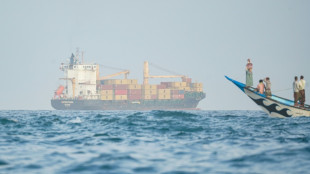
 Two killed, one arrested, at school near Berlin: police

 Cox defies Pakistan after Abbas's treble strike rocks England

 Bosnian Serb war criminal Ratko Mladic dead

 Ogura to miss Aragon MotoGP after hand surgery

 Severe Thunderstorms Hit Eastern Australia After SA Deluge

 More than goals: What Mourinho wants from Real Madrid's Mbappe
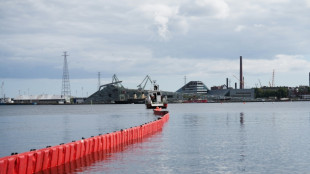 Finland defends shores against oil spill risk

The world's strongest ocean current could slow as melting Antarctic ice sheets flood it with fresh water, according to research published on Monday that warned of "severe" climate consequences.
Scientists used one of Australia's most powerful supercomputers to model how melting ice sheets might change the Antarctic Circumpolar Current, which plays a major role in global climate patterns.
If fossil fuel emissions increased over the next 25 years -- a so-called high emissions scenario -- the current could slow by around 20 percent, the peer-reviewed research found.
"The ocean is extremely complex and finely balanced," said University of Melbourne scientist Bishakhdatta Gayen.
"If this current 'engine' breaks down, there could be severe consequences, including more climate variability -- with greater extremes in certain regions, and accelerated global warming due to a reduction in the ocean's capacity to act as a carbon sink."
The Antarctic Circumpolar Current acted as a kind of "ocean conveyor belt" shifting immense columns of water through the Indian, Atlantic and Pacific Oceans, Gayen said.
Melting ice sheets would "dump vast quantities of fresh water" into the current, the modelling found.
This would change the ocean's salt content, making it harder for cold water to circulate between the surface and the depths.
Oceans play vital roles as climate regulators and carbon sinks.
Cooler waters can absorb greater amounts of heat from the atmosphere.
The strength of the current -- which flows clockwise around Antarctica -- also acts as a barrier that stops invasive species washing up on the continent's shores.
Algae and molluscs could more easily colonise Antarctica if the current slowed down, the researchers wrote.
Even if global warming was limited to a threshold of 1.5 degrees Celsius, the Antarctic current could still slow down.
"The 2015 Paris Agreement aimed to limit global warming to 1.5 degrees Celsius above pre-industrial levels," said climate scientist and co-author Taimoor Sohail.
"Many scientists agree that we have already reached this 1.5 degree target, and it is likely to get hotter, with flow-on impacts on Antarctic ice melting."
The research team, which included scientists from Australia, India and Norway, noted that their findings contrasted with previous studies that observed the current speeding up.
They said further observation and modelling was needed to understand how the "poorly observed region" was responding to climate change.
The research was published in the Environmental Research Letters journal.
A.Ruegg--VB