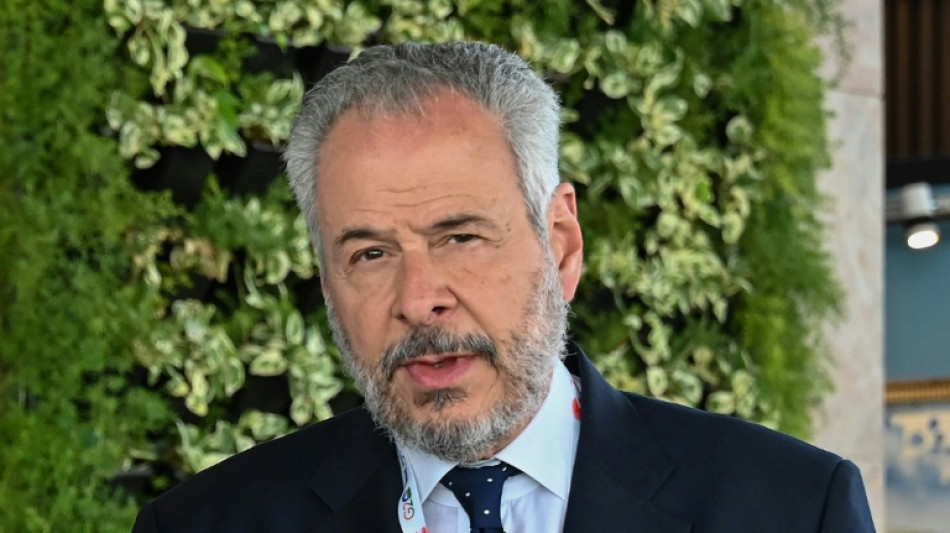
COP30 president urges most ambitious emissions targets possible / Photo: © AFP/File

 Oil extends gains, stocks mostly down as Trump issues fresh Iran warning

 ThinkMarkets Expands Weekend Trading Offering, Launches Weekend League Competition

 Tibet activists accuse China of downplaying floods
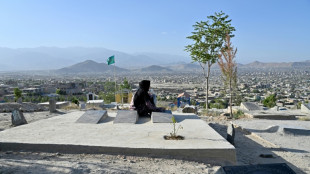 Afghanistan war victims left 'without justice', UN says
 Iran president offers US olive branch before Putin meeting

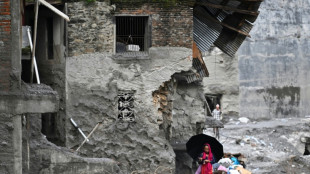 China-Nepal flood toll tops 1,000 as tunnel rescue offers last hope

 Japan to relax overtime regulation under workaholic PM
 Thwarted Niger mutiny exposes junta's Russia dependence
 Illegal mining ravages S.Africa's economic hub
 Nepal's wall of missing offers last hope after Himalayan flood

 US to press G20 on light-touch AI regulation

 2 die in Grand Canyon flash flood, only 1 person unaccounted for
 US Army Secretary Driscoll submits resignation: White House
 Oil extends gains, stocks drop as Trump issues fresh Iran warning

 Tsitsipas says Kyrgios's positive cocaine test 'kind of expected'

 In Japan's mountains, a different way to manage bears

 Middle East war a boon for UAE defence giant with global ambitions
 Former gang member found guilty of murdering Tupac Shakur

 Top-seeded Zverev opens US Open campaign
 US regulator, 22 states accuse Amazon of 'manipulating' ad auctions: lawsuit

 TRON Founder Justin Sun Shares Outlook on Bitcoin, Stablecoins and Global Finance at Bitcoin Asia 2026

 Tributes to 'eternal' Messi on Argentina retirement
 Arteta hails Arsenal's 'finishers' after Saka kills off Villa
 Yamal, Raphinha bag braces as Barcelona rout Rayo

 Alcaraz makes winning return at US Open, Sabalenka safely through
Countries must aim as high as possible when setting new goals to reduce greenhouse gas emissions, Andre Correa do Lago, the president of the COP30 climate conference to be hosted by Brazil in November, told AFP in an interview.
With just days to go until the February 10 deadline for signatories of the Paris climate accord to unveil their new goals for 2035, major players such as the European Union and China have yet to announce their targets.
Under the accord, countries agreed in 2015 to try to hold warming to 1.5 degrees Celsius above pre-industrial levels -- which has already been breached over the past two years.
Europe's climate monitor said Thursday that last month was the hottest January on record.
Correa do Lago, the Brazilian foreign ministry's secretary for the environment, said it did not matter if countries took their time to announce their new targets, but they needed to be "as ambitious as possible."
"They have to be more ambitious than they were before, so that's a rule, but we want them to be particularly ambitious and... compatible with avoiding a 1.5 percent increase in temperature."
Brazil will host the COP30 meeting in the Amazonian city of Belem -- the first time the conference will be held in a region considered so crucial to the global climate.
This year's climate conference will come after US President Donald Trump withdrew his country from the Paris accord for a second time and doubled down on the use of fossil fuels.
Correa do Lago said there were still "several ways to talk to the United States" about climate change, such us through the G20 or the UN Framework Convention on Climate Change.
- Increasing climate financing -
After much tortuous haggling, the last COP held in Azerbaijan ended in a deal that would see wealthy nations pay $300 billion a year to developing countries, which are worst affected by climate change.
This was criticized by poorer nations as falling short of what was needed to tackle the impact of a changing climate.
Correa do Lago said that aside from the presentation of the new Paris accord goals, "there are a number of negotiations that are still ongoing."
"There is also a mandate for Brazil, together with Azerbaijan, to present alternatives so that we can increase financial resources from $300 billion to $1.3 trillion."
Under leftist President Luiz Inacio Lula da Silva, Brazil -- the world's ninth largest oil producer -- is seeking to position itself at the forefront of efforts to combat climate change.
While the country has managed to reduce deforestation in the Amazon, Lula has come under fire for pushing for the expansion of oil exploration, particularly in a controversial offshore basin near the mouth of the Amazon River.
Correa do Lago said the energy transition "is something that will be very different depending on the country."
"This process may have paths that some consider tortuous or not in a straight line. The example that is always remembered is that when Germany decided to abandon nuclear energy, which does not emit greenhouse gases, it went back to using coal. But this is a process."
K.Sutter--VB