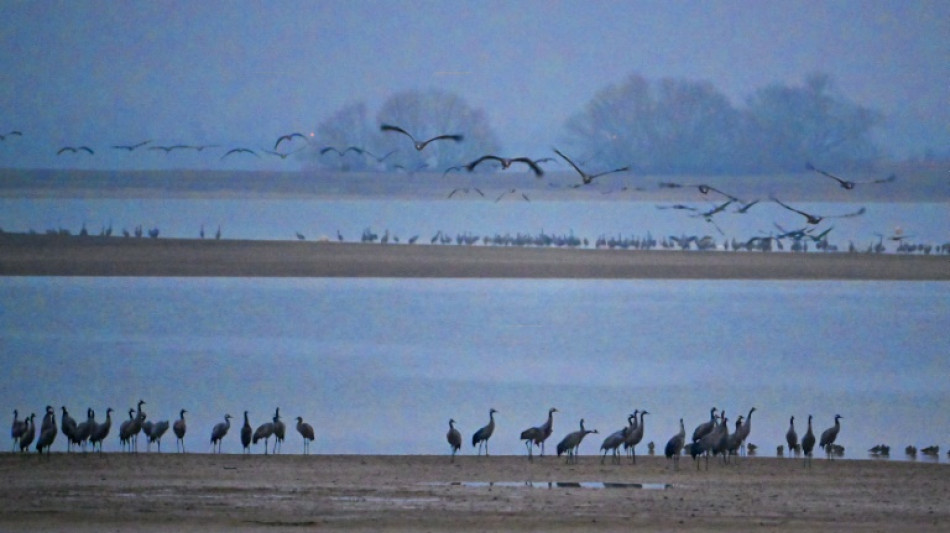
Global warming makes French reservoir a winter resort for migrating cranes / Photo: © AFP

 US defends Trump's Venezuela oil deal

 OpenAI to launch new model with 'stronger safeguards' after hack

 Fans mourn 'bittersweet' final Ariana Grande gig in London

 Norway's King Haakon VIII swears allegiance to constitution

 Syria site infrastructure 'consistent with nuclear reactor': IAEA

 Juventus sign Woltemade, Sarr on loan from Premier League

 US strikes Iran in latest tit-for-tat attacks

 China's Xi arrives in Egypt as US sanctions threat looms over Iran links
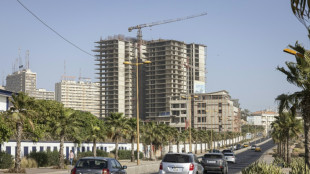
 Car bomb at Colombian police station kills one, injures 11

 Rain delays start of play on US Open

 Man City agree blockbuster deal to sign Chelsea star Fernandez: reports

 Alkemya Metacore Secures $50M via Tokenised Equity to Scale Nickel Energy and Security Tech

 Man City chase Fernandez, Arsenal sell Jesus on deadline day

 EU says Russian 'hybrid attacks' won't halt aid to Ukraine

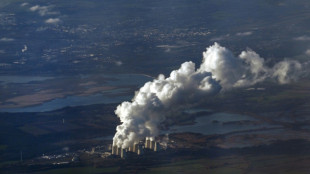 Explosives used in sabotage attack on German power lines

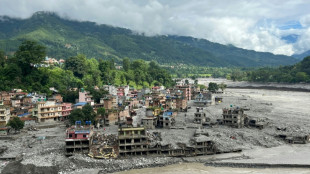 Nepali families hold symbolic funerals for missing after floods

 Newcastle sign Lille forward Fernandez-Pardo

 Even at Elysee, phones are handed in, Macron tells French pupils
 Chelsea agree to sign Atalanta's Ahanor, with Palace loan for this season

 Chelsea sign Atalanta's Ahanor and loan him to Palace

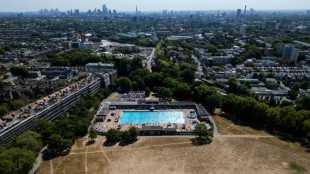 UK chalks up hottest summer on record for second year running

 China's Xi visits Egypt as US sanctions threat looms over Iran links

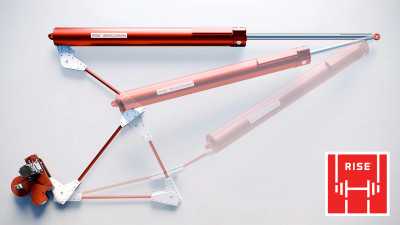 RISE Robotics Awarded $100,000 MassVentures Grant to Accelerate Commercialization of Beltdraulic Technology

 Global bond sell-off deepens on inflation concerns

 Germany's far-right AfD promises 'boom' but economists fear worst

The Lac du Der was once just a passing glimpse for hundreds of thousands of cranes flying from Scandinavia in search of sunshine, but with global warming the French reservoir has become an attractive winter retreat.
Tens of thousands of the majestic birds now spend Europe's coldest months around the 48 square kilometre (19 square mile) expanse of water south of France's champagne capital of Reims.
Each year, the number increases and, every dawn, clouds of thousands of birds rise up to fly off in search of food in nearby fields.
Lac du Der was created in the 1970s to stop flood waters heading down the River Seine towards the Paris region.
For much of the time since, small islands in the lake were frozen over in the winter and so of no interest to the common cranes and sandhill cranes that passed over each year heading from Scandinavian countries to Spain and North Africa.
But the rising temperatures of recent decades, much of it blamed on human activity, mean the islets have become a haven for the birds. Nearby fields are also soft enough to find food.
The reservoir unwittingly established a "humid zone" for the cranes on their migration route, according to Benoit Fontaine, an ecologist for the French biodiversity office and the natural history museum.
"Now the birds do not have to go so far," he added.
Most cranes still head for the Mediterranean sunshine but the League for the Protection of Birds (LPO) estimates that up to 30,000 now spend winter around Lac du Der. It says the number has increased tenfold in the past decade.
The cranes have become an attraction for tourists armed with cameras. But local farmers complain of the damage to their land.
"They eat the seed or they tear up the wheat with their feet," complained Jean-Claude Laffrique, whose farm in the village of Scrupt is 20 kilometres (13 miles) from the lake.
Local residents are also woken up when the squadrons of cranes land nearby. Some experts say migrating birds play a key role in the spread of bird flu.
Laffrique has tried to scare off the cranes by putting old cars in his fields or using a scare cannon -- a tube connected to a gas bottle which makes noises. This year he has put up three windsurf boards with their sails.
"After a while, they get used to it," said the exasperated farmer, who like other landowners gets compensation from the regional government.
I.Stoeckli--VB