Oil, gas giants could pay climate damage and still profit: research / Photo: © AFP

 SkySail Strategies Outperforms Wall Street's 30-Year Risk Standard With Proprietary AI Inference Model

 Canada ends refugee family sponsorship exemption over integrity concerns
 Berlin's run-down public spaces at heart of election campaign

 Ribeiro and Richie among celebrity birthdays for September 20–26

 Bob Mackie, costume designer for Cher and Madonna, dies aged 87

 Mahomes makes triumphant return as Chiefs rout Broncos 31-10

 Belgium completes outer structure of offshore energy island

 Video documents rescue of injured US airman from Iran

 Asian Games: Bigger than Olympics, young stars and a cruise ship

 Asian Games set for liftoff but will have everyone have a bed?

 Most markets drop as oil extends gains ahead of expected US rate hike

 Kate Beckinsale challenges assumptions about her beauty routine

 Sri Lanka's famed beach shack battles demolition

 Drone shot down by NATO over Lithuania

 Vserv targets ₹1,000 crore revenue by 2030 through AI expansion

 India prohibits bank fees on UPI payments up to ₹2,000
 Air India CEO summoned over alleged departure immigration lapse

 New Zealand agencies missed red flags in child kidnapping case: inquiry

 Brazil's Amazon defender Raoni has cancer

 HFCL expands planned fibre investment to ₹1,800 crore

 Emmy Awards begin as 'Widow's Bay' and 'The Pitt' vie for top prizes

 Himalayan glacier study warns of flood and water-supply risks

 Kuwait schools restore classroom routines after remote learning

 US designer Bob Mackie, known for Hollywood glamour, dies at 87

 BIS flags debt and profitability risks in AI-driven market rally

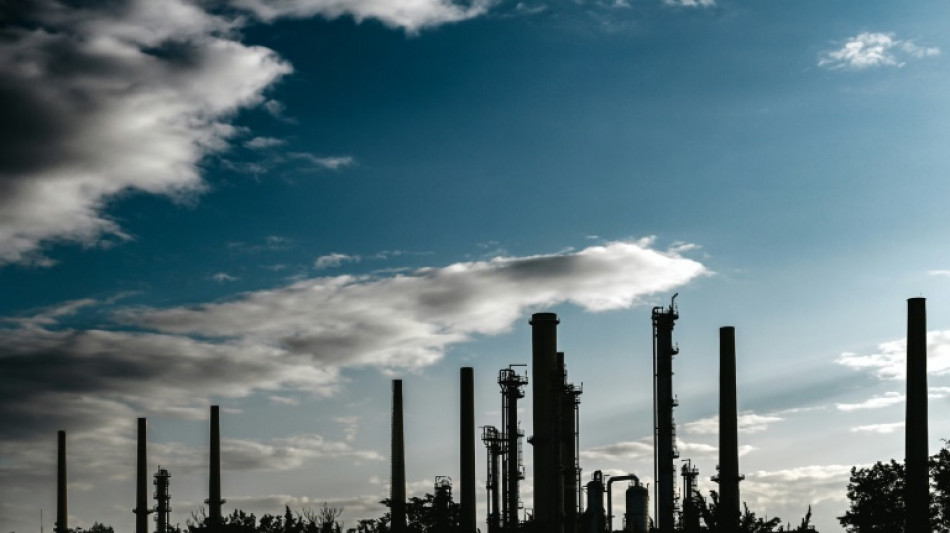
Major oil and gas companies such as Aramco, ExxonMobil and Shell could have paid for their share of the damage caused by climate change and still earned trillions of dollars in profit, researchers said on Thursday.
Their conclusions were released ahead of the UN's COP28 climate negotiations later this month in Dubai, where developing countries not responsible for most carbon emissions are expected to push for governments and firms to pay more for their role in global warming.
If the top 25 oil and gas companies had been held accountable for their role in global warming in recent decades, they would still have made $10 trillion dollars in profit, according to the report published by think tank Climate Analytics.
The estimated damage caused by carbon emissions from the 25 companies cost $20 trillion from 1985 to 2018 -- but during that time they earned $30 trillion, the report said.
The research looked at private oil and gas giants as well as state-owned companies. State-owned firms contribute to huge sovereign wealth funds in countries such as the United Arab Emirates, the host of this year's COP28 talks.
"This fossil wealth is here to stay while the world suffers from the devastating consequences of climate change for centuries to come," the report's lead author Carl-Friedrich Schleussner told journalists.
The contrast was particularly striking last year, the authors of the report said.
As energy prices sky rocketed due to Russia's war in Ukraine, major oil and gas companies posted record profits.
The $161 billion profit of Saudi Arabia's state-owned Aramco in 2022 was "probably the highest net income ever reported in the corporate world," its CEO Amin Nasser has said.
Aramco was one of seven companies that posted profits almost twice the amount of the estimated damage caused by their emissions, according to the report.
- 'Flaunting their profits' -
The researchers calculated damages for the world's biggest emitters by using estimates for the social cost of carbon from 1985-2018, which amounted to $185 per tonne of carbon dioxide.
They compared this number with company profits from the same period.
The researchers then split the damages in three to account for the responsibility of governments and consumers.
State-owned oil companies in Saudi Arabia, Russia, Iran, China and the UAE showed both the most damaged caused -- and the largest financial gain.
ExxonMobil topped the list for private companies, followed by Shell, BP and Chevron.
Half of the sovereign wealth fund of COP28 host the UAE could cover the climate damage from its fossil fuel industries and still have $700 billion left over, the report said.
At last year's COP27 talks in Egypt, nations agreed to set up a dedicated fund to help vulnerable countries cope with "loss and damage" from climate disasters such as extreme weather.
The details have yet to be worked out, however, and the fund will be a key point of negotiation at this year's COP28 talks.
Barbados Prime Minister Mia Mottley, whose Caribbean island nation is threatened by rising sea levels, has called for a 10 percent tax on the profits of oil and gas companies to go into such a fund.
The UN estimates that developing countries will need over $300 billion per year by 2030 to combat the impacts of climate change.
The COP28 talks will be held during what is widely expected to be the hottest year on record.
"Oil and gas companies are meanwhile unabashedly flaunting their profits, some even walking back on their climate commitments," said report co-author Marina Andrijevic.
N.Schaad--VB