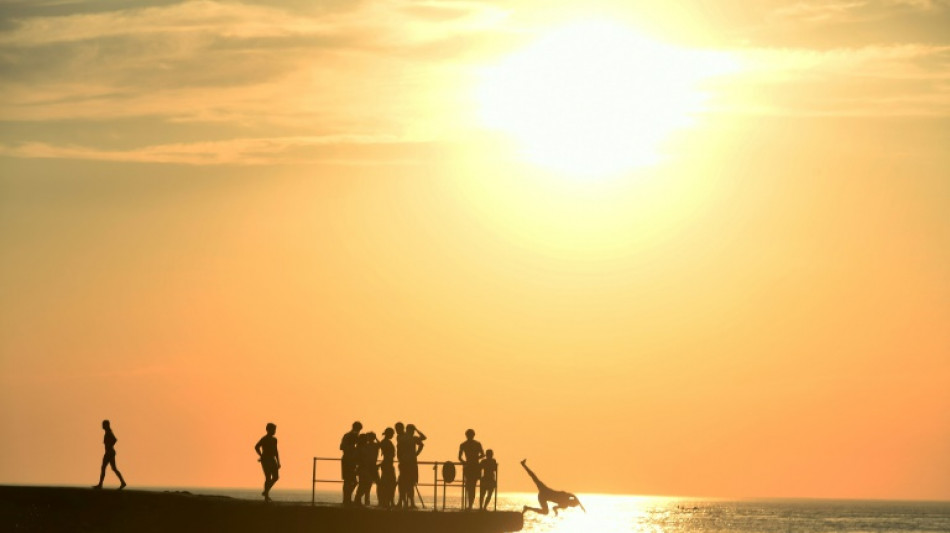
UN sounds warning on climate change health threat / Photo: © AFP/File

 SkySail Strategies Outperforms Wall Street's 30-Year Risk Standard With Proprietary AI Inference Model

 Canada ends refugee family sponsorship exemption over integrity concerns
 Berlin's run-down public spaces at heart of election campaign

 Ribeiro and Richie among celebrity birthdays for September 20–26

 Bob Mackie, costume designer for Cher and Madonna, dies aged 87

 Mahomes makes triumphant return as Chiefs rout Broncos 31-10

 Belgium completes outer structure of offshore energy island

 Video documents rescue of injured US airman from Iran

 Asian Games: Bigger than Olympics, young stars and a cruise ship

 Asian Games set for liftoff but will have everyone have a bed?

 Most markets drop as oil extends gains ahead of expected US rate hike

 Kate Beckinsale challenges assumptions about her beauty routine

 Sri Lanka's famed beach shack battles demolition

 Drone shot down by NATO over Lithuania

 Vserv targets ₹1,000 crore revenue by 2030 through AI expansion

 India prohibits bank fees on UPI payments up to ₹2,000

 Air India CEO summoned over alleged departure immigration lapse

 New Zealand agencies missed red flags in child kidnapping case: inquiry

 Brazil's Amazon defender Raoni has cancer

 HFCL expands planned fibre investment to ₹1,800 crore

 Emmy Awards begin as 'Widow's Bay' and 'The Pitt' vie for top prizes

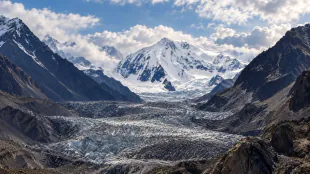 Himalayan glacier study warns of flood and water-supply risks

 Kuwait schools restore classroom routines after remote learning

 US designer Bob Mackie, known for Hollywood glamour, dies at 87

 BIS flags debt and profitability risks in AI-driven market rally

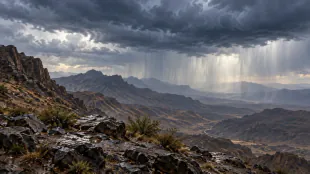
Climate change poses a health threat through increasing weather disasters and extreme heat, the UN said Thursday, calling for better warning systems that could be weaved into public health policy.
"Climate change threatens to reverse decades of progress towards better health and well-being, particularly in the most vulnerable communities," the United Nations' World Meteorological Organization said.
The WMO said climate information was not sufficiently integrated into health service planning.
"Scientific know-how and resources can help redress the balance, but are not sufficiently accessible or utilised," it said.
The WMO's annual State of Climate Services report said tailored climate information was needed to support the health sector to tackle more extreme weather and poor air quality, shifting infectious disease patterns and food and water insecurity.
The report weeks ahead of the November 30-December 12 COP28 climate summit in Dubai.
- Extreme heat -
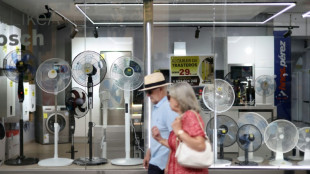
The WMO said abnormally high heat causes the greatest mortality of all extreme weather but health decision makers in only half of the countries affected can access warning services.
Between 2000 and 2019, the estimated deaths due to heat were approximately 489,000 per year, it said, adding: "the impacts are underestimated as heat-related mortality could be 30 times higher than what is currently recorded".
WMO chief Petteri Taalas struck a more sombre note.
"Practically the whole planet has experienced heatwaves this year," he said.
"The onset of El Nino in 2023 will greatly increase the likelihood of breaking temperature records further, triggering more extreme heat in many parts of the world and in the ocean."
Taalas said closer collaboration would boost the impact of climate science and health services so the health sector gets support "at a time when unprecedented changes to our climate are having an increasing impact".
Less than a quarter of health ministries have a health surveillance system which uses weather information to monitor climate-sensitive health risks.
Countries with limited early warning coverage have disaster mortality which is eight times higher than countries with substantial to comprehensive coverage, according to the WMO report.
And the number of medium- or large-scale disaster events "is projected to reach 560 a year -- or 1.5 each day -- by 2030", the agency said.
- Covid lessons -
The report highlighted the usefulness of early warning systems for extreme heat, pollen monitoring and satellite surveillance for climate-sensitive diseases.
"The climate crisis is a health crisis, driving more severe and unpredictable weather events, fuelling disease outbreaks, and contributing to higher rates of noncommunicable diseases," said World Health Organization chief Tedros Adhanom Ghebreyesus.
"By working together to make high-quality climate services more accessible to the health sector, we can help to protect the health and well-being of people facing the perils of climate change."
The report said far more hydrometeorological investments needed to be designed to support health outcomes.
"In the wake of the global COVID-19 pandemic, all countries have experienced the social and economic losses and damages which can occur when the health of society is compromised," the WMO said.
"More must be done to prepare the health community for future shocks and pressures they may experience due to climate variability and the damaging effects of climate change."
R.Kloeti--VB