Aluminum recycling in Brazil: Scraping by in a billion-dollar industry / Photo: © AFP

 Himalayan glacier study warns of flood and water-supply risks

 Kuwait schools restore classroom routines after remote learning
 US designer Bob Mackie, known for Hollywood glamour, dies at 87
 BIS flags debt and profitability risks in AI-driven market rally

 Qatar Chamber and Maltese envoy consider business forum
 Spanish PM denies being blackmailed by Morocco

 Doha Islamic finance forum names AlRayan firms as co-lead partners

 Leeds thrash Newcastle to go third in the Premier League

 Zelensky says Ukraine ready for 'de-escalatory steps'

 In-form Malen fires Roma to Serie A summit, Inter on their heels

 Lebanese agency reports Israeli shelling and gunfire in south

 Expert proposes phased digital reform for Arab business schools

 Trump rejects 'hoax' warnings that AI could destroy humanity

 Houthis say Saudi Arabia hits Yemen with 54 strikes after attack on bases

 Why the far right is losing ground in Sweden
 Ex-Ireland fly-half O'Gara extends deal as La Rochelle coach

 Russian attacks on Ukraine railways escalating every week: rail CEO to AFP

 France, Iraq deepen energy, defence ties during Zaidi visit

 Trump says Ukraine, Russia agree not to hit energy targets

 Nigeria's Dangote refinery launches continent's biggest IPO

 Trump blasts 'sick conspiracy' against AI as warnings mount

 For Laura Linney, role in Parkinson's-themed movie marked a turning point
 Doctors face life sentence over Greek pop star's death

 Trump moves to axe power plant climate rules

 Slow the AI race? Investors weigh the potential cost

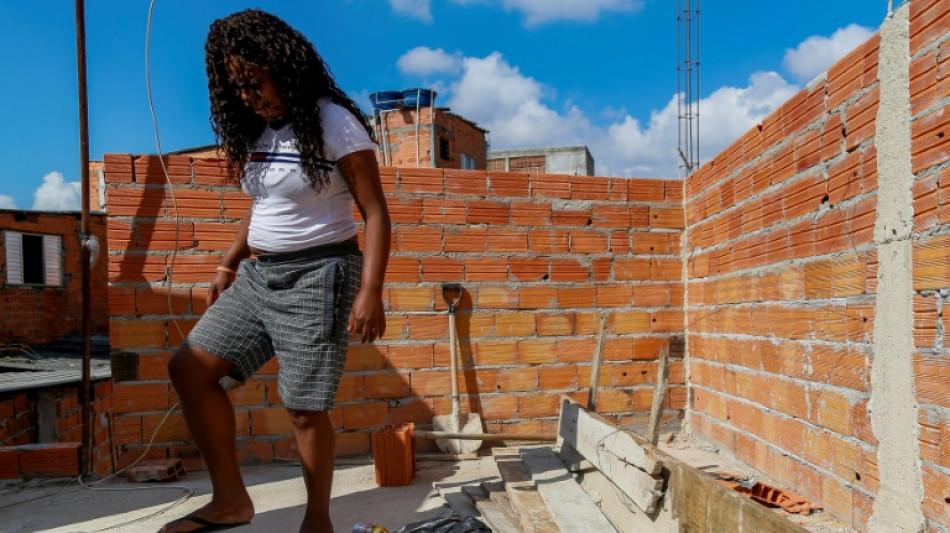
Shirlei Aparecida de Souza uses her foot to crush the empty cold drink cans she collects in the alleys of a poor Sao Paulo neighborhood: a precarious livelihood critical to Brazil's environmental protection goals.
It is thanks to about a million collectors like her that the country recycled as many aluminum cans as it produced for the first time in 2022, according to data from Recicla Latas, a recycling industry body.
Brazil is a world leader in recycling drinks cans: its new record beats out the European Union, which recycles 73 percent, and the United States with 60 percent, according to their own databases.
Recicla Latas says the country's recycling efforts have prevented about 16.5 million tons of planet-warming greenhouse gas emissions in the last 10 years.
But for Aparecida de Souza, collecting cans is a matter of survival.
She gathers them off the street, from garbage cans or landfills, and sells them to collection centers that send the cans to recycling plants.
She earns about 20 real, or just over $4, a day: "Just enough to buy the necessities, a packet of rice, black beans and sometimes meat," the 38-year-old told AFP.
With this, she supports five daughters in a working-class district of the largest metropolis in Latin America.
- 'Family tradition' -
Dressed in flip-flops, a T-shirt and shorts, Aparecida de Souza leaves the house every day at dawn to collect as many cans as she can. It takes almost 70 black rubbish bags to make a kilogram of aluminum, which sells for just over $1.
The work is a "family tradition," into which she was initiated by her mother from the age of 15, she told AFP.
"Aluminum sells for a higher price than other materials such as cardboard, and it is lighter to carry."
Aline Sousa da Silva, an activist with the Ancat association representing collectors of recyclable materials, said there is "a lot of competition" in gathering cans, which can be reused indefinitely.
The recycling rate of other materials in Brazil is much lower than that for cans: about four percent on average.
In 2022, nearly 430,000 tons of cans were recycled, according to Renato Paquet, a director at Recicla Latas, whose data is used as a reference by the Brazilian government.
That is the equivalent of about 31.8 billion cans.
- 156 cans per person -
Since 2010, when drinks manufacturers signed an agreement with Brazilian authorities, aluminum recycling numbers have skyrocketed in a country where each of its 200-odd million inhabitants consumes about 156 cans every year.
It takes "an average of 60 days" for a can bought in a supermarket to reappear on the shelves after recycling, according to Danilo Machado, logistics supervisor at the Latasa-Garimpeiro Urbano recycling company.
The industry adds some $1.25 billion to the Brazilian economy every year. But those who form its backbone live mostly precarious lives with few social protections.
On January 1, they received a special honor at the inauguration of leftist leader Luiz Inacio Lula da Silva, with Sousa da Silva among a group of activists chosen to present him with the presidential sash.
M.Ouellet--BTB