-
 England Rugby League World Cup hopes hang by a thread
-
St. Louis City's unbeaten MLS run ends at 19, Union's reaches 15

-
 Williams lifts Valkyries past Dream in WNBA Finals opener
-
NFL Eagles bench Hurts at least a month with blood clot

-
 Dubois destroys Wardley to retain WBO heavyweight crown
-
Across US, 'No Kings' events seek to boost early voting

-
 Oregon families grapple with explaining school shooting to children
-
Tents spring up in Lisbon as Portugal housing protests spread

-
 Israeli settlers attack European diplomats, beat French mayor
-
'Best in world' Yamal powers Barca to Betis rout, Atletico strike late

-
 Town hall in Limoges 'largely lost' to blaze set during French protests
-
El Salvador's Bukele puts conditions on early release of gang prisoners

-
 US goes on the offensive in central Asia
-
Fire rages at town hall in France's Limoges after protests: authorities

-
 Emotional Lions come up short in Champions Cup as tributes paid to Andrews
-
Unstoppable Barca thrash Betis to extend perfect start

-
 Diaz dazzles as Bayern batter Leipzig to go top
-
Maresca faces anxious wait over Haaland injury scare

-
 Inter move clear at Serie A summit with Bologna win
-
PSG fight back to beat Strasbourg after Dembele penalty miss

-
 Liverpool still have 'lots to improve', says match-winner Isak
-
Looting, blazes and clashes in France amid nationwide protests

-
 Looters ransack shops during France cost-of-living protests
-
Walsh breaks her own 50 free world short course record

-
 Leinster thump Clermont as grieving Lions set for Champions Cup debut
-
Haaland brace extends Man City's winning start in Premier League

-
 Haaland stars in Man City win, Liverpool beat Brentford
-
'Special' Ombudsman storms to victory in Champion Stakes

-
 Dortmund go top despite Union Berlin stalemate
-
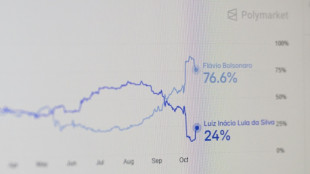
Brazil's right embraces election betting odds amid polls skepticism
-
 Venezia upset Napoli for first Serie A win of season
-
Four more Ebola cases detected in Kenya, bringing total to seven
-
 Glasgow and Bulls win as grieving Lions set for Champions Cup debut
-
Clashes erupt in France as protesters vow to make government 'tremble'

-
 Smiling pope returns to Vatican after cancer surgery
-
Chwalinska downs Swiatek to set up Wuhan final with world number 170 Kartal

-
 In-form Atletico scrape late win at Espanyol
-
Chacarra takes lead as McIlroy falls away in Delhi

-
 Rabada returns as S.Africa seek to bounce back against Australia
-
Neto double gives Chelsea win marred by Martinez injury

-
 Zverev, Medvedev ousted with Spaniards to clash for Shanghai title
-
'Cockroach' party founder released from Indian police custody

-
 French protesters clash with police during nationwide demonstrations
-
Nepal floods 'defining moment' for climate action: UN
-
 Zelensky says Trump could lift more Russia sanctions
-
Albanian capital sees fifth straight day of violent clashes

-
 Jayawardene quits as coach of five-time IPL winners Mumbai
-
Leaders weigh 'huge benefit', risks of AI for global economy

-
 World number 170 Kartal battles past Ostapenko to reach Wuhan final
-
Zverev stunned by Davidovich Fokina in Shanghai semi-finals

Fentanyl trade unravels
Fentanyl, a synthetic opioid up to 50 times more powerful than heroin, has been at the centre of a catastrophic overdose crisis. After years of relentless expansion, the market that once claimed tens of thousands of lives annually is contracting. Preliminary data from the United States Centers for Disease Control and Prevention (CDC) indicate that estimated drug overdose deaths fell to about 80,000 in 2024, a 27 per cent decline from the record of more than 110,000 in 2023, signalling the largest one‑year drop in modern history. This article examines why the fentanyl business is faltering, exploring the interlocking impacts of supply‑chain disruption, international diplomacy, law‑enforcement operations and public‑health initiatives.
From Peak to Downturn
During the early 2020s, illicitly manufactured fentanyl flooded the North American drug market, becoming the leading cause of overdose deaths. The pandemic exacerbated the situation: social isolation and disrupted addiction treatment services contributed to a spike of nearly 110,000 U.S. overdose deaths in 2023. Most of those deaths involved fentanyl, which dealers used to replace or adulterate heroin, counterfeit prescription pills and cocaine. Yet by 2024 the tide had turned. CDC data show that overdose deaths fell by roughly 30,000 in one year, and preliminary numbers for 2025 suggest the decline is continuing. The decrease extends across most U.S. states, with notable reductions in Ohio and West Virginia. Such a sustained downward trend had not been seen in decades and prompted researchers to look beyond domestic policy interventions for an explanation.
Supply‑Chain Disruption and China’s Crackdown
One of the most significant drivers of the decline appears to be a disruption in the global supply of fentanyl and its precursors. Researchers analysing death trends in the United States and Canada found evidence of a sudden shortage of fentanyl on illicit markets beginning in mid‑2023. A Science journal study led by scholars at Stanford and the University of Maryland concluded that Chinese enforcement actions against chemical suppliers have curtailed exports of fentanyl precursors. Officials in Beijing shut down hundreds of companies, removed tens of thousands of online advertisements and arrested about 300 people after agreements with Washington to restrict the trade. The research suggests these moves reduced the availability of 4‑fluoroisobutyryl fentanyl and other precursors, causing the purity of seized fentanyl to fall and the price to rise. According to the DEA’s 2025 National Drug Threat Assessment, some Chinese suppliers have become wary of shipping controlled chemicals, aware that their government is enforcing updated counter‑narcotics treaties. Mexican fentanyl cooks report difficulty obtaining key precursors and are increasingly relying on designer chemicals to circumvent regulations.
Cartel Disruption and Enforcement
While precursor shortages have choked production, targeted law‑enforcement operations have also shaken the industry. White papers from the National Security Data and Policy Institute detail how the capture of Ovidio Guzmán López — a senior Sinaloa Cartel figure and son of Joaquín "El Chapo" Guzmán — in 2023 destabilised the cartel’s synthetic‑drug division. Experts point to a correlation between cartel ‘decapitation’ operations and sharp but temporary declines in fentanyl seizures and overdose deaths. The killing of Nemesio Oseguera Cervantes, leader of the Jalisco New Generation Cartel in late 2025, likewise rattled the market, although researchers caution that rival factions can quickly reconstitute production. The National Drug Threat Assessment notes that the Sinaloa and Jalisco cartels continue to dominate fentanyl production, but they face greater risk as Mexican and U.S. authorities cooperate to target laboratories and intercept shipments at the southwest border. Seizures at border crossings dropped from 29,000 kilograms in 2023 to 23,000 kilograms in 2024, reinforcing evidence of a supply contraction.
Public‑Health Measures and Changing Behaviour
The contraction of the fentanyl trade has amplified the effect of public‑health interventions. Increased distribution of the overdose‑reversal drug naloxone, expansion of medication‑assisted treatment programmes and billions of dollars in opioid settlement funds have collectively improved survival rates. Harm‑reduction services such as supervised consumption sites and drug‑checking kits have proliferated in major cities, allowing users to detect dangerous adulterants like xylazine and medetomidine. Younger Americans appear less likely to initiate opioid use than previous cohorts, and some long‑term users have died or shifted consumption patterns. These behavioural changes mean that a shrinking pool of susceptible individuals is exposed to an increasingly fragmented drug supply.
An Evolving Drug Market
Despite the current downturn, the illicit drug market is far from static. The DEA warns that declining fentanyl purity does not equate to reduced danger. To compensate for shortages, traffickers are mixing fentanyl with veterinary tranquilizers and new synthetic opioids such as nitazenes, which can be even more potent. The National Security Data and Policy Institute notes that precursor chemicals still arrive in Mexico’s Pacific ports such as Manzanillo, and cartels are diversifying sourcing through India and alternative trans‑shipment points. According to the DEA, the presence of xylazine in seized powder has risen steadily since 2020, increasing the risk of fatal respiratory depression and flesh‑rotting wounds. Nitazene analogues and other novel substances are appearing in toxicology reports at an accelerating rate in 2026, underscoring how quickly manufacturers pivot when confronted with enforcement pressure.
The sharp decline in fentanyl‑related deaths offers a glimmer of hope after years of escalating tragedy, but it is not a definitive victory. The current contraction appears to be driven primarily by disruptions in precursor supply, strategic cartel‑targeting operations and strengthened public‑health responses. Yet the same agility that allowed traffickers to flood markets with fentanyl enables them to adapt to enforcement, shifting to new chemicals, routes and business models. Sustained reductions in opioid mortality will require international cooperation to control chemical exports, continued pressure on manufacturing networks, wider access to treatment and harm‑reduction services, and public education to deter drug initiation. As policy makers debate how to allocate resources, the lesson of the fentanyl collapse is clear: comprehensive, co‑ordinated action across borders and disciplines can save lives.

Iran's Ayatollahs the next to Fall?

China, Trump, and the power of war?

Who wins and who loses in Syria?

Russia: Is Putin's time nearly up?

Alice Weidel: AfD Chancellor Candidate 2025

Hungary: China's CATL battery factory

Meta's announcements and digital services?

Donald J. Trump: America is back

Is this Europe's plan for China?
Argentina, Milei and the US dollar?

The Roman Empire and its downfall?