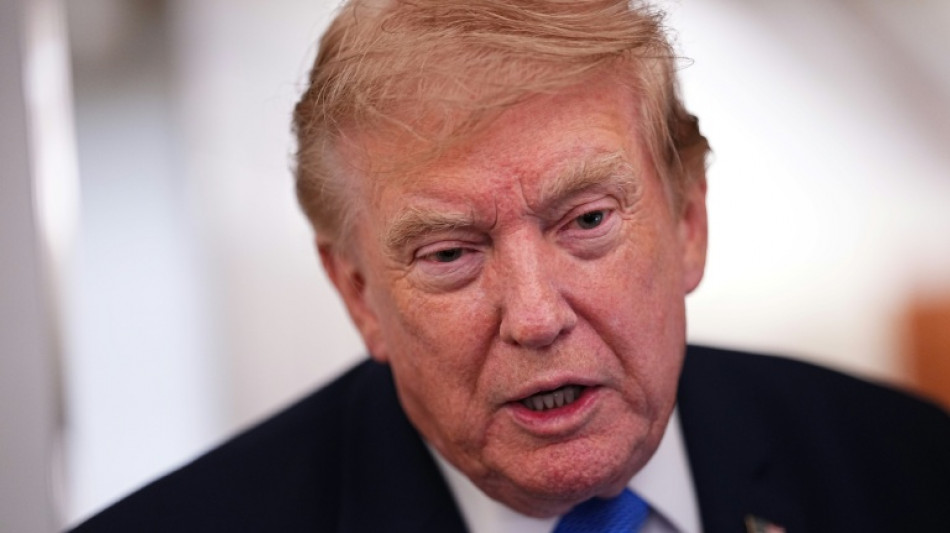
US, Japan support yen with first joint intervention since 2011 / Photo: © AFP

 Stocks rise on AI buzz, oil prices cool

 India narrowly survive huge scare against minnows Japan

 Missing F-35 fighter parts 'not sensitive', says Australia minister

 Cambodia showcases scams crackdown with global conference

 Afghan cyclist who disguised herself as man wins Asian Games silver

 Typhoon Dujuan leaves four dead in Japan, 45,000 houses without power

 G7 leaders condemn Houthi strikes on Saudi Arabia

 Google data centre sparks protests in Austria

 Shin Ohashi: Junk food-loving teen and Japan's next big swimming hope

 Stocks rise on AI buzz, drop in oil prices
 China's robot dancers limber up for America's Got Talent final

 Despite military might, Saudi struggles to crush the Houthis
 Trump to tout deals, defend Iran war in UN speech
 Sri Lanka to issue verdict in landmark Easter attack trial
 Macron says talks with Trump on Red Sea, Ukraine 'constructive'

 Green policies just good politics, says UK minister
 Bardot auction in Paris fetches nearly one million euros
 No timeline on Daniels injury return, says Commanders coach

 British Columbia sues OpenAI in US court over Canada school shooting

 French star Batum retires after 18-year NBA career
 Zidane leads first France training session

 Man shot by ICE agent in Texas detained with bullet inside him: lawyer

 California declares state of emergency ahead of El Nino

 South Africa arrests three more suspects, after nine women murdered
 Carse needs time away from England, says captain Brook

Japan and the United States said Monday they were ready to act again following their first joint action in 28 years to boost the yen, after the beleaguered currency hit a four-decade low.
The yen has been weakening because of the gap between Japanese and US interest rates -- fuelling the yen "carry trade" by investors -- as well as concerns about Japan's colossal debts under new Prime Minister Sanae Takaichi.
The scale of Friday's joint operation was not known, but it was the first since 2011 when the United States and Japan -- and other G7 members -- sold yen to stop it rising after a huge earthquake.
The last time Washington and Tokyo bought yen was 1998, Japan's finance minister said.
US President Donald Trump confirmed the concerted action aboard Air Force One on Sunday Washington time, calling it a "signal of friendship" with Japan and "good for the world economy".
"And we're always there for Japan. Japan's been very good to us, with the exception, of course, of Pearl Harbor," Trump added, referring to the Japanese attacks on the Pacific US naval base in World War II.
"We will not hesitate to participate in further joint intervention," US Treasury Secretary Scott Bessent said, adding that the US officials "strongly support Japan's decisive market and monetary steps to correct the substantial undervaluation of the yen."
"The Takaichi government is moving into an exciting new phase of Abenomics, as nearly 15 years of powerful stimulus have created durable, robust underlying economic dynamics," he added.
This referred to the combination of aggressive monetary easing, fiscal stimulus, and structural reforms under assassinated former premier Shinzo Abe, a figure greatly admired by Japan's first woman leader Takaichi.
The intervention came after the yen hit 163.99 per dollar last month, its weakest level since 1986. On Friday it soared to 157.40, the strongest since early May, and on Monday briefly touched 155.23, prompting speculation of another intervention.
"This joint action... countered excessive volatility and disorderly movements in the Japanese yen in recent months," Japan's Finance Minister Satsuki Katayama said. She added that Tokyo had "received very high praise for robustly revitalising and boosting the economy".
"This is the first time since 1998 that Japan and the US conducted coordinated intervention to buy the yen, so naturally, both countries made their own assessments and decided that such intervention was necessary, which is why they acted in concert," Satayama said.
- Tough talk -
While good for its big exporters like Sony and Toyota, a weak yen inflates import costs for resource-poor Japan, especially oil just as the war strangles supplies from the Gulf.
The yen has been sliding despite previous interventions and comments by Katayama that Japan was ready to act, remarks aimed at deterring investors from betting on the currency sliding further.
The Bank of Japan in June hiked interest rates to a 31-year high of 1.0 percent -- and held them there last week -- well below the US Federal Reserve's 3.50-3.75 percent.
This gap means investors borrow yen cheaply and invest in other assets outside Japan with better returns -- known as a "carry trade" -- resulting in capital outflows and more downside for the yen.
The BoJ is expected to hike rates in the coming months but the US Federal Reserve could do the same to combat surging inflation on the back of Trump's months-long war on Iran.
"Historical episodes of joint (yen) intervention show that these events have typically taken place around key turning points in (the exchange rate)," said economist Michael Wan at MUFG.
But he added that this was "not always the case" and that "the fundamentals likely still need to change for a more durable move".
M.Betschart--VB