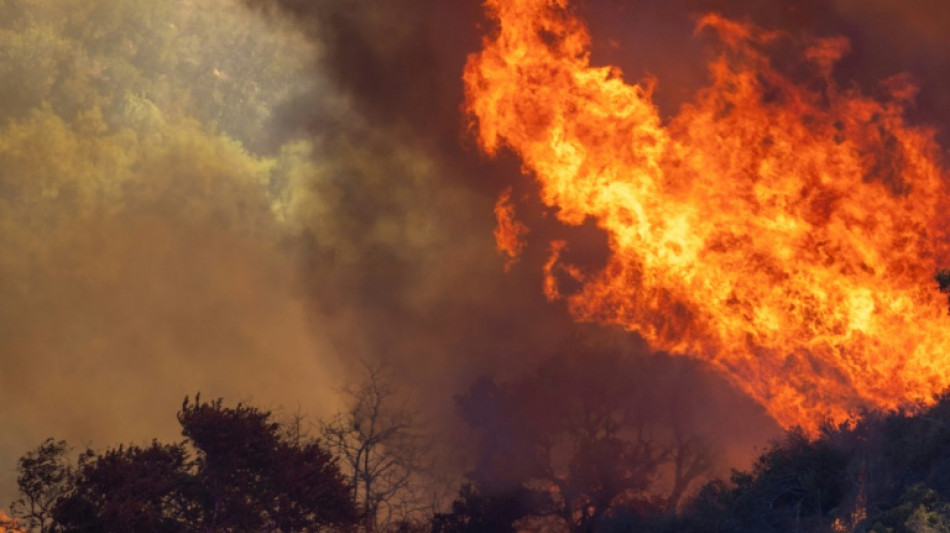
North America 'heat dome' left winners and losers: study / Photo: © GETTY IMAGES NORTH AMERICA/AFP

 Kyrgios gets month ban for cocaine, enters treatment programme

 Colombian judge bans strikes on guerrillas if minors are present

 Khachanov shocks ailing Auger-Aliassime, Swiatek and Osaka advance at US Open

 Lone juror blocking verdict in US mother's child murder trial: defense
 'Kinda chic' - Williams sisters set to launch US Open doubles bid

 Volkswagen says cutting 100,000 jobs by end of decade

 Russia slaps curfew on charity director over army criticism

 Ailing Auger-Aliassime upset by Khachanov at US Open

 Richarlison omitted from Tottenham's Premier League squad

 How El Nino is choking the Panama Canal

 Hamilton drives his Ferrari dream at Monza
 Senegal has an IMF loan, now what?

 Auger-Aliassime upset by Khachanov at US Open

 Hugging Face, the French start-up that became AI's warehouse
 World Cup winner Llorente retires from Spain team at 31

 Osaka squeezes into US Open third round

 Apple faces £2 bn lawsuit in UK over app privacy feature
 Former champ Swiatek eases into US Open third round

 DR Congo latest to promise moving Israel embassy to Jerusalem

 War criminal Mladic's body returns to Serbia with military honours

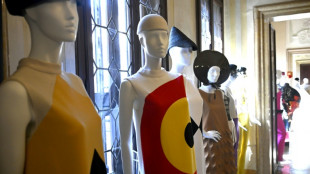 Pierre Cardin museum brings designer's futurist style to Venice

 Slovenian rookie Omrzel triumphs as Mas extends Vuelta lead
 British, French leaders talk migrants, EU relations

 Heading for Ferrari's home race, Leclerc still dreams of world title
 Cafe at centre of Israel culture clash agrees to shut on Sabbath
Billions of mussels scorched and baby birds dropping from sweltering nests: North America's 2021 heatwave caused a cascade of ecological damage, some of it catastrophic, some unexpected, a new study showed Wednesday.
The "heat dome" that hit the western United States and Canada, fuelled by human-induced climate change, was among the most extreme ever recorded globally, with temperatures sometimes exceeding 50C.
"The heatwave had widespread ecological effects, including an almost 400-percent increase in wildfire activity and negatively affecting more than three-quarters of the species studied," said study co-author Diane Srivastava, professor at the University of British Columbia.
To assess the heatwave's impact, researchers combined weather, ecological and hydrological data with information on wildfires and scientific models.
Of the 49 terrestrial and marine species studied, over 75 percent were negatively affected, according to the study published in the journal Nature Ecology and Evolution.
But the effects were highly variable: some populations fell by nearly 99 percent, while others increased by up to 89 percent.
The variability depends on factors such as vegetation cover, a species' intrinsic heat tolerance and behaviour -- especially the ability to seek shade.
More than half the thatched barnacle population died as well as 92 percent of Bay mussels.
The number of surf scoters, a native sea duck, dropped by 56 percent while daily camera trap detections of caribou fell by half.
"Basically, any animal that couldn't escape the heat was hard hit by it," said Julia Baum, the lead author and biology professor at the University of Victoria.
"This included mobile animals at vulnerable stages of life, such as baby birds that couldn't yet fly and were trapped in their heat-retaining nests," she said.
Some species thrived.
Sea lettuce benefited from the die-off of other algae and expanded, increasing its coverage on beaches by 65 percent after the heatwave.
Moose returned to the same level of daily camera trap sightings after the heatwave as they had before.
"We know from previous studies that moose are sensitive to high temperatures, so it's possible they were able to avoid the hottest areas by selecting cooler microclimates, such as sites with denser forest cover," said co-author Cole Burton, an associate professor at UBC.
C.Stoecklin--VB