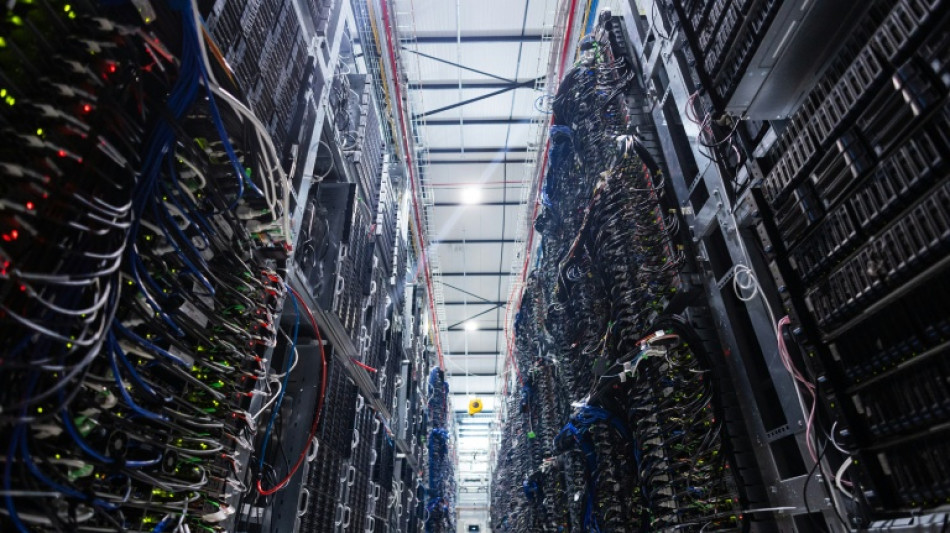
EU wants to favour European firms for AI, cloud in sovereignty push / Photo: © AFP/File

 알렉스 보디와 슈테판 하우프트 교수, 루마니아의 전설적인 미술품 컬렉션을 위한 협력 합의

 BaazEX Enters the Asian Trading Market With a New Approach to Online Forex Trading.
 Asian markets fall on US-China jitters as leaders meet

 Thais hail teen rocker Nene for 'America's Got Talent' win
 Zverev, Agassi defend 'spectacular' Laver Cup

 Eel-powered Japan whizz-kid, 11, dominates in historic Games debut

 Madagascar's Gen Z 'betrayed' after ushering in new rule

 As Moscow steps up attacks, Kyiv residents brace for harsh winter

 Comic inspires unlikely kabaddi dreams for Japan's Asian Games amateurs

 Thailand slams chaotic Asian Games organisation as 'musical chairs'

 North Korea to keep nuclear weapons 'forever': foreign minister

 Markets mixed as China's Xi arrives for US talks

 Swiss voters expected to shun stricter neutrality

 Rapper-turned-PM faces first big test after Nepal disaster

 Tuchel seeks tonic to England World Cup 'scar' in Spain showdown

 'Helps me cope': Catholic baptisms rise among French youth

 Colombians in Santa Marta stay inside after violence wracks the city

 Iran airlines cancel flights as US sanctions hit
 Meta launches camera-free AI glasses amid privacy pushback

 Australian PM says OpenAI hacked government health website

 Xi arrives in US to personal Trump welcome

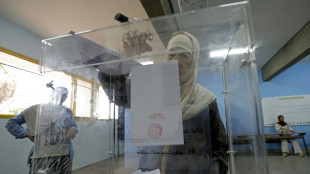 Morocco elects new parliament amid social frustration, youth discontent

 Scheffler and Burns to face Im and Lee in Presidents Cup opener

 Crushing wins for Lyon and Barca in women's Champions League

 Rio breaks record for rainiest September amid powerful El Nino

The EU on Wednesday unveiled its plan for slashing dependence on American and Asian technology, including favouring European firms in the most sensitive public contracts for cloud computing and AI.
The long-awaited "tech sovereignty" package is part of a raft of new EU rules aimed at boosting domestic manufacturing across different sectors, and catching up with rival companies in the United States and China.
But the plans risk further irking the United States, which has pushed back hard at the European Union's fines and rules in recent years against American tech companies.
The issue is existential for the EU since it is heavily reliant on foreign technology providers.
The European Commission said non-EU companies provide more than 80 percent of its digital products, services, infrastructure and intellectual property.
Brussels worries its soft underbelly has been exposed after crises over chips and rare earths with China last year, coupled with fears that President Donald Trump could one day pull the plug on US cloud computing via a "kill switch".
EU tech chief Henna Virkkunen insisted that the bloc was "not closing anyone out" but told journalists that for "very critical" sectors like defence, it was "very important" that Europeans provide the services.
This will be done through a scheme with four levels that range from a general obligation to keep data in Europe to stricter requirements in the most sensitive areas, such as security and defence.
"We cannot afford to depend on others for the technologies that keep our hospitals running, our energy grids stable and our services secure," EU chief Ursula von der Leyen said.
- US cloud domination -
The package includes:
-- a new law on cloud computing and artificial intelligence to encourage the construction of data centres in the EU;
-- boosting the demand for European-made semiconductors with a new chips law;
-- a push for the public sector to use more open-source software solutions that ensure greater control and flexibility, and avoid being locked in.
The EU is estimated to spend 264 billion euros ($307 billion) annually on US cloud software, according to a 2025 report by the French consultancy Asteres.
The sovereignty push is partly fuelled by worries over Europeans' data, since the Trump-era 2018 Cloud Act allows Washington to demand access to data from US-based providers regardless of where the information is held.
Brussels hopes the rules will triple the bloc's data centre capacity in the next five to seven years, but vowed to establish a rating scheme to ensure they are integrated into the energy system in Europe in a "sustainable" manner.
- US firms will remain 'dominant' -
There are fears the new rules could provoke retaliation by Trump. But an EU lawmaker who has worked closely on tech sovereignty told reporters Tuesday that Europe "should not bow down to pressure".
"We set our rules in Europe, according to the needs and the demands of the European citizens," said Matthias Ecke of the Socialists and Democrats, though he expects US providers to remain "dominant" despite the EU push.
Brussels is making clear its determination.
The European Commission said last week it wants to reserve for European firms a share of the mobile satellite frequencies currently used by US operators.
The latest moves reflect a change in Brussels, beyond just regulating Big Tech towards actively favouring European technology.
In the latest example, the European Parliament said France's Qwant would become the default search engine on its Microsoft Edge and Mozilla Firefox browsers from Thursday as part of its effort to cut reliance on foreign digital tools.
Chips, cloud computing and AI "are the nervous system of the modern economy", powering everything from defence to healthcare, EU lawmaker Oliver Schenk said.
"Europe therefore cannot afford to remain merely a consumer of critical technologies developed elsewhere," the conservative MEP told AFP.
M.Vogt--VB