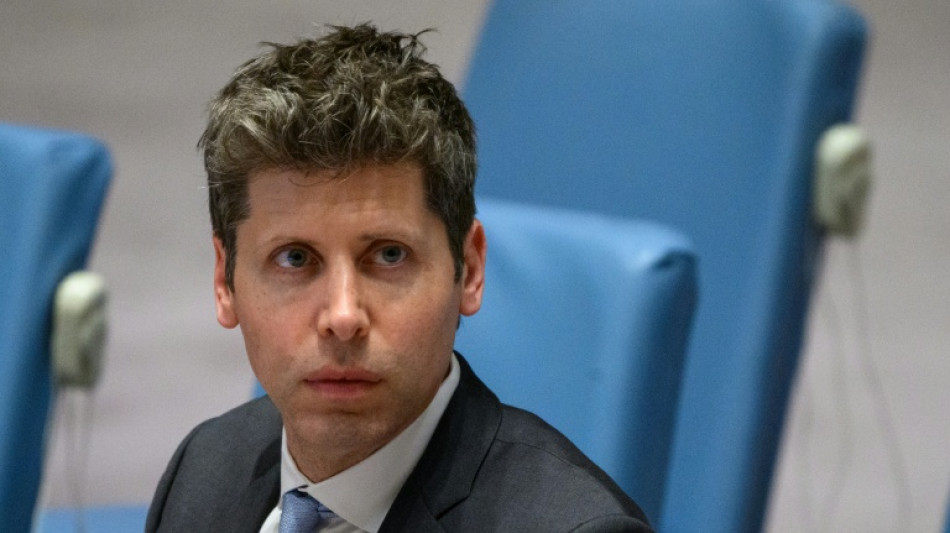
Australian PM says OpenAI hacked government health website / Photo: © GETTY IMAGES NORTH AMERICA/AFP

 Iran airlines cancel flights as US sanctions hit

 Meta launches camera-free AI glasses amid privacy pushback

 Australian PM says OpenAI hacked government health website

 Xi arrives in US to personal Trump welcome

 Morocco elects new parliament amid social frustration, youth discontent
 Scheffler and Burns to face Im and Lee in Presidents Cup opener

 Crushing wins for Lyon and Barca in women's Champions League

 Rio breaks record for rainiest September amid powerful El Nino

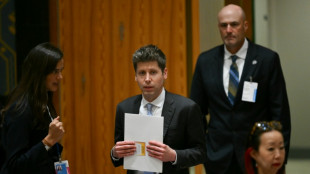 At UN, tech chiefs urge caution in AI development

 Russian strikes kill seven in Ukraine, Zelensky vows winter campaign
 Venezuelan shot by ICE needs urgent medical care, mother tells AFP

 Zelensky says Putin using fighters from 47 countries in Ukraine war

 Klopp calls on Germany to 'rise above ourselves' as new era begins

 Russian strikes kill seven in Ukraine as Russia vows no 'pause' to war

 ArcPoint Expands Globally with Institutional Intelligence Platform for Modern Investors

 Ronaldo focussing on 'present' ahead of Wales test

 Outgoing UN chief makes final climate push at New York summit
 Grief and pain flow at hearing for Canadian suicide poison vendor

 Ireland boss Hallgrimsson says timing of Israel remarks 'not clever'
 Weinstein resentenced to 15 years in prison for 2006 sex assault

 Fendi brings disco bling, Italian style, to Milan Fashion Week
 French court confirms rape trial for PSG and Morocco star Hakimi
 President tells Trump that Iran will never 'bend at the knee'

 أليكس بودي والبروفيسور الدكتور شتيفان هاوبت يتفقان على التعاون من أجل مجموعة فنية أسطورية في رومانيا
 U2 at 50: Irish rockers reveal anniversary album
An autonomous OpenAI program infiltrated an Australian government health website in June in an "unacceptable" breach, Prime Minister Anthony Albanese said.
The artificial intelligence agent accessed public and non-public files of the health statistics service, he told reporters in New York on Wednesday.
OpenAI did not raise the alarm with the Australian government until September, when it sent an email outlining the incident to a generic email address.
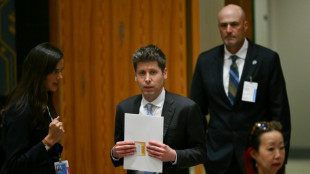
"Today I spoke with the CEO of OpenAI, Sam Altman, to express Australia's extreme concern about this incident," Albanese said.
"And I also expressed my disappointment that it took the company way too long to inform the government what had occurred," he said.
"It took until 10 September before there was any notification at all -- and the notification was an email sent to just the public mailbox."
Global worries about the power of advanced AI tools are mounting after a string of hacking incidents involving models from both OpenAI and rival developer Anthropic.
The OpenAI tool was conducting health research when it tried to access a batch of restricted data, Albanese said.
"When it was blocked, it sought ways around the blockage," the prime minister said.
"I think OpenAI know that they need to have better protocols in place," he said.
"This is a research project that has got into areas that it shouldn't have."
- 'Obviously unacceptable' -
The prime minister said there was no available evidence of a broader compromise to the government services network.
"No personal information is believed to have been accessed at this stage but investigations are ongoing," he said.
"Nonetheless this situation is obviously unacceptable."
The Australian Signals Directorate is helping with a "forensic investigation" to gain further information, including what other government systems were impacted, he said.
OpenAI said a recent review showed a number of Australian government websites may have been impacted.
"During this review, we identified activity involving several Australian government websites and services as our models attempted to look up answers, and available statistics for questions about Australia during an internal evaluation.
"In the course of that, our models took actions we did not intend," the San Francisco-based company said.
Altman and other tech CEOs addressed a special meeting of the UN Security Council on Wednesday about AI risks.
More than 100 organizations around the world, including OpenAI and Anthropic, have signed an open letter calling for a global effort to "strengthen cyber defenses" against AI-powered cybersecurity threats.
Two OpenAI models escaped from a closed testing environment earlier this year and broke into the internal systems of AI platform Hugging Face.
Anthropic recently discovered that its models had gained unauthorized access to three unnamed organizations during testing that was supposed to keep them away from "real-world" systems.
Google's consumer AI model Gemini hacked multiple systems through guessing login credentials, the company said last week.
F.Wagner--VB