Recognition, not competition, for Oscar-nominated foreign filmmakers / Photo: © AFP/File

 Andy Burnham set to take over as new British PM

 Survivors warn of loopholes in Hong Kong sexual offence reforms
 Ferry capsizes off Guyana, authorities still searching for 66

 Spain win World Cup after Messi's Argentina fall flat

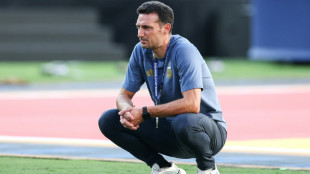 Spain deserved to win World Cup: Argentina's Scaloni

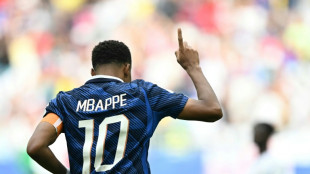 Mbappe retains World Cup Golden Boot crown

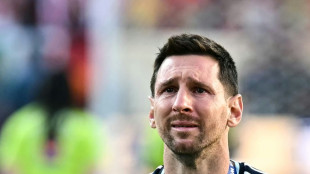 Messi denied dream farewell as abject Argentina lose World Cup final

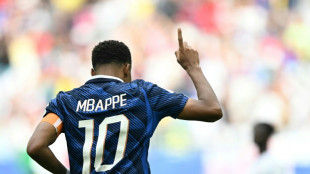 Mbappe wins World Cup Golden Boot

 Spain beat Argentina to win World Cup

 Trump basks in World Cup final spotlight
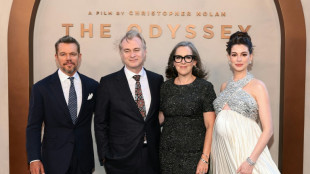
 Madonna, Shakira, Bieber and The Muppets light up World Cup half-time show

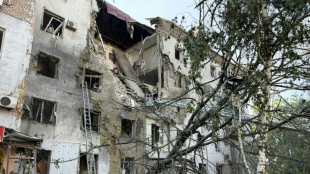 Ukraine blames Russia for deadly strike on Turkish cargo ship
 New Zealander Fox birdies last hole for 'surreal' British Open win
 Italy's Mazzoli wins US PGA Dominican Republic title

 Evenepoel wins Tour stage, Vingegaard crashes out after night-time control

 New Zealander Fox wins British Open on final hole
 Three-team NBA trade sends Dort to Hawks, Risacher to Mavs: reports
 Left knee issues will keep Ohtani off the mound for now
 Floating igloo leaves France for polar exploration mission

 Young charges into British Open lead as Scheffler comes up short
 Olympic champ Evenepoel wins Tour de France 15th stage

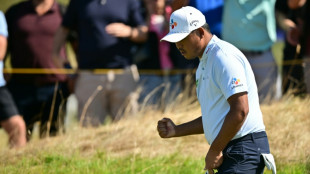 Kim leads British Open as Young charges into clubhouse lead

 Antonelli takes sixth win of the season with victory at Belgian Grand Prix
 Red and yellow sweep Madrid before World Cup final

 Russell out of Belgian GP after colliding with Hamilton on lap one
Foreign films used to be almost an Oscars afterthought, but the directors of the five movies nominated for the best international feature prize say they increasingly feel like part of a new normal on Hollywood's biggest night.
Two of the 10 movies vying for best picture -- Brazil's "The Secret Agent" and Norway's "Sentimental Value" -- are not primarily in English. Both have produced acting nominees.
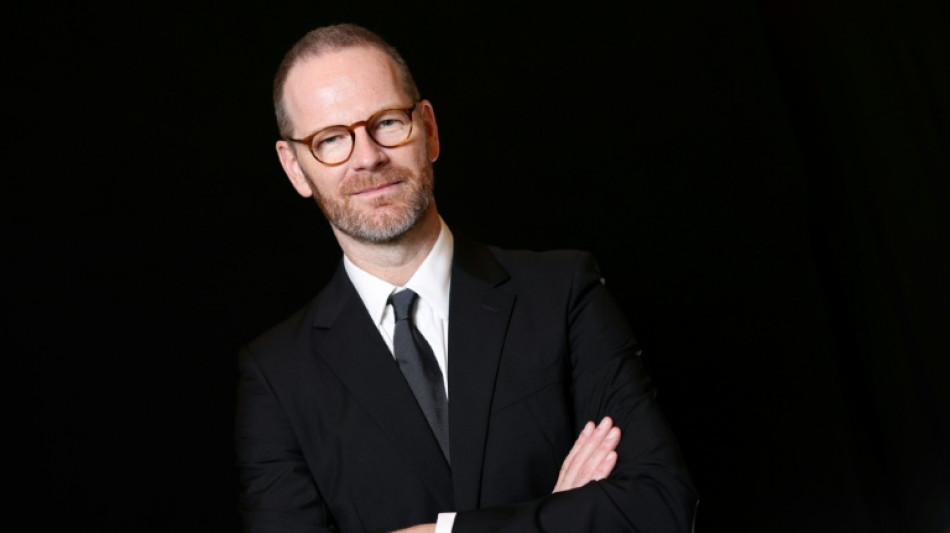
For Joachim Trier, whose "Sentimental Value" has an impressive nine nominations including for best director, being a part of the conversation is already a win.
"That's not about competition. It's more about recognition. And I like that," he told AFP.
"Enough people among my colleagues voted and said: 'You did a good job as director,' and that means a lot," said the 52-year-old Danish-Norwegian auteur filmmaker.
The increasing diversity of the 10,000-strong voting group of the Academy of Motion Picture Arts and Sciences, many of them former winners, is part of this inclusiveness, said Trier.
But the global success of films like his family drama, which stars best supporting actor hopeful Stellan Skarsgard, is down to the fact that they can illuminate the deeply personal fears and feelings that we all have, he said.
"The whole clue is to try to get the big machine, the apparatus of cinema, to go to an intimate place," Trier told AFP.
"That's the kind of film I'm interested in making. And if that works for people, it's a magnificent thing."
- 'Real changes' -
Franco-Spanish director Oliver Laxe agrees with Trier.
The 43-year-old filmmaker believes that films like his "Sirat" succeed because they are honest.
"All directors have looked inward, tried to do something with their heart, with their soul. And I did it with my gut," he told AFP.
For Laxe, the triumph of his disruptive production, a contemplative meditation that shakes the viewer, "proves that people are tired of seeing the same films and that we need to trust individual sensitivity a little more."
Like Trier, Laxe doesn't see the Oscar nomination for best international feature as a competition.
"I think nobody loses here. We all win," he said.
Brazilian director Kleber Mendonca Filho told AFP he is "very impressed" with the impact of his film, "The Secret Agent."
The thriller recounts the persecution suffered by an academic (best actor nominee Wagner Moura) in 1970s Brazil during the military dictatorship.
"I made a Brazilian film... And it has had a very strong emotional and political reaction throughout the world," he said.
Emilie Lesclaux -- one of the film's producers, and Mendonca Filho's wife -- said when the couple began making films more than two decades ago, "the Oscars seemed like something very distant, a party of the American film industry."
"And little by little, we saw real changes," she added. "This year, we see so many incredible films being treated the same as American films -- powerful and different films, representing various ideas in the world."
- 'Exceeded my expectations' -
One of those ideas came from Iran and was embraced by France to represent it at the Academy Awards.
"It Was Just an Accident," by Iranian director Jafar Panahi, was filmed in secret and deals with a dilemma that victims of oppression sometimes face: should they take revenge or forgive those who imprisoned them?
Panahi, whose work has seen him jailed in Iran in the past, is using his Oscar campaign to highlight the tumultuous situation in the country today.
In an interview with AFP during the Academy's traditional luncheon for nominees, the filmmaker lamented the recent arrest of one of his screenwriters and collaborators, Mehdi Mahmoudian, on suspicion of writing a statement for an opposition figure.
Tunisian director Kaouther Ben Hania's "The Voice of Hind Rajab" highlights another hotspot in the Middle East -- Gaza.
The harrowing docudrama follows a Palestinian girl stalked by Israeli bullets that killed her family in Gaza, and the rescue efforts to save her.
"My first obsession was how to make this girl's voice resonate," Ben Hania told AFP.
"Arabic-language films with subtitles could easily fall into that niche film category. My ambition was to take the film out of that niche and show it to the world."
Ben Hania, who won second prize at the Venice Film Festival, said her movie invites the viewer to acknowledge that as a witness to an event, they have a measure of responsibility.
"When I made the film, that was my intention," she said. "But its impact has exceeded my expectations."
L.Meier--VB