Hungarian star composer Kurtag celebrates 100th birthday with new opera / Photo: © AFP

 US accuses Cuba of sweeping spy campaign, aiding American left

 US stocks drop on latest Middle East fighting, tech earnings caution

 Louvre heist gallery to reopen to public on Wednesday

 World Cup champs Spain lap up adulation of a million on bus parade

 Canada faces one of its most intense fire seasons

 Mexican drug lord 'El Mayo' sentenced to life in US prison
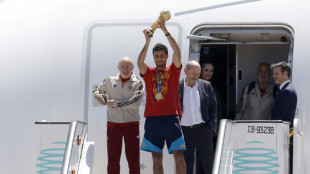 Spanish king hails World Cup heroes as celebration tour begins

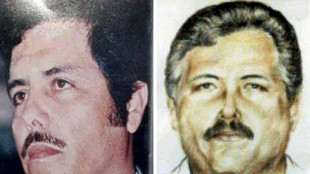 Mexican drug lord 'El Mayo' sentenced to life in prison
 Leasing firm SMBC orders 200 planes from Airbus and Boeing

 Zelensky faces deepening political crisis as protests dig in
 'Legendary' former Liverpool and England star Keegan dies aged 75
 Former Liverpool and England star Kevin Keegan dies aged 75

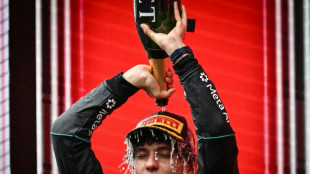 Three things we learned from the Belgian Grand Prix

 Without Messi, Argentine team set for low-key homecoming
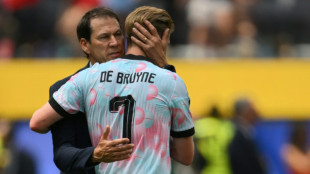 Garcia departure leaves Belgium facing 'generational change'

 Scars of war linger on Syria's Saint Simeon monastery
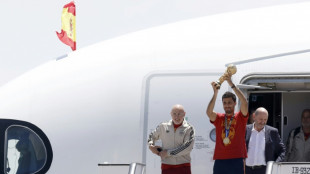 Plane carrying Spain's World Cup winning team lands in Madrid

 MEXC Launches 0-Fee Stock Futures Campaign With $5,000,000 SNDK Prize Pool

 Iran says fighting 'full-scale war' with US
 Swiss researchers hoard vast trove of NASA climate data

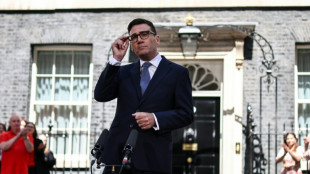
 Starmer 'proud' of achievements as Andy Burnham set to become new UK PM

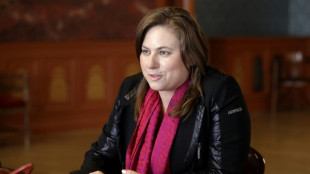
 Hungary PM proposes chess great Judit Polgar for president

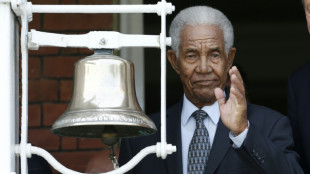 Lara calls for celebration of 'father figure' Sobers

 Madrid awaits triumphant return of Spain's World Cup heroes

 Superb Spain worthy winners of World Cup dominated by superstar names

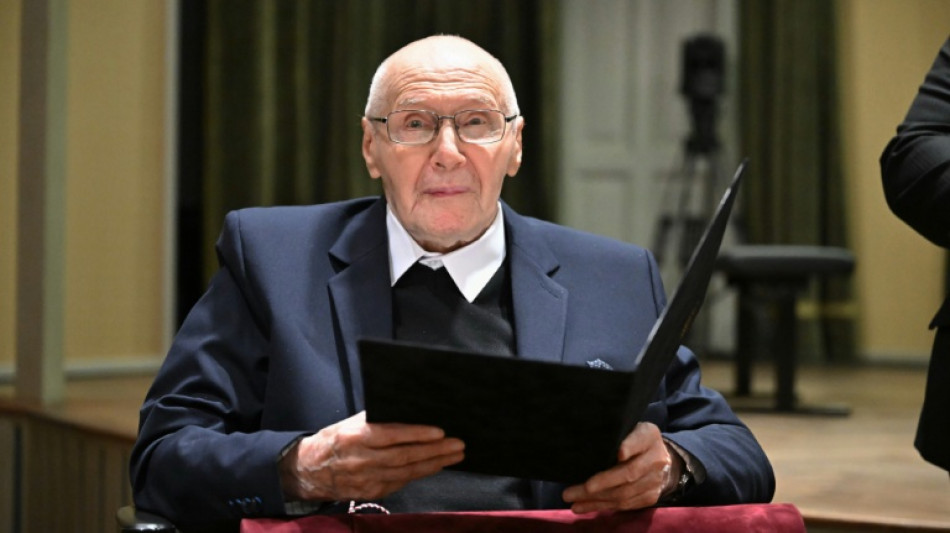
As Hungarian Gyorgy Kurtag, who is widely considered one of the greatest living classical composers, turns 100 on Thursday, he will offer a one-of-a-kind birthday gift to music lovers: a brand-new opera.
In recent weeks, people across the globe have paid tribute to the star composer, with Budapest marking his centennial with special events, concerts and documentaries.
Later this month, the world premiere of Kurtag's second opera "Die Stechardin" about the 18th-century love story of a German polymath and a flower girl will cap the centenary of his birth.
In a rare interview with a Hungarian weekly in 2017, Kurtag confided that composing can sometimes be "painful".
But despite being confined to a wheelchair and suffering a loss of hearing, Kurtag has lost none of his intellectual vibrancy or passion for music, according to those close to him.
"He doesn't hear so well anymore. But in return, he feels even more, he perceives even more from the world and from music," Concerto Budapest conductor Andras Keller told AFP during a rehearsal of Kurtag's new one-act opera earlier this month.
When his wife, pianist Marta Kurtag, who was also a close artistic partner, died in 2019, "everyone was scared about what would happen next", said Laszlo Goz, director of Budapest Music Center, where Kurtag now resides.
But Kurtag resumed composing, "writing increasingly larger and more complex pieces".
"He began teaching again, and now he has written his second opera, which is a kind of message to his wife, Marta," Goz said.
Born on 19 February, 1926, in the Romanian city of Lugoj to ethnic Hungarian parents, Kurtag started playing the piano as a young boy.
After taking piano and composition lessons as a teenager in Timisoara, he eventually moved to Budapest in 1946, where he began his studies at the Franz Liszt Academy of Music.
While studying, he met fellow composer Gyorgy Sandor Ligeti.
He graduated in piano and chamber music in 1951, and later in composition, before pursuing his studies in Paris for a year.
Over the decades, the award-winning musician became famous for composing short yet highly complex pieces, and only turning to opera late in life.
- 'Master of miniature forms' -
Throughout his career, Kurtag drew inspiration from literature and the works of famous compatriots like Bela Bartok. But despite his success, he was not immune to suffering from writer's block.
After returning to Hungary, in 1960 he became a repetiteur with the Budapest Philharmonic Society, and would later teach piano and chamber music at his alma mater.
At age 92, his first opera "Fin de partie" premiered at Milan's famous La Scala in late 2018.
Based on Irish writer Samuel Beckett's play "Endgame", and more than seven years in the making, Kurtag and his wife did not attend the premiere due to their advanced age and instead opted for the radio broadcast.
Like Beckett, who lived and died in Paris, Kurtag also has a passion for the French language.
The musician and his wife settled near Bordeaux in France in the mid-1990s before moving back to Hungary in 2015.
Kurtag's "music glows with such intensity, even in its quietest, most refined moments," said music historian Gergely Fazekas.
His music "strives with such force to discover what reality is... what is unspoken but still there," Fazekas told AFP during a ceremony in early February at the Liszt Academy, where the composer received an honorary doctorate and led a rehearsal of his new opera.
He said Kurtag is widely referred to as "the master of miniature forms", as many of his pieces "capture only a few minutes or even less period of time from eternity".
J.Marty--VB