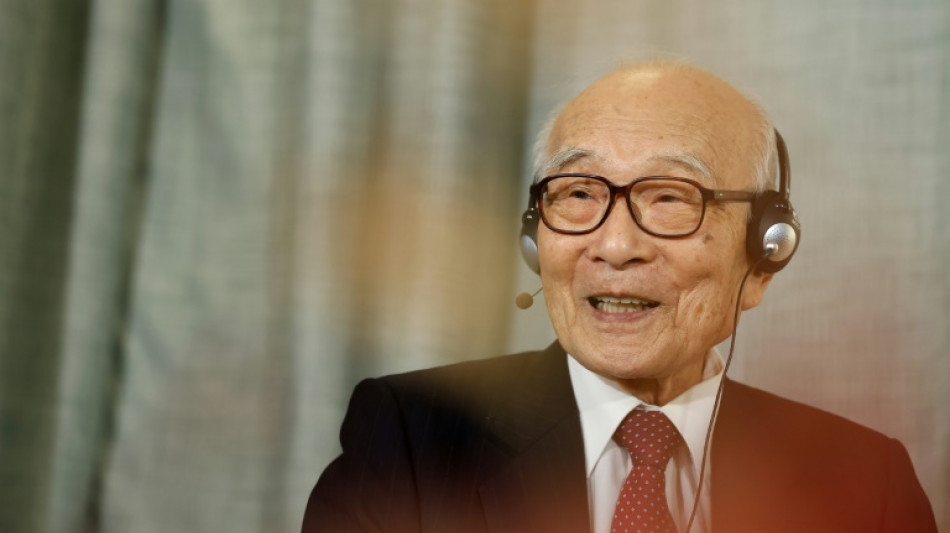
Japan's atomic bomb survivors to accept Nobel Prize in Oslo / Photo: © AFP

 USA and France ease into women's Basketball World Cup semis

 ECB lifts borrowing costs amid energy shock, opens door for more hikes

 France defeat China to reach women's basketball World Cup semis
 Tribal Launches Campfire, Letting Business and Technical Teams Build on Salesforce Together

 Yemen's Houthis seize key city on Red Sea
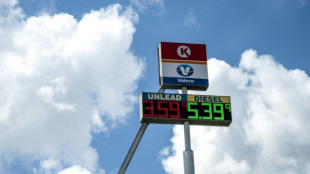 US producer inflation tops expectations as diesel costs jump
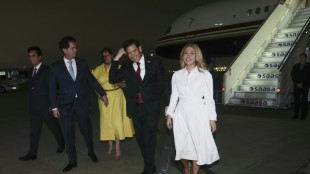 Rubio ends South America swing with Peru security talks
 Defiant Iran seeks to bruise Trump ahead of midterms

 France withdraws support for Infantino in FIFA presidential election
 Evolution Metals & Technologies Provides Initial Revenue Guidance of $400-460mm for Fiscal Year 2027
 Clark-led USA thrash Hungary to move into women's World Cup semi-finals

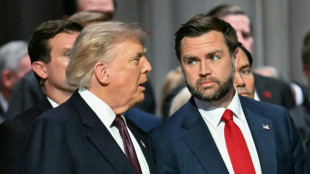 Vance takes spotlight as Republicans close Trump-heavy convention
 Russian skater Valieva loses neutral status
 Will Israel's right exploit sanctions in run-up to vote?
 'Metal Gear' creator moves to Xbox after Playstation cancellation

 Indonesia rescues six orangutans from fires in a week

 Macron urges Europe to develop 'crewed spaceflight' programme
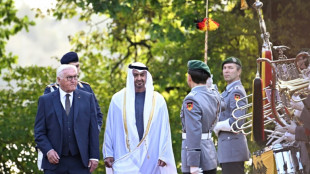 Deals worth billions to be signed as UAE leader visits Germany
 Alessio Vinassa Unveils an Emerging Technology Investment Approach Shaped by Financial Challenges

 Sri Lanka court revokes monk's pardon, orders return to prison
 'Hopeless, stuck, afraid': US deportees in limbo in Cameroon
 Mount Fuji ends hiking season with landslide, two rescues

 Seahawks beat Patriots again in NFL opener
 Asian Games begin with Qatar basketball win, nine days before opening ceremony
 Stocks sink as oil rally fans inflation and rate hike fears
This year's Nobel Peace Prize will be presented Tuesday to Japan's atomic bomb survivors' group Nihon Hidankyo, which lobbies against the weapons now resurging as a threat 80 years after the Hiroshima and Nagasaki bombings.
The three co-chairs of Nihon Hidankyo will accept the prestigious award during a ceremony starting at 1:00 pm (1200 GMT) in Oslo's City Hall, at a time when states like Russia increasingly threaten to break the international taboo on the use of nuclear arms.
"Nuclear weapons and humanity cannot co-exist," one of the three co-chairs, Terumi Tanaka, told a press conference on Monday in the Norwegian capital.
"Humanity may come to its end even before climate change brings its devastating impacts," the 92-year-old said.
Nihon Hidankyo works tirelessly to rid the planet of the weapons of mass destruction, with testimonies from survivors of Hiroshima and Nagasaki, known as "hibakusha".
Around 140,000 people were killed in Hiroshima when the United States detonated an atomic bomb over the Japanese city on August 6, 1945.
A further 74,000 were killed by a US nuclear bomb in Nagasaki three days later.
Survivors suffered from radiation sickness and longer-term effects, including elevated risks of cancer.
The bombings, the only times nuclear weapons have been used in history, were the final blow to imperial Japan and its brutal rampage across Asia. It surrendered on August 15, 1945.
Tanaka was 13 when the bomb was dropped on Nagasaki, killing five members of his family.
On Monday, he expressed alarm at the resurgence of nuclear threats and urged Russian President Vladimir Putin to stop brandishing the threat to prevail in the war in Ukraine.
"President Putin, I don't think he truly understands what nuclear weapons are for human beings," he said.
"I don't think he has even thought about this."
- Firing signals -
Putin began making nuclear threats shortly after Russia's full-scale invasion of Ukraine in February 2022. He signed a decree in late November lowering the threshold for using atomic weapons.
Russia has the largest nuclear arsenal in the world.
On November 21, Moscow fired its new Oreshnik hypersonic missile on the Ukrainian city of Dnipro in an escalation of the almost three-year war.
The missile is designed to be equipped with a nuclear warhead, but was not in this case.
Russian Foreign Minister Sergei Lavrov said Thursday that Moscow was ready to use "any means" to defend itself.
"It is crucial for humanity to uphold the nuclear taboo, to stigmatise these weapons as morally unacceptable," the chairman of the Norwegian Nobel Committee, Jorgen Watne Frydnes, said on Monday.
"To threaten with them is one way of reducing the significance of the taboo, and it should not be done," he added.
"And of course, to use them should never be done ever again by any nation on Earth."
North Korea, which has increased its ballistic missile tests, and Iran, which is suspected of developing nuclear weapons though it denies this, are also seen as posing a threat to the West.
Nine countries now have nuclear weapons: Britain, China, France, India, North Korea, Pakistan, Russia, the United States, and, unofficially, Israel.
In 2017, 122 governments negotiated and adopted the historic UN Treaty on the Prohibition of Nuclear Weapons (TPNW), but the text is considered largely symbolic as no nuclear power has signed it.
This year's Nobel prizes in the other disciplines -- medicine, physics, chemistry, literature and economics -- will be awarded at a separate ceremony in Stockholm.
D.Schaer--VB