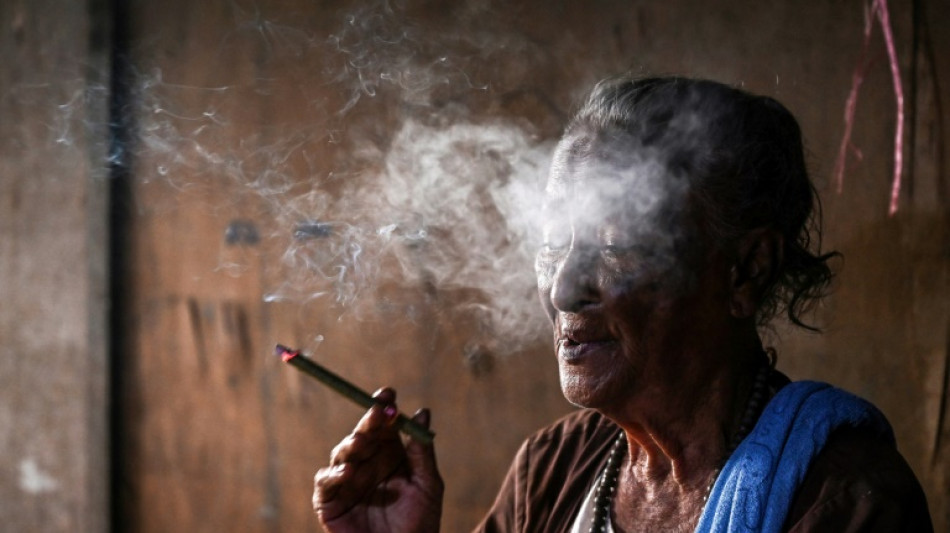
The Burmese barmaid who nabbed a North Korean assassin / Photo: © AFP

 US imposes new tariffs on 60 partners as Trump rebuilds trade agenda
 Stocks suffer fresh blow as markets hit by perfect storm
 Trump under pressure from all sides over Chinese AI surge

 ICC member states decide fate of embattled prosecutor Karim Khan
 Dodgers return to Trump White House despite fan anger

 Lyles, Richardson ease into 100m semis at US athletics championships
 Salman Rushdie testifies at knife attacker's US terror trial

 World Bank confirms plan to phase out China lending by 2031

 US panel backs trendy peptides despite safety concerns

 Justice Dept withdraws NY Times subpoenas over Trump plane report

 Barcelona's De Jong returns from World Cup with torn ligament
 Albania police teargas protesters against Trump-linked resort

 US panel says to loosen restrictions on popular peptide despite safety concerns

 Verstappen swerves around future questions
 EU renews online child sex abuse detection powers

 Airbus, Boeing fly in different directions at Farnborough

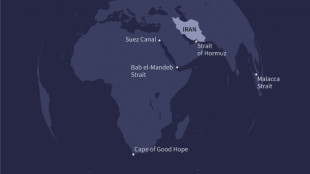 Bab al-Mandeb Strait: another key oil shipping route under threat
 Deadly wildfires in Europe force thousands to flee

 NATO to overhaul European fuel pipeline network

 US trade envoy to make tariff announcement as 10% duty soon expires

 Trump stuns Saudis by pinning nuclear deal to Israel ties

 Tough day for Ubisoft stock topped with weaker revenues
 Swelling jet fuel costs hit American Airlines outlook
 Carapaz climbs unopposed to Tour de France 18th stage win

 Sooryavanshi hits maiden 50 as India thump Zimbabwe in T20
Forty years ago, Myanmar barmaid Dar San Ye stood in a river running through Yangon, squaring up to a North Korean agent gripping a live grenade.
Hours earlier on October 9, 1983, a huge explosion had shattered the peace of the capital city as a Pyongyang hit team detonated bombs to try to assassinate visiting South Korean president Chun Doo-Hwan.
Seventeen Korean officials, including the foreign minister, and four Burmese nationals died when the blast ripped through a mausoleum housing the remains of Myanmar's founding father and independence hero Aung San.
President Chun himself was not there, however, having been delayed at a previous engagement.
The bombers fled the scene, with Yangon plunged into chaos.
Now 87 years old, she spoke to AFP in her home on the outskirts of the city, recalling her role in the drama as she puffed on a cigar.
"I heard the Martyrs' Mausoleum had been blown up by some foreigners," she said.
Customers in her bar on the banks of the Pazundaung River could talk of little else, she said.
"I asked people if they (the attackers) had been captured... They said no," she recalled.
"I told them the bombers will be captured later because we are Buddhist Myanmar and our good spirits will guard us."
Little did she know she would be the one to do it.
- 'I punched him' -
Dar San Ye finished her shift and returned home as evening began to fall, with the city still on edge and a hunt for the perpetrators under way.
Suddenly, she heard shouts that there was a thief in the river. She rushed out and saw a crowd of around a hundred people gathered on the bank.
Pausing only to hitch up her nightdress, she waded in, not quite sure who the man in the water was.
"The guy was standing waist-deep in water," she said. "I called him: 'Come here! Come here!'"
"He just stared at me. I realised he wouldn't understand Burmese. I remembered an English phrase that I used to use to make fun of English people.
"I asked him: 'Are you my friend?'"
Desperate for sympathy as he found himself surrounded, he replied: "Yes, yes! Are you Chinese?"
The barmaid recalled that he then reached out to try to shake her hand.
But when three men from the crowd joined in to help Dar San Ye, he began to fight back, pushing her and the others away and running to the end of a pier.
There he took out a grenade and pulled the pin, but it failed to detonate fully.
"His left hand was blown off. On his right hand, four fingers were blown off and only the thumb remained," she said.
"After that, he jumped into the water again and I also jumped in... When he appeared above the water again, I punched him in the neck."
- Hanged after trial -
The agent, Kim Jin-su, was one of the three-man hit team.
Thanks to Dar San Ye, he was captured by authorities. He refused to cooperate with interrogators and was hanged after a trial.
The two other assassins, Shin Ki-chol and Kang Min-chol, were tracked down by security forces just outside Yangon.
Shin died in the ensuing firefight but Kang was captured alive and sentenced to life in prison after confessing.
He died there after almost 25 years behind bars.
A CIA report said there was "very strong circumstantial evidence" linking Pyongyang to the mausoleum bombing.
It said alleged North Korean agents had used similar radio-detonated explosives in a 1970 plot to kill then-president Park Chung Hee as he visited a cemetery in Seoul.
A delegation from Pyongyang had also visited the mausoleum less than two months before -- "an excellent opportunity to survey the scene and plan an operation".
A North Korean ship unloading aid equipment in Yangon port two weeks earlier "would be consistent with the dispatch of an agent team," it said.
A court in Myanmar -- then called Burma -- ruled that the attack was "the work of saboteurs acting under instructions of the Democratic People's Republic of Korea."
Its then junta cut off diplomatic ties with Pyongyang that were not restored until more than 20 years later.
- Well-known figure -
Shortly after the bombing Dar San Ye and the three men who helped her were feted at a government ceremony and given clothes and money in compensation.
"Since then, they have never come to see me," she said, with a copy of a faded and creased "Record of Honour" certificate all she has left to link her to the day.
Myanmar re-established ties with North Korea in 2007, when both countries were under a slew of Western sanctions and branded "outposts of tyranny" by the United States.
Under the current junta, the rebuilt Martyr's Mausoleum is all but closed off -- barring select diplomats invited to pay their respects to Myanmar's independence hero.
Dar San Ye is a well-known figure in Yangon, and has been the subject of several documentaries and feature articles in Myanmar media.
But with most of her family dead and little other support she lives off donations from charitable neighbours that come to around 30,000-40,000 kyat ($15-19) per day.
She has no regrets about the risk she took in the river that day.
"I tried to catch him just for my country. Once, our General Aung San was assassinated. Then his grave was destroyed again. So I went down to catch him."
"I can't let them insult my country."
B.Baumann--VB