Canada holds key rate steady, says will act if war inflation persists / Photo: © AFP

 Wellalage and Mendis star as Sri Lanka level England ODI series
 Guyana urges Venezuela at UN to respect ICJ's ruling on Essequibo region

 Argentina coach says Messi deserves to go out on own terms
 Xi sets red lines for Trump despite lavish White House welcome

 Cowboys, Ravens happy with footing for first Rio NFL clash
 Starbucks to close 250 more cafes in North America

 French actress Marina Vlady dies at 88

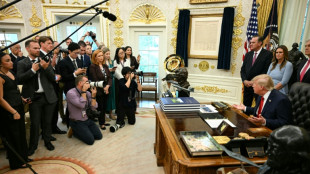 CNN, MS NOW, Politico allowed back in White House after judge's order
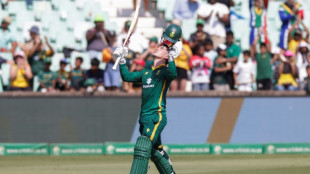
 Morocco's ruling coalition dominates low-turnout parliament election
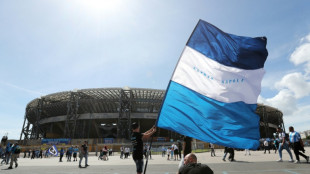 Napoli hoping to build new stadium, says owner

 What's behind the Pakistani strikes on Afghanistan?
 Hundreds protest for return of Nobel peace laureate Machado to Venezuela

 Aubameyang to miss two months for Deportivo after knee surgery

 Newsom says Trump presidency 'as we know it' ends in November

 Stocks fall as oil prices rise and bonds back under pressure
 Russell leads Mercedes 1-2 in Azerbaijan GP practice

 Ukrainian kills priest, wounds four at Polish abbey
 Sri Lanka captain Mendis hits century in 321-6 against England

 Oscar-winner Cotillard fears being moved by AI actor
 Agassi demands proper break for exhausted tennis stars

 Seixas 'crushes' teammates in training to draw Pogacar comparisons
 Trump welcomes Xi to White House, touting agreement on AI

 Stocks fall, oil prices rise as global bonds back under pressure
 UK man died putting women, children first in Mozambique jihadist siege: coroner

 Russell leads Mercedes 1-2 at Azerbaijan GP practice
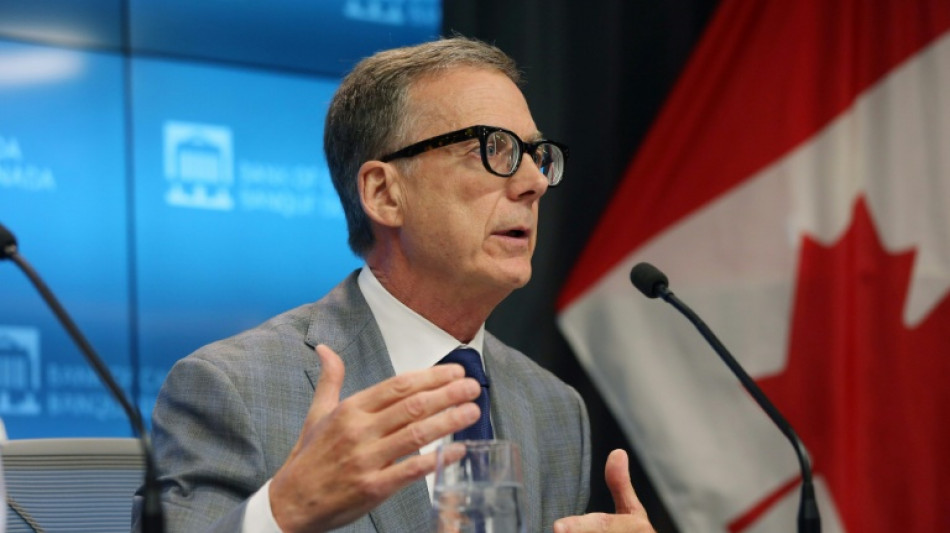
Canada's central bank held its key lending rate at 2.25 percent on Wednesday, but warned it may need to act if inflation caused by the Middle East war persists.
The fallout from the US‑Israeli strikes on Iran has sent energy prices soaring. The impacts in Canada, a net oil exporter, have been more muted than in other regions, but prices at the pump are shooting up.
The Bank of Canada said it would continue "looking through the war's immediate impact on inflation," and would not raise rates in response to temporary oil price shocks.
But it added that it "will not let higher energy prices become persistent inflation," and said it was "ready to respond as needed."
Bank of Canada Governor Tiff Macklem told reporters: "The higher oil prices go, and the longer they're higher, the more likely it is that we'll have to raise rates."
But, he added, the bank's baseline forecast is that oil prices will come down. He said the bank will be closely watching to see if elevated energy costs trigger higher prices on other goods.
- Tariff uncertainty -
The rate pause marks the fourth consecutive hold for Canada's central bank, which has previously said it wants to stay on the sidelines for as long as possible while uncertainty hovers over the key forces shaping the economy.
Prior to the Middle East war, the main source of uncertainty was the future trading relationship with the United States.
President Donald Trump's sector-specific tariffs have hurt crucial parts of Canada's economy, particularly the auto, steel and aluminum sectors.
But more than 85 percent of cross-border trade has remained tariff-free thanks to the existing North American free trade agreement.
Revision talks on that deal are set to intensify. Trump has said the agreement is "irrelevant" to the United States.
His top trade officials have made clear that Washington wants substantial changes to the agreement that Trump signed and praised during his first term.
Canadian Prime Minister Mark Carney has said the United States will not dictate the terms of a new agreement.
Macklem said "uncertainty is unusually elevated," and that a deterioration in trade relations with the United States could force a rate cut.
"Monetary policy may need to be nimble. If the United States imposes significant new trade restrictions on Canada, we may need to cut the policy rate further to support economic growth," he told reporters in Ottawa.
CIBC said in a note that the central bank faces a "two-way risk" — an economy facing inflation pressure because of the war while also confronting "sluggish growth" that could soften further if trade with the United States faces additional levies.
M.Betschart--VB