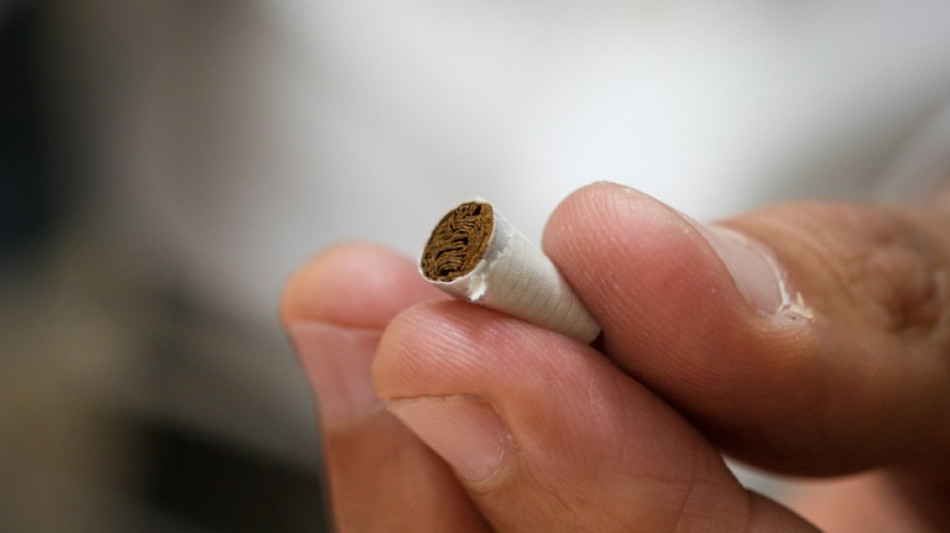
Swiss vote on banning tobacco advertising, animal testing / Photo: ©

 UK set for cautious budget as borrowing costs climb
 Anthropic's record IPO faces some big questions

 US Fed expected to hold rates steady ahead of key midterm elections

 Can this Latin Grammy-winner help Democrats win back Congress?

 Tuvalu has 'limited' power to halt its fossil fuel investments: NZ govt papers seen by AFP
 Palestinian activist Khalil returns to Columbia after US detention

 Trump drastically loosens oil and gas methane rules
 French Senate weighs bill to make protesters pay for unrest damage
 'A very sad day': Arteta despair as Arsenal stunned by Fleetwood

 Charles tackles thorny legacy of slavery on Caribbean trip

 Former Grand Slam winner Wawrinka ends tennis career

 Brazil's Flavio Bolsonaro flees to US after election loss

 'Faerie' nights: 'ACOTAR' fans finally get their book

 American woman convicted of getting military training from Islamic State

 Israel opposition holds narrow edge over Netanyahu in first projections

 Floriani hits maiden goal as Lazio go top

 Trump set to drastically loosen oil and gas sector's methane rules

 Storied Paris department store seeks bankruptcy protection
 Xhaka, Embolo can return to Swiss squad after fake Covid docs affair
 Allegri suspended for two Serie A games after red card

 Flight data, satellite images reveal growing US role at Ecuador base
 McInnes feels 'guilt' ahead of Hearts return with Rangers

 Brazil's Lula turns 81, vows to work '24 hours a day'

 Boeing releases cautious growth plan as shares fall sharply
 Exiled Russian dissident Navalnaya warns dictators becoming 'more cunning'

The Swiss head to the polls Sunday to decide whether to ban almost all advertising of tobacco products and separately on a blanket ban on all animal testing.
In-person voting on those and other topics will begin at 10:00 am (0900 GMT) as part of Switzerland's direct democracy system, although most people vote in advance by post.
Recent polls indicate that the initiative to tighten Switzerland's notoriously lax tobacco laws by banning all advertising of the health-hazardous products wherever minors might see it -- effectively all settings -- is the most likely to pass.
Switzerland lags far behind most wealthy nations in restricting tobacco advertising -- a situation widely blamed on hefty lobbying by some of the world's biggest tobacco companies headquartered in the country.
Currently, most tobacco advertising remains legal at a national level, except on television and radio, or ads that specifically target minors.
Some Swiss cantons have introduced stricter regional legislation and a new national law is pending, but campaigners gathered enough signatures to spur a vote towards a significantly tighter country-wide law.
- 'Extreme' -
Opponents of the initiative, which include the Swiss government and parliament, say it goes too far.
Philip Morris International (PMI), the world's largest tobacco company, which, like British American Tobacco and Japan Tobacco, is headquartered in Switzerland and which has helped fund the "No" campaign, described the initiative as "extreme".
"This is a slippery slope as far as individual freedom is concerned," a spokesman for PMI's Swiss section told AFP, warning that it "paves the way for further advertising bans on products such as alcohol or sugar".
Jean-Paul Humair, who heads a Geneva addiction prevention centre and serves as a spokesman for the "Yes" campaign, flatly rejected that comparison.
"There is no other consumer product that kills half of all users," he told AFP.
Campaigners claim lax advertising laws have stymied efforts to bring down smoking rates in the Alpine nation of 8.6 million people, where more than a quarter of adults consume tobacco products. There are around 9,500 tobacco-linked deaths each year.
The latest gfs.bern poll hinted that 63 percent of voters favoured the tobacco advertising ban, but it will also need backing from a majority of Switzerland's 26 cantons to pass.
- Animal testing -
There is meanwhile little chance that a bid to ban all animal and human testing will go through, with only a quarter of those questioned in the latest survey backing the move.
All political parties, parliament and the government oppose it, warning it goes too far and would have dire consequences for medical research.
Switzerland has since 1985 rejected three similar initiatives by large margins.
Researchers insist medical progress is impossible without experimentation, and even the Swiss Animal Protection group has warned against the initiative's "radical" demands.
Swiss authorities insist the country already has among the world's strictest laws regulating animal testing.
As the laws have tightened, the number of animals used has fallen sharply in recent decades, from nearly two million per year in the early 1980s to around 560,000 today.
In another animal-themed vote, inhabitants in the northern Basel-Stadt canton will on Sunday decide whether non-human primates should be granted some of the same basic fundamental rights as their human cousins.
Among the other issues on Sunday's slate, there will also be a national referendum on a new law aimed at providing additional state funding to media companies, which have seen their advertising revenues evaporate in recent years.
The government argues the extra funding could secure the survival of many small, regional papers in peril, and also assist with their costly digital transition.
But the latest poll indicates a win for the "No" campaign, backed by rightwing parties, who charge the subsidy would mainly benefit large media groups and would be a waste of public funds.
G.Schulte--BTB