Sci-fi without AI: Oscar nominated 'Arco' director prefers human touch / Photo: © AFP/File

 Argentina represented themselves in 'best possible way' at World Cup: Fernandez

 Philippines, China summon ambassadors over clash in disputed waters

 'White elephant': Colombia's anti-corruption activist turned senator

 Stock markets, oil prices climb

 South Africa's anti-migrant unrest sparks smalltown suspicion, fear

 Tour de France hit by new wave of anti-doping tests
 Afghans search for dozens missing after devastating flood

 Novartis says buoyed by new treatments in second quarter

 Great Barrier Reef at risk of 'collapse', scientists warn

 India's 'Cockroach' movement vows to protest until education minister resigns
 South Korea president urges regulator action on leveraged stock funds

 For Ukraine's drones, names are part of the battle
 Countries move to ban social media for children

 Asia stocks up as chip stocks recover, oil eases
 Desperate Rohingya risk deadly voyages as trafficking surges

 French lawmakers expected to approve social media ban for under-15s

 'All these rashes': chickenpox surges in Gaza camps

 Australia's Cummins, Hazlewood, Lyon back for Bangladesh Test series
 Rubio in Philippines as US condemns 'dangerous' China actions

 Unnatural physique turns Evenepoel into a Tour de France contender

 'Sit down!' Australian politician berates dog on live TV

 Argentina squad returns, without Messi, after World Cup final loss

 New strikes as Trump warns Iran will pay for US troop deaths

 Spain stars lap up adulation of estimated two million on World Cup parade
 Business of Dance Mentees and Enola Bedard Join Shakira for the FIFA World Cup Halftime Show

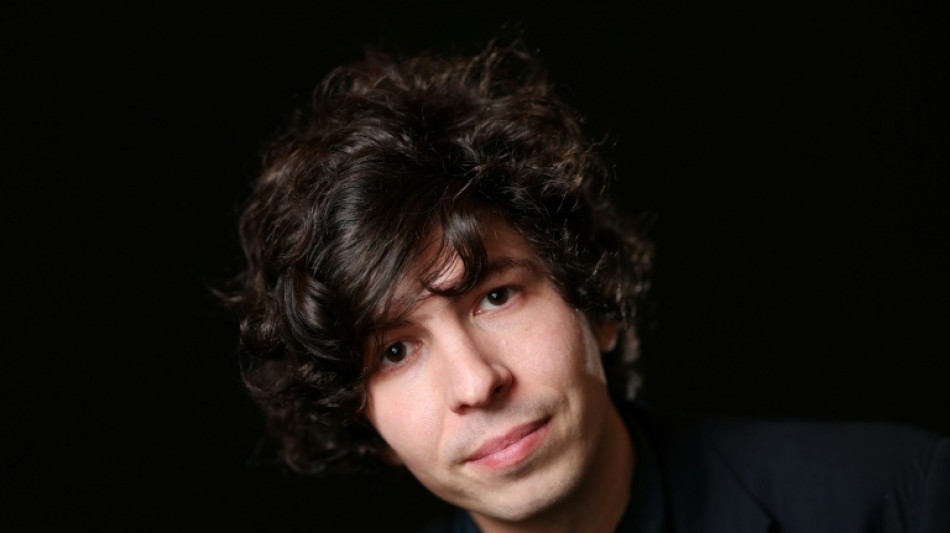
Oscar-nominated animated film "Arco" tells the story of a young boy in a future where humanity lives in harmony with nature, far from the robots and artificial intelligence shaping our present.
For first-time director Ugo Bienvenu, who drew the whole film by hand, there was never any chance he would resort to using AI.
"That's why I make science fiction," the French director told AFP. "It was to say to this generation: 'Maybe there are other paths, maybe there are other things to imagine.'"
The graphic novel illustrator, 38, says he is alarmed by society's increasing dependence on artificial intelligence, which he insists is inferior to the things it is being used to replace.
"It's like wanting to saw off your own leg just because you have a great crutch," he said.
The Academy of Motion Picture Arts and Sciences, the body that will hand out the Oscars in Hollywood on March 15, last year updated its rules to say it was neutral on the technology.
"Generative Artificial Intelligence and other digital tools... neither help nor harm the chances of achieving a nomination," it said in April.
"The Academy and each branch will judge the achievement, taking into account the degree to which a human was at the heart of the creative authorship."
- 'Nobody really wants to use it' -
The move came after a furor over the use of AI in best picture contenders "The Brutalist" -- where Adrien Brody's Hungarian accent was artificially smoothed out -- and "Dune: Part Two," in which certain characters had their eye color changed.
This season, two Oscar-eligible animated shorts openly acknowledged their use of AI, but did not get a nomination.
For Bienvenu, the reliance on AI in the creative process is dangerous because it risks allowing the imagination to wither.
"If we tell ourselves that the machine will do it for us, we never make the mistakes that allow us to access our subconscious" where true creativity lies, he said.
Bienvenu, who spoke to AFP on the sidelines of the Oscars nominees luncheon in Beverly Hills last month, said many conversations at the gathering had touched on the use of AI in filmmaking -- a key sticking point in the writers' and actors' strikes that crippled Hollywood in 2023.
"Everyone is more or less on the same page," he said. "Nobody really wants to use it."
- 'Human' -
In January, more than 800 creatives, including actresses Scarlett Johansson and Cate Blanchett, as well as director Guillermo Del Toro, published an open letter accusing AI giants of "theft."
The Mexican filmmaker, whose "Frankenstein" is competing this year for the best picture Oscar, in 2022 said animation created by AI is an "insult to life itself."
Bienvenu shares that alarm.
"The real danger is that we... become weaker intellectually," he says.
"It's not about protecting our jobs, it's about what makes us human."
"Fiction is about sharing experiences," he says -- a process that helps us to be "emotionally prepared when something serious happens to us in life, so we don't fall apart."
Too much of modern life is dominated by machines that can only regurgitate what has come before, says Bienvenu.
"Today, there are people who wear clothes made by robots, and eat food made by robots — basically, they're the poor," he said.
"And now, this same group will be consuming fiction made by robots."
The massive companies that make AI do not pay the true cost of their product, Bienvenu says, and something must be done to level the playing field.
He suggests levying a tax on the huge volumes of water used by companies to cool their server farms, an amount one study published in December found exceeded the volume of bottled water consumed around the planet every year.
"AI isn't free," says Bienvenu.
"It has physical repercussions and impacts on our subconscious."
L.Maurer--VB