Archaeologists unearth clues on French colonial massacre in Senegal cemetery / Photo: © AFP

 Trump family project in Albania has already caused 'irreparable' damage: NGOs
 Bollywood blast master keeps it real with fire and fury

 Tearful fights, edible offerings: A glimpse into the Maradona trial
 What's the deal with peptides? The hyped market under US review
 Tesla shares fall as Musk touts ambitious -- and costly -- plans
 Houthis claim Red Sea tanker strikes as US hits Iran again

 Wildfires ravage parts of southern France, Italy and Spain
 Alphabet beats expectations in second quarter, cloud revenue nearly doubles
 Trump threatens Iran infrastructure, Tehran vows 'eye for eye'

 US teen withdraws lawsuit against Meta over social media addiction
 Lebanon PM says Beirut working for 'complete Israeli withdrawal'

 EU conditionally clears Paramount bid for Warner Bros.

 Philipsen snaps 'horrible' drought with Tour de France stage 17 victory

 US trial of Venezuela's Maduro set for June 2027

 New UK PM Burnham gets early boost as inflation dips
 Samsung launches new, more expensive foldable smartphones

 Philipsen ends 'horrible' drought with Tour de France 17th stage victory

 Hungary's Orban says graft case is 'pretext' to target his party

 South African tycoon Motsepe rules out presidential bid

 Trump threatens Iran bridges, power as payback for Hormuz attacks

 Germany's Merz replaces leader ousted over surrogacy row

 CAF chief Motsepe backs Infantino despite criticism
 Evacuees from Spain's wildfire struggle with scale of devastation
 Ancient Lebanese city of Tyre added to heritage danger list
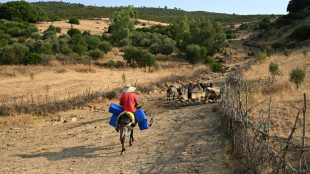 Extreme heatwave grips Tunisia as wide power cuts fuel frustration

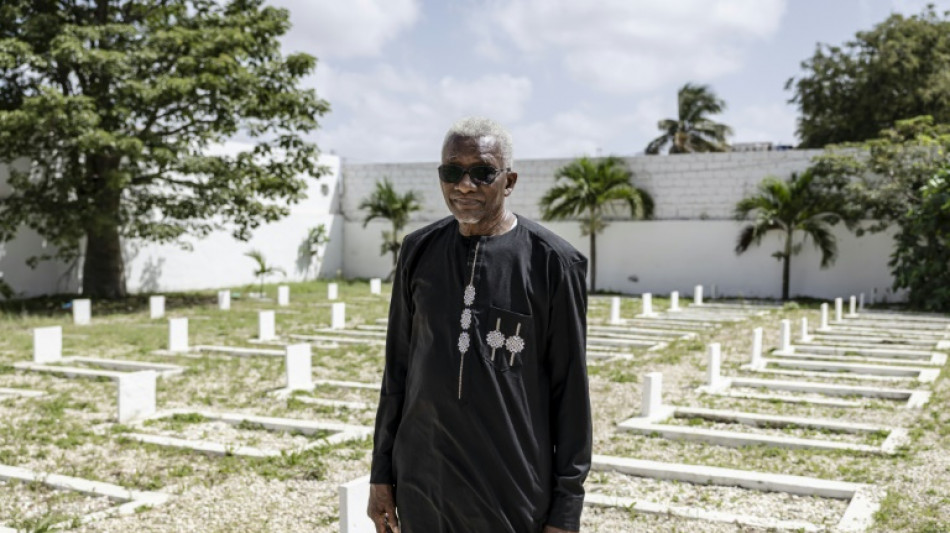
Holes in the ground, clods of earth next to headstones, dislocated concrete outlines: the Thiaroye military cemetery near Dakar bears the marks of recent excavations meant to unearth the truth behind a WWII-era massacre by French colonial forces.
In November 1944 around 1,600 soldiers from several west African countries were sent to the Thiaroye camp after being captured by Germany while fighting for France.
Discontent soon mounted over unpaid back pay and unmet demands that they be treated on a par with white soldiers.
On December 1, French forces opened fire on them.
The circumstances surrounding the massacre, the number of riflemen killed and their place of burial all remain unclear.
An AFP team recently visited the camp's cemetery, where archaeologists are conducting landmark excavations to find and examine the remains of those interred there.
Rows of 202 graves, marked with white headstones and cement demarcations, are covered with shells.
It is not known who exactly is in all the graves, or if there are even bodies at each marker. The researchers have so far only been able to excavate a very small percentage of them.
The cemetery was created in 1926 by colonial France to bury African soldiers. Some researchers believe that riflemen killed in the Thiaroye massacre were buried there.
Unearthed burial containers, since covered in blue plastic, bear testament to the archaeologists' work.
Senegal alleges it was difficult to access the French colonial archives to study the massacre in full.
This is why Colonel Saliou Ngom, the director of the Senegalese army's archives and historical heritage, believes it was necessary to "make the underground" speak.
The archaeologists have so far carried out their initial excavations under one of two large baobabs, enormous trees that can indicate the site of buried bodies.
The baobab is "a calcareous tree, that is one that likes limestone", history and geography professor Mamadou Kone, technical adviser to the Armed Forces Museum, told AFP.
"Where there are bones, there are often baobabs", he said.
- Clues on violence -
The researchers submitted an official report on October 16 to Senegalese President Bassirou Diomaye Faye describing the massacre as "premeditated" and covered up, with a death toll that had been grossly underestimated.
The French colonial authorities at the time of the massacre said up to 70 World War II riflemen were killed.
But the researchers said the most credible estimates put the figure closer to 300 to 400, with some of the men buried in the Thiaroye cemetery.
One of the archaeologists who led the dig, Moustapha Sall, explained that seven graves were excavated out of a first group of 34.
"Archaeologists found seven skeletons. This is a very important step in the search for historical truth," Colonel Ngom said.
According to Sall, "one skeleton contains a bullet in its left side in the location of the heart."
"Others lack a spine, ribs or skull. Some individuals are buried with iron chains on their shins," he added.
"This means they suffered violence."
The graves where the bodies are located are more recent than the remains themselves, Sall added.
"One hypothesis is that the graves were made after the (initial) burials or that it was staged to make is appear they had been properly buried," Sall said.
- Genetic, ballistic studies -
The next key step, Sall explained, will be taking DNA samples to help determine the individuals' origins.
"The preliminary results do not allow us to answer all the questions," he said.
Ballistics experts will additionally provide information on the military equipment, he added.
Meanwhile the Senegalese government has ordered ground-penetrating radar (GPR) to better explore the depths of the cemetery's subsoil.
"We have been searching for the historical truth for 81 years", Colonel Ngom said. "If the subsoil provides us with (this truth) there is nothing more significant".
President Faye, who has committed to preserving the soldiers' memory, has announced he has approved "the continuation of archaeological excavations at all sites likely to contain mass graves".
In November 2024, as the atrocity's 80th anniversary approached, French President Emmanuel Macron acknowledged that French colonial forces had committed a "massacre" in Thiaroye.
F.Fehr--VB