'Moonfall' and the art of the disaster film cliche / Photo: ©

 UK set for cautious budget as borrowing costs climb

 Anthropic's record IPO faces some big questions

 US Fed expected to hold rates steady ahead of key midterm elections

 Can this Latin Grammy-winner help Democrats win back Congress?

 Tuvalu has 'limited' power to halt its fossil fuel investments: NZ govt papers seen by AFP
 Palestinian activist Khalil returns to Columbia after US detention

 Trump drastically loosens oil and gas methane rules

 French Senate weighs bill to make protesters pay for unrest damage
 'A very sad day': Arteta despair as Arsenal stunned by Fleetwood
 Charles tackles thorny legacy of slavery on Caribbean trip

 Former Grand Slam winner Wawrinka ends tennis career

 Brazil's Flavio Bolsonaro flees to US after election loss

 'Faerie' nights: 'ACOTAR' fans finally get their book

 American woman convicted of getting military training from Islamic State

 Israel opposition holds narrow edge over Netanyahu in first projections

 Floriani hits maiden goal as Lazio go top
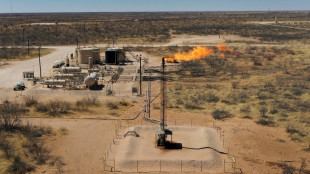 Trump set to drastically loosen oil and gas sector's methane rules

 Storied Paris department store seeks bankruptcy protection

 Xhaka, Embolo can return to Swiss squad after fake Covid docs affair

 Allegri suspended for two Serie A games after red card
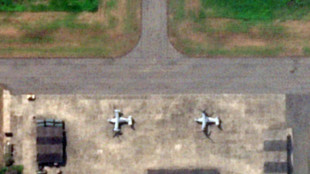 Flight data, satellite images reveal growing US role at Ecuador base

 McInnes feels 'guilt' ahead of Hearts return with Rangers

 Brazil's Lula turns 81, vows to work '24 hours a day'
 Boeing releases cautious growth plan as shares fall sharply

 Exiled Russian dissident Navalnaya warns dictators becoming 'more cunning'

Director Roland Emmerich knows a thing or two about the ingredients needed for a good disaster flick, having given the world "Independence Day", "2012" and "The Day After Tomorrow".
He is back in cinemas next week with "Moonfall" starring Halle Berry, in which the moon starts to act rather strangely.
Naturally, it's a small group of Americans that must save the world, but how closely does the film respect the other rules of the disaster genre?
- The Divorced Hero
If there is one cliche that Emmerich loves, it's the estranged couple thrown back together by the imminent destruction of the world.
The comforting reassertion of family values and parental stability is in all his big disaster flicks, right up to "Moonfall".
Emmerich is far from alone. From "Twister" to "Outbreak" to "San Andreas", there's a good chance that an exasperated woman is going to realise her new (usually rich and obnoxious) husband is not a patch on her rough diamond ex when the going gets tough.
- Generals are always wrong
In disaster movies, generals are always desperate to nuke the problem, when everyone else knows this can only make things worse.
"Moonfall" sticks solidly to this script, with a series of stony-faced old white guys who are adamant they need to blow up the moon.
- The Dog Survives
Canines are effectively immune from death in disaster movies, miraculously surviving fast-moving lava (both "Dante's Peak" and "Volcano"), asteroid strikes ("Armageddon"), alien invasions ("Independence Day") and tornadoes (on two separate occasions in "Twister").
"Moonfall" marks a significant departure from disaster film history by failing to include any house pets, invincible or otherwise.
- One Guy Knows
They are an eccentric scientist or a wacky amateur, and they tried to warn everyone and no one would listen -- and now look at the mess we're in!
In the case of "Moonfall", everyone should have been listening to conspiracy nut KC Houseman (played by "Game of Thrones" regular John Bradley) and his ridiculous ideas about the moon.
In a contemporary twist on the trope, he convinces the world to take him seriously by posting his findings on social media, which is treated in the film as a shortcut to legitimacy (perhaps the least probable element of a film about the moon falling on the Earth).
- Hollywood Science
Ben Affleck recently made the not-unreasonable point about 1998 asteroid caper "Armageddon" that it might have made more sense to train astronauts as drillers, rather than the other way around.
But it turns out there were bigger problems with their plan in the movie.
In 2019, scientists at John Hopkins University released a paper arguing that 4,000 of the most powerful nuclear explosives ever created would have to be concentrated in a single spot to disrupt a 20-kilometre-wide asteroid, and that the fragments may be pulled back together anyway by gravity.
Bad science crops up regularly in disaster films, from the ice age that emerges within three days in "The Day After Tomorrow" to the truck wheels that can drive through lava in "Dante's Peak".
And don't ask geologists about "The Core", in which scientists use an indestructible element called "Unobtanium" to drill to the centre of the Earth and restart the core with a nuclear bomb.
Without giving away any spoilers, "Moonfall" is similarly unlikely to serve as a teaching aid in any university science departments.
Y.Bouchard--BTB