
Canada needs 'bold ambition' to poach top US researchers / Photo: © AFP

 EU fines Google 890 mn euros, risking US fury

 France evacuates thousands of tourists as fire rages in pine forest

 French Jewish DJ sues after activists disrupt stage show: lawyer

 Nokia says AI, cloud boosted sales in second quarter

 Repsol says profit more than triples on higher oil prices

 TotalEnergies says profit doubled on Mideast war

 Giant swing on Swiss peak aims to boost summer tourism as Alps warm

 ASEAN to call for open straits as US-Iran war casts shadow

 AI catches up with humans to score 100% at top maths contest

 South Korea election office raided in fake turnout figures probe: investigators

 Killer whales: orcas blow fish to bits 'for fun', study finds

 Deadly wildfires force thousands from homes in parts of Europe

 Tech bounce lifts Asia stocks, oil extends gains on US-Iran fears

 Surrounded by militias, Sudanese fear endless cycle of war

 Commonwealth Games 'where champions are made' despite slimmed down model, argues president
 Trump family project in Albania has already caused 'irreparable' damage: NGOs

 Bollywood blast master keeps it real with fire and fury

 Tearful fights, edible offerings: A glimpse into the Maradona trial

 What's the deal with peptides? The hyped market under US review

 Tesla shares fall as Musk touts ambitious -- and costly -- plans

 Houthis claim Red Sea tanker strikes as US hits Iran again

 Wildfires ravage parts of southern France, Italy and Spain
 Alphabet beats expectations in second quarter, cloud revenue nearly doubles

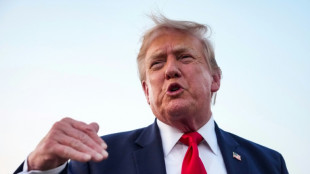 Trump threatens Iran infrastructure, Tehran vows 'eye for eye'

 US teen withdraws lawsuit against Meta over social media addiction

Like Europe, Canada is looking to attract top US scientists who may want to evade President Donald Trump's crackdown on universities and research institutions.
But to succeed, Canada will need to summon something it has at times lacked, namely "bold ambition," the head of the country's largest hospital chain told AFP.
Trump's funding cuts for scientific research are freeing up talent and "creating a once-in-a-lifetime opportunity" to recruit, said Kevin Smith, the chief executive of Toronto's University Health Network (UHN).
To seize that opportunity, Canada has to ditch its traditional "incrementalist" approach, Smith added.
"Let's not say good enough is good enough. Let's say excellent is where we need to go."
Experts say Trump's policies could trigger a tectonic shift in the global competition for the world's brightest minds.
For decades, deep-pocketed US universities backed by federal support have scooped up talent, including in biomedical research.
But Trump's administration has already slashed billions of dollars in research grants affecting various institutions, including most notably Harvard University.
Programs affected by the National Institutes of Health's cuts include studies on gender, the health effects of global warming, Alzheimer's disease, and cancer.
France and the European Union are already trying to woo disgruntled US researchers.
European Commission head Ursula von der Leyen said last month that the EU would launch a new incentives package worth 500 million euros ($577 million) to make the 27-nation bloc "a magnet for researchers".
- 'Peanut butter spread' -
Smith and UHN's vice president for science and research, Brad Wouters, argued that Canada -- and particularly its largest city, Toronto -- are well placed to compete for US talent.
English-speaking, culturally familiar, and geographically close to major US research centers in New England and New York, Toronto boasts a hospital network and research ecosystem regularly ranked among the world's best.
The city has already poached three high-profile academics from Yale University, although all work in the arts.
The group -- who study fascism -- announced last month in a stirring New York Times video that they were leaving the United States to take up positions in Toronto.
"I'm leaving to the University of Toronto because I want to do my work without the fear that I will be punished," one of the professors, Jason Stanley, said in the video.
Wouters told AFP that since Trump's election, UHN "started to see a talent pool that was a notch higher than what we normally see" for vacant positions, with leading US-based scientists initiating inquiries about opportunities in Toronto.
UHN has launched a plan to create 100 medical research positions through its own fundraising but wants institutions across Canada to attract 1,000 new scientists.
Reaching that target will require government support, and confronting an ingrained Canadian mindset that prioritizes sharing healthcare resources equally across the vast country.
The plan will face "a bit of a collision between the peanut butter spread of equality versus elitism," Smith said.
"That isn't always easy for governments or for elected officials...but we're pretty hopeful," he added.
- 'Supporting role' -
Matthew Lebo, a political scientist at Ontario's Western University, agreed Trump's policies have created an unprecedented opportunity for brain gain in Canada.
But he voiced concern the country wouldn't mobilize.
"Canada has a history of being comfortable playing a supporting role," he told AFP. "There is just an inherent lack of ambition."
Lebo noted that while some US-based researchers may be concerned about crackdowns on their work, others might eye Canada for personal reasons, including the desire to live in a country where reproductive and LGBTQ rights are more firmly safeguarded.
While he hasn't yet seen signs of broad national action, he said "it wouldn't take deep thought to catch up."
"It takes some big number (of dollars) and a plan."
B.Wyler--VB