Anger at plan to turn Nazi tunnels into bunker for super-rich / Photo: © AFP

 USA and France ease into women's Basketball World Cup semis
 ECB lifts borrowing costs amid energy shock, opens door for more hikes
 France defeat China to reach women's basketball World Cup semis
 Tribal Launches Campfire, Letting Business and Technical Teams Build on Salesforce Together

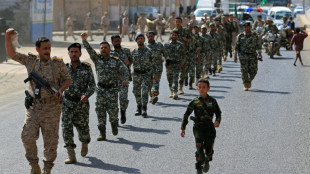 Yemen's Houthis seize key city on Red Sea
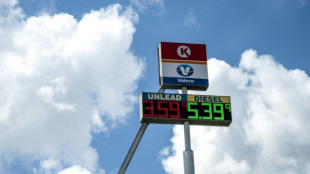 US producer inflation tops expectations as diesel costs jump
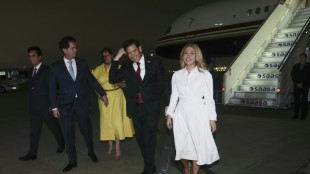 Rubio ends South America swing with Peru security talks
 Defiant Iran seeks to bruise Trump ahead of midterms
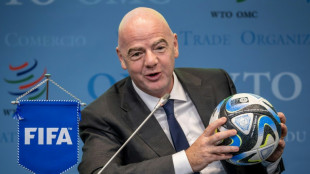
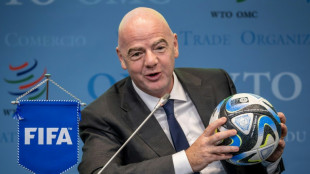 France withdraws support for Infantino in FIFA presidential election
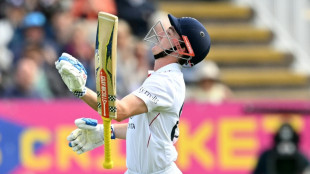
 Evolution Metals & Technologies Provides Initial Revenue Guidance of $400-460mm for Fiscal Year 2027
 Clark-led USA thrash Hungary to move into women's World Cup semi-finals

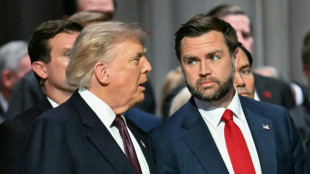 Vance takes spotlight as Republicans close Trump-heavy convention
 Russian skater Valieva loses neutral status
 Will Israel's right exploit sanctions in run-up to vote?
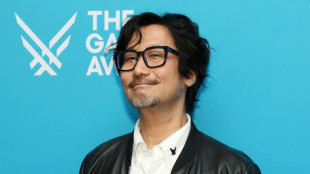 'Metal Gear' creator moves to Xbox after Playstation cancellation

 Indonesia rescues six orangutans from fires in a week
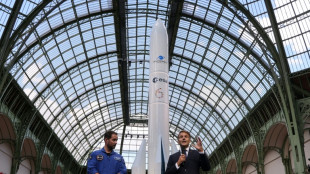 Macron urges Europe to develop 'crewed spaceflight' programme
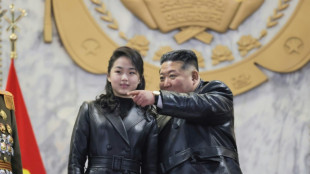
 Deals worth billions to be signed as UAE leader visits Germany
 Alessio Vinassa Unveils an Emerging Technology Investment Approach Shaped by Financial Challenges

 Sri Lanka court revokes monk's pardon, orders return to prison
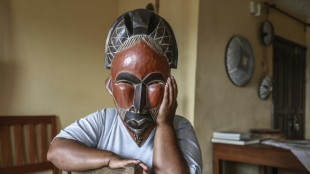 'Hopeless, stuck, afraid': US deportees in limbo in Cameroon
 Mount Fuji ends hiking season with landslide, two rescues
 Seahawks beat Patriots again in NFL opener
 Asian Games begin with Qatar basketball win, nine days before opening ceremony

 Stocks sink as oil rally fans inflation and rate hike fears
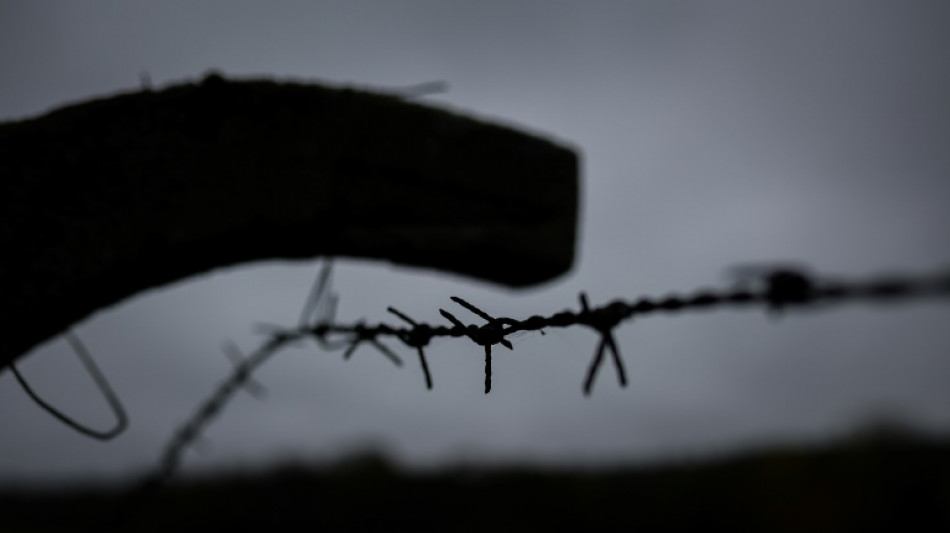
A German property developer has sparked outrage with a plan to turn a World War II tunnel system into a luxury bunker for rich survivalists who fear the outbreak of World War III.
Relatives of the prison labourers who built it under the Nazis are aghast at the business venture that is offering a crypto-currency called "BunkerCoin" as entry tokens to the promised apocalypse shelter.
Others suspect an elaborate ploy to embarrass German authorities and raise the price for the sensitive historical property's eventual re-sale to the state.
The tunnel site was constructed by prisoners held in an annex to the Buchenwald concentration camp, in a forest about 200 kilometres (120 miles) southwest of Berlin near the town of Halberstadt.
About 7,000 forced labourers were interned at the camp, more than half of whom died digging the 13-kilometre-long tunnel system where the Nazis manufactured aircraft in the latter phase of the war.
Today, a memorial centre at the nearby Langenstein-Zwieberge camp site honours the victims as well as the survivors, among them the French wartime prisoner Louis Bertrand.
After the end of World War II, Bertrand dreamed of a "ring of memory" pathway around the underground network where thousands perished, said his 72-year-old son Jean-Louis.
Bertrand died in 2013 and was buried at the camp where he had left behind "part of his youth", his son told AFP.
Jean-Louis Bertrand is furious at the plan to turn the hallowed site into "the largest private bunker in the world".
So far, the promised nuclear-proof underground complex exists only as a series of images on a website.
Well-heeled preppers are offered an underground safe space with its own clinic, school, workshop, casino, bar, gym and spa as well as "artificial sunrises and sunsets".
Housing will be "similar to luxurious yacht accommodations" and food provided through indoor farming and mushroom cultivation.
To gain access in the event of war or other major catastrophe, clients are asked to purchase BunkerCoins, each of which buys one cubic centimetre of future bunker space.
At that rate, a small room would cost around half a million euros.
The business says it is also planning a "safe city in Gambia".
- 'Unfairly treated, insulted' -
The head of the Langenstein-Zwieberge camp memorial site, Gero Fedtke, rejected the luxury bunker project in measured language, labelling it "not an appropriate way of dealing with the historical heritage of the tunnel".
The entrepreneur behind the venture is Peter Karl Jugl, who according to news weekly Der Spiegel has past links to far-right figures.
Jugl's firm, Global Project Management, says it specialises in the purchase of "problematic properties".
His other business interests reportedly include a stake in a dating app, a property he rents out to a table-dancing club and a love hotel.
Jugl bought the tunnel site in 2019 from an insolvency administrator after it had previously served as a munitions depot for the communist East German state.
In a phone interview with AFP, Jugl said he did not understand what all the fuss was about and said he had been "unfairly treated, insulted and threatened".
"I am building a facility there to save human lives in an emergency."
He also argued that "these underground shafts have nothing to do with the camp located two kilometres (1.2 miles) away."
- End-of-days hideout -
An association of prisoners' relatives disagrees, pointing out that the sole reason for the camp's existence was the construction of the nearby tunnel system.
"It is unthinkable to dissociate the two components of this whole, and therefore to ignore the tunnel," they wrote in a statement.
Jugl has allowed memorial visitors to access a section of the tunnel shaft, although he declined to grant entry to AFP.
Fedtke argued that the tunnels are of historical relevance because at the former prison camp site "hardly any historical traces from the Nazi era have been preserved".
"This is different in the tunnel," he told AFP.
As the controversy flares, Jugl has offered the state of Saxony-Anhalt the chance to buy the tunnels back.
His asking price, according to multiple sources, is eight million euros -- far beyond the 1.3 million euros he paid for it.
The state culture ministry told AFP it had not received an application for a building permit for the super-bunker and that, as it is "a cultural monument, all structural or usage changes require approval".
It confirmed that state culture minister Rainer Robra had addressed the issue of a potential repurchase in a letter to Germany's defence and interior ministers.
Bertrand said he suspected Jugl's motivation is not to build an end-of-days hideout for the super-rich but simply "to make money".
F.Stadler--VB