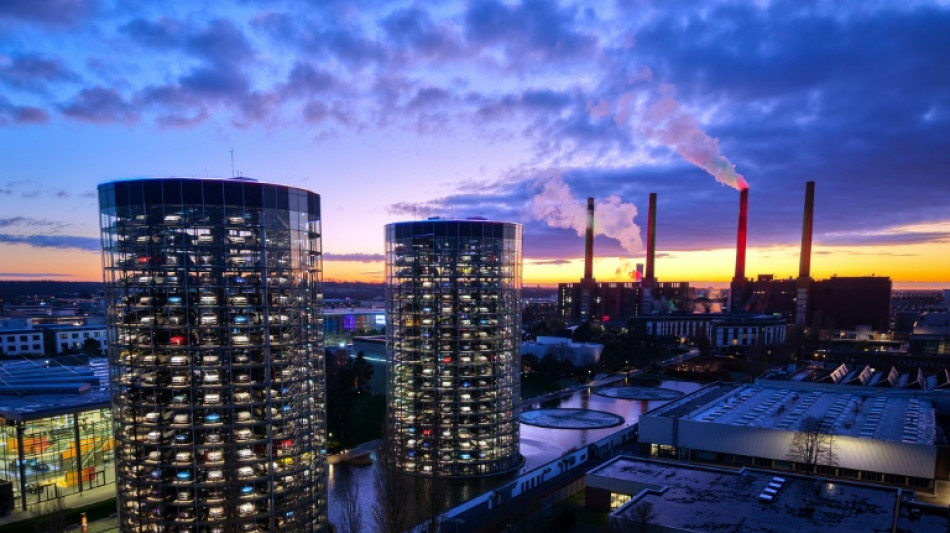
Germany halves 2026 growth forecast on Iran war fallout / Photo: © AFP/File

 Perry stars as Australia knock India out of World Cup
 Stokes 'content' after extraordinary England exit

 Europe swelters as heatwave moves east
 Stokes announces shock England exit as New Zealand eye series win

 CAF president Motsepe hails African World Cup successes

 South Korea coach quits after early World Cup exit
 Venezuela quakes kill 1,400, time running out to find survivors

 Hamilton laments lack of power and poor tyre performance

 Goals galore at record-breaking World Cup
 Augusta Tops Best Gold IRA Companies List By Gold Advisor

 They support Argentina at the World Cup, but are not Argentine
 Iran warns ships not to bypass its chosen Hormuz route
 Serena blasts drug test rules ahead of Wimbledon return
 Ogier wins Acropolis Rally to close in on Evans
 South Korea president apologises after World Cup group-stage exit
 Bergs wins Eastbourne final to clinch first ATP title
 Iran warns challenge to Hormuz routes will spike Middle East tensions
 From rubble to music: Gaza's Oud repairman
 Cycling industry bets on smart bikes to boost sales

 In Idaho, the next generation of US nuclear reactors nears reality

 Africa the winner of expanded World Cup amid mixed fortunes for minnows

 Asia's vendors grapple with rising costs of ever-present plastics

 Messi scores again as Argentina head into World Cup last 32 on a high
 Wissa proud to deliver World Cup joy to war-torn DR Congo
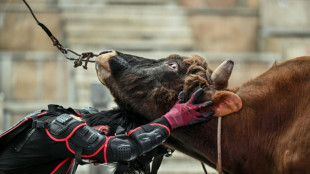
 South Korea's 'dismal' World Cup ends in group phase

The German government on Wednesday halved its growth forecast for this year as the energy shock triggered by the Middle East war hammers Europe's biggest economy.
The economy ministry said it expected gross domestic product (GDP) to expand 0.5 percent in 2026, down from a projection of one percent made in January.
It also cut its forecast for 2027 to 0.9 percent, down from 1.3 percent.
Hopes had been high that the eurozone's traditional growth engine would sputter back to life in 2026 after years of stagnation, driven by Chancellor Friedrich Merz's public spending blitz.
But the jump in oil and gas prices since the start of the US-Israeli war on Iran has dealt the economy a heavy blow, pushing up overall inflation and raising costs for the country's crucial manufacturers.
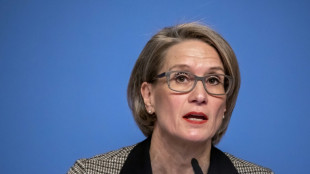
Presenting the new forecasts, Economy Minister Katherina Reiche said that before the conflict, there had been signs of of a moderate recovery.
"But the escalation in the Middle East has set us back economically," she told a press conference. "The shock has hit the structurally weakened German economy hard once again."
Higher energy costs, as well as the higher cost of borrowing on international markets since the outbreak of the conflict in February, were weighing heavily, she said.
The downgraded forecasts follow a similar move by leading economic institutes in early April, which are now forecasting just 0.6 percent growth this year.
Before the Iran war, the economy was just getting back on its feet after the energy shock triggered by the Ukraine war and last year's US tariff blitz.
The renewed surge in energy prices is a particular burden for Germany's heavy industry, in sectors ranging from steel to chemicals, which was also struggling with weak demand in export markets and fierce Chinese competition.
Knock-on effects, like supply chain snarls that are delaying delivery of vital base products, are weighing on industry, while consumers are facing higher costs, especially at the petrol pump.
Inflation jumped to 2.7 percent in March, its highest level in over two years.
- Investor morale plunges -
Surveys highlight the darkening picture.
A poll this week showed that German investor morale hit its lowest level in April since late 2022, when the country was battling the fallout from Russia's full-scale invasion of Ukraine.
The government is scrambling to respond. As well as the relief on fuel prices, Merz has announced that businesses can pay workers a tax-free bonus of up to 1,000 euros ($1,170).
Still, many economists and business groups have criticised the measures as ill conceived, saying they are not properly targeted at needy groups.
They are calling on the government to instead focus on pushing through deep reforms to areas like healthcare, pensions and bureaucracy that they argue can help spur growth in the long term.
"You cannot cushion a shock like this with tax money or bonus payments," Peter Leibinger, president of the Federation of German Industries (BDI), said this week.
"The state cannot insure citizens and companies against every external crisis," he said. "The only insurance is growth-oriented policies that enable investment."
Businesses have meanwhile become increasingly frustrated with Merz's coalition.
The chancellor, who took power in May last year, promised to revive the economy through huge public outlays on defence and infrastructure and a barrage of reforms.
But the spending has moved slowly and structural overhauls have made little headway, bogged down by lengthy talks between his centre-right CDU party and its coalition partners, the centre-left SPD.
The coalition is promising to push through an ambitious programme before parliament's summer recess, though critics doubt what can realistically be achieved so quickly.
E.Gasser--VB