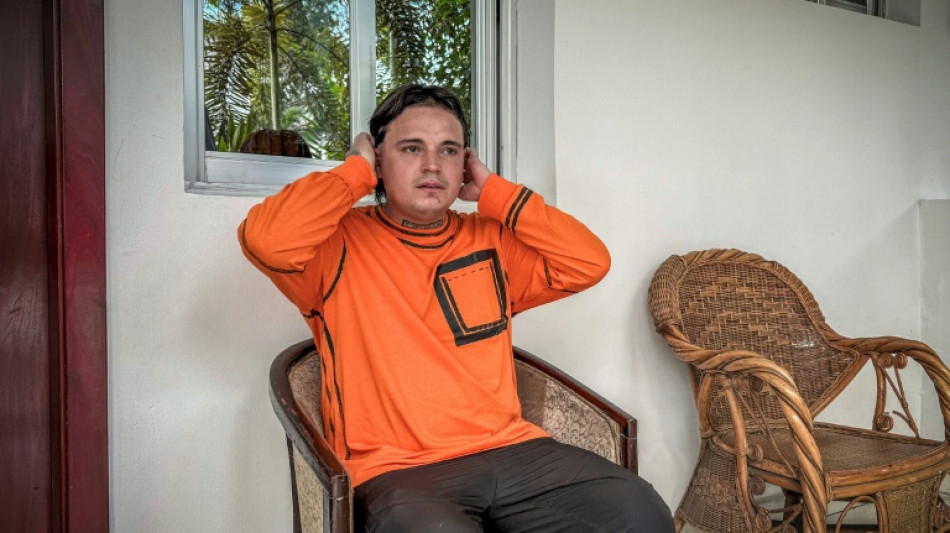
Migrants deported from US stranded, 'scared' in DR Congo / Photo: © AFP

 UN approves resolution on dealing with rising sea levels

 Yalcouye makes dream debut as Ivory Coast beat Ghana in AFCON qualifier
 Chicago's White Sox and Cubs book MLB playoff berths

 Last-gasp Gakpo strike snatches Dutch draw to sour Klopp debut

 Global stocks mostly fall as oil prices and bond yields rise

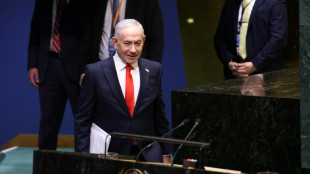 Israel's Netanyahu denounces enemies, allies in fiery UN speech
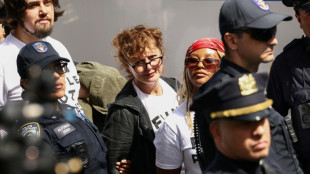 Hollywood stars among arrests in NY anti-Netanyahu protest

 Losing start in AFCON qualifying for 78-year-old coach Le Roy

 Italy bans burqas in schools, caps numbers of foreign students per class
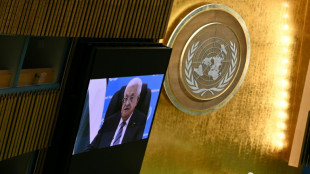 Israel policies threaten 'life and existence' of Palestinians, Abbas says

 Paolini steers Italy past China in BJK

 Zidane admits emotion on eve of first game as France coach

 Breetzke and Maharaj sink Australia in first one-day international
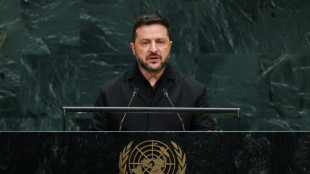 Zelensky broke confidentiality with North Korea POWs disclosure: South's president
 Former Liverpool star Carroll reveals he was sexually assaulted
 Dominican Republic calls for Haiti force to be strengthened
 Dolly Parton's nephew ordered to stay away from estate staff, properties

 Early exit for Philippine darling Eala at Singapore Open

 Hurricane Polo triggers huge waves in coastal Mexican city

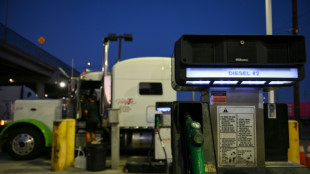 What happens if the US bans diesel exports

 Macklemore hits back with 'Free Palestine Tour' after Sheeran split
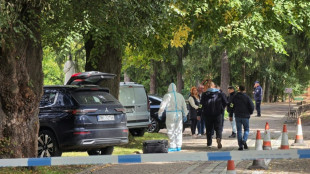
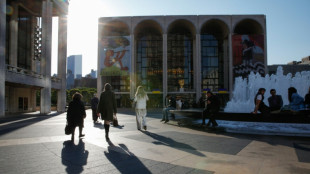 Met Opera to give New Yorkers free tickets in affordability push

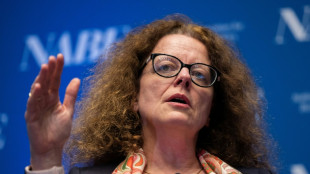 Top ECB official to resign to take up IMF role

 Xi and Trump call for peace in lavish White House state visit

 Five up-and-coming players looking to make mark in Nations League

Spending the past five days cooped up in a hotel in the capital of the Democratic Republic of Congo is not quite what a group of Latin Americans expected when they sought asylum in the United States.
But their predicament is far from the worst of it: the men and women told AFP on Wednesday that they arrived in Kinshasa after a 27-hour flight which they spent with their hands and feet shackled.
Gabriela, a 30-year-old Colombian sporting tattoos and clad like most of her fellow sufferers in a white T-shirt, summed up their plight.
"I didn't want to go to Congo. I'm scared, I don't know the language," she said.
She only found out where they were headed the day before being expelled from the United States.
The DRC -- one of a number of African nations that have agreed to take in deported migrants -- is one of the world's 15 poorest countries, thousands of kilometres from the Americas.
The first batch of deportees arrived last Friday in the central African country under a controversial US migration scheme to pack off undocumented foreign nationals to third countries.
Others include Cameroon, Equatorial Guinea, Eswatini, Ghana, Rwanda and South Sudan.
The scheme has often been accompanied by US financial or logistical support.
Yet scant information is provided by the authorities in the host countries about the migrants' fate once they arrive on their soil.
The International Organization for Migration (IOM), which takes charge of them once they have obtained short-stay visas, told AFP it can offer "assisted voluntary return to migrants who request it".
- Waiting -
Since their arrival in Kinshasa, a megacity of more than 17 million people, the 15 South American migrants have been whiling away their time in a complex near the airport.
Rows of neat, white-walled little houses stand side by side. The migrants sleep there and say they are forbidden to leave the premises.
Police and army vehicles are parked outside and on occasion personnel can be seen from a private military firm which AFP was unable to identify.
Cast adrift by US President Donald Trump's immigration policy, the migrants spend their days on their mobile phones, trying to contact their families.
None speaks French, the DRC's official language.
They claim to have received around $100 in aid from IOM officials but are not allowed any visitors.
"Several of our friends have taken ill -- as have I," said Gabriela.
"We've had fevers, vomiting and stomach problems. But we're told that's normal and that we must adapt."
Some have been given medication, but Gabriela said no healthcare worker has come to examine them.
Four residents of the hotel said they had been issued with a seven-day visa, extendable for three months.
But once the seven days are up, they said they are threatened with no further support, as well as with being left to fend for themselves.
"They've got us cornered because they tell us: if you don’t accept the repatriation programme, you'll be stuck in a mess here in Congo," said Gabriela, visibly upset.
"That is inhumane and unfair."
- Afraid -
The noisy chaos of the overcrowded Congolese capital reverberates behind the walls of the hotel.
A constant stream of minibuses and cars honk their horns on a potholed road that is surrounded by dilapidated buildings.
Most Kinshasa residents have no reliable access either to running water or electricity.
Nearly three-quarters of Congolese people live below the poverty line, according to the World Bank.
The arrival of South American migrants has sparked strong reactions among civil society and on Congolese social media.
"I get three meals a day, the hotel staff cleans the rooms, and we're well protected," said Hugo Palencia Ropero, a 25-year-old Colombian who said he spent five months in US detention before being deported to the DRC.
But he added: "I'm more afraid of being here in Africa than in Colombia.
"If the seven days go by and we don't receive any further assistance, things will get very difficult for us, especially since we don't have work permits."
He said he was willing to accept "any travel document" just to "be able to leave this country".
G.Haefliger--VB