-
 Trump renames AI 'super intelligence' as leaders jostle over dangers
-
Man City hold Bayern to start Women's Champions League, Arsenal win late

-
 Oil prices retreat as markets welcome US-Iran talks
-
Trump threatens Iran with 'hell' but reveals fresh talks

-
 US refusing to give Sudan's de facto leader visa for UN: diplomatic sources, UN
-
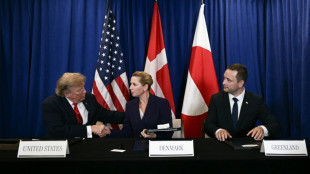
Trump signs security deal with Greenland, Denmark at UN
-
 Macron urges world to choose UN over 'law of the jungle'
-
Trump threatens Iran with 'hell' but unveils fresh talks

-
 All-rounder Jacks stars as England beat Sri Lanka in 1st ODI
-
Chile's Atacama Desert blossoms with life after El Nino rains

-
 Man City peg back Bayern to start Women's Champions League
-
Sri Lanka hands 220-year jail terms to 15 convicted of Easter bombings

-
 Trump beats 'America first' drum at UN as allies tread carefully
-
Typhoon Dujuan leaves 7 dead in Japan from landslides, flooding: media

-
 Snedeker backs Spaun for Ryder Cup after Presidents snub
-
Ganna and Borghini lead Italy to mixed relay gold at cycling worlds
-
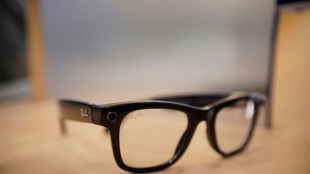 French prosecutors probe secret filming of women with smart glasses
-
Drug cocktail killed former child star Hayden Panettiere: coroner

-
 Trump renames AI "super intelligence," rejects international oversight
-
Moldova declares energy, water emergency

-
 Trump rejects international regulation of AI
-
French Holocaust denier jailed for eight months
-
 How is the EU approaching record fuel prices?
-
Oil prices slide, AI stock buzz fades

-
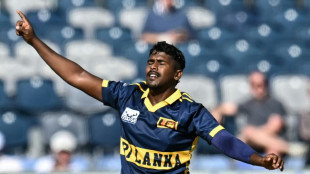 Sri Lanka's Colombage strikes on debut as England dismissed for 265 in first ODI
-
Trump threatens to 'annihilate' Iran in bombastic UN speech

-
 Hurricane Polo strengthens to top category 5 off Mexico
-
Prada's skirts take centre stage as Milan Fashion Week begins

-
 11 hurt as teen opens fire outside school in western Turkey
-
Quoin Pharmaceuticals Announces FDA Fast Track Designation for QRX003 for the Treatment of Peeling Skin Syndrome

-
 UN chief says 'Big Oil' treats atmosphere as open sewer
-
Brazil's Flavio Bolsonaro turns scandal into poll gains

-
 Tunisia says 2026 summer hottest on record
-
Republican senator seeks probe of Trump Jr Russian-funded wedding

-
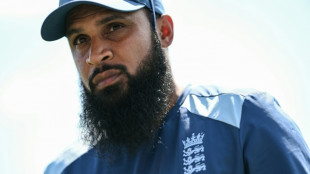 England's Rashid out of Sri Lanka ODIs with hand injury
-
Memoir by Diana's brother goes on sale after rocking UK monarchy

-
 Houthis accuse Saudi Arabia of deadly strikes as thousands flee
-
Newcomers South Korea face holders Italy in Davis Cup finals

-
 Stocks climb as oil slides, AI buzz returns
-
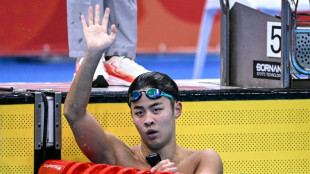
Japan's Kojima sounds Marchand warning with Asian Games gold
-
 India cricketers win in style as Afghan savours 'special' Games silver
-
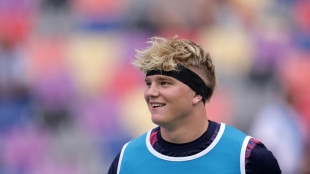
England rugby star Pollock signs new Northampton deal
-
 La Liga president hits out at Real Madrid refereeing 'conspiracy' claims
-
STARTRADER Expands Its Chinese Equity CFD Range with CXMT and Unitree Robotics

-
 MEXC Launches “Real Stocks, Real Friends” with Rewards for Bringing Friends to Wall Street
-
MEXC Expands Opportunity Compass with Stock Trading Handbook to Help Crypto Users Build Investment Knowledge

-
 Mbappe continues media push for Ballon d'Or recognition
-
England paceman Wood retires from international cricket

-
 Stocks rise on AI buzz, oil prices cool
-
Magnificent Mandhana's 79 helps India to Asian Games cricket gold

SpaceX Polaris Dawn crew set for historic private spacewalk
After trekking deeper into space than any humans in the last half-century, a pioneering private crew is set to make history Thursday with the first-ever spacewalk by non-professional astronauts.
The SpaceX Polaris Dawn mission, led by fintech billionaire Jared Isaacman, launched early Tuesday from the Kennedy Space Center in Florida, reaching a peak altitude of 870 miles (1,400 kilometers).
That's more than three times higher than the International Space Station, in a region of space called the inner Van Allen radiation belt --a zone teeming with dangerous, high-energy particles.
Now, with their Dragon spaceship's elliptical orbit reduced to an apogee of 458 miles, the crew of four are gearing up for the mission's centerpiece: an audacious extravehicular activity (EVA) scheduled for 0623 GMT on Thursday, with a backup window on Friday.
SpaceX will livestream the event starting an hour earlier on its website.
- 'Bit of a dance' -
Outfitted in sleek, newly developed SpaceX suits with heads-up displays, helmet cameras, and advanced joint mobility systems, Isaacman and his crewmate Sarah Gillis, a SpaceX engineer, will take turns peeking out from a hatch structure affectionately dubbed "Skywalker," fitted with hand and footholds.
"It'll look like we're doing a little bit of a dance," Isaacman quipped during a recent press conference. What they're actually doing, he explained, is stress testing their next-generation suit to inform future design evolution.
They won't, however, float away from the ship on a tether, as early space farers like Soviet cosmonaut Alexei Leonov and NASA's Ed White did in 1965 -- nor for that matter use jetpacks to fly away untethered as Space Shuttle astronauts did on three missions in 1984. Rather, they will hold on to the outside of the spacecraft as it whizzes around the Earth at thousands of miles per hour.
Nevertheless, "the risk is greater than zero, that's for sure, and it's certainly higher than anything that has been accomplished on a commercial basis," former NASA administrator Sean O'Keefe told AFP.
"This is another watershed event in the march toward commercialization of space for transportation," he added, likening the crewmates to early aviators who paved the way for today's aviation industry.
- First of three Polaris missions -
Since the Crew Dragon capsule lacks an airlock, the entire crew -- including mission pilot Scott Poteet, a retired US Air Force lieutenant colonel, and another SpaceX engineer, Anna Menon -- will be exposed to the vacuum of space for around two hours.
The actual time Isaacman and Gillis spend holding on to the spaceship will be around 15 to 20 minutes each.
All four underwent more than two years of training in preparation for the landmark mission, logging hundreds of hours on simulators as well as skydiving, centrifuge training, scuba diving, and summiting an Ecuadoran volcano.
Beyond their spacewalk, the crew will test laser-based satellite communications between the spacecraft and the vast Starlink satellite constellation.
They'll also carry out 36 scientific experiments, including tests on contact lenses with embedded microelectronics to monitor changes in eye pressure and shape in space.
Polaris Dawn is the first of three missions under the Polaris program, a collaboration between Isaacman and SpaceX.
Financial terms of the partnership remain under wraps, but Isaacman, the 41-year-old founder and CEO of Shift4Payments, reportedly poured $200 million of his fortune into leading the 2021 all-civilian SpaceX Inspiration4 orbital mission.
The final Polaris mission aims to be the first crewed flight of SpaceX's Starship, a prototype next generation rocket that is key to founder Elon Musk's ambitions of colonizing Mars.
S.Leonhard--VB