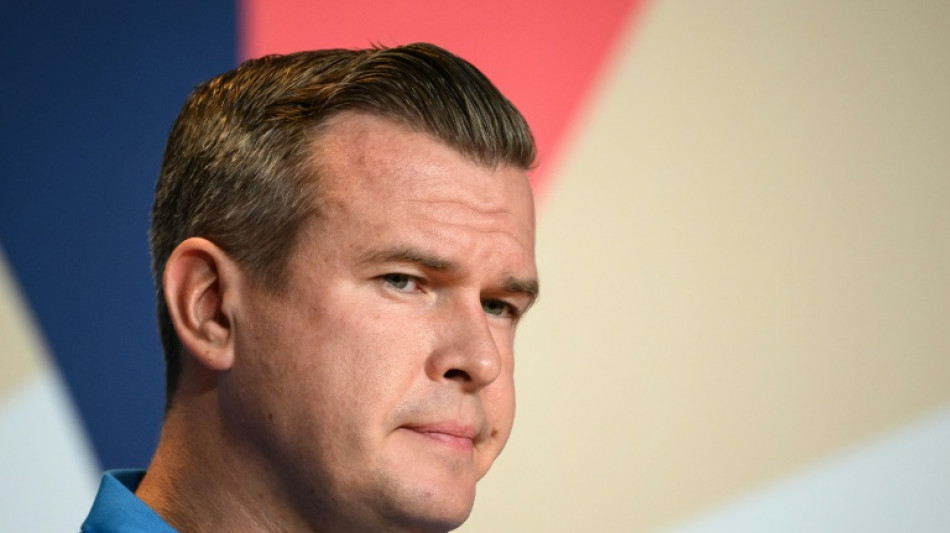
Final report clears WADA in Chinese swimmers case, adds rules need strengthening / Photo: © AFP/File

 Arizona Superintendent Tom Horne to Leave Office, Plans Law Practice and Charter School

 Japan and Peru Mark 150 Years of Diplomatic Ties Amidst Trade and Investment Talks

 Ian Jackson Scores Game-High 22 Points After Rick Pitino's Prank Suspension

 Khan Welcomes Milburn’s Youth Employment Reforms Amid High NEET Rates

 Shinde Clarifies Torn Photo Controversy Amid Sonia Gandhi Book Protest

 BMW i3 vs Mercedes C-Class Electric vs Hyundai Ioniq 6: The Ultimate Premium EV Showdown

 BING X: 22,624.66 SNC have disappeared at BingX – how safe are tokens on BingX? Will BingX’s MiCAR licence be suspended?

 Urban Company Raises Rs 2,500 Crore via QIP to Expand InstaHelp
A final report Thursday confirmed that the World Anti-Doping Agency did not show "favouritism" towards China in the case of 23 Chinese swimmers who were cleared to compete after testing positive for a banned drug.
But it also found WADA's anti-doping rules and administrative processes can be further strengthened, which the agency itself acknowledged.
The report's author, Swiss prosecutor Eric Cottier, said he found "WADA has done its work autonomously, independently and professionally, and that there is no evidence to the contrary."
This matched his interim findings announced in early July.
Cottier noted also in the final report that some anti-doping rules were not followed by the Chinese anti-doping agency (CHINADA), but added "it does not change the outcome of the cases and the acceptance of the contamination hypothesis."
In April, the New York Times and German broadcaster ARD reported that the swimmers had tested positive for the banned heart medication trimetazidine (TMZ) at a domestic competition in late 2020 and early 2021.
It was determined by Chinese anti-doping authorities they ingested the substance unwittingly from tainted food at their hotel and no action against them was warranted.
The World Anti-Doping Agency accepted the argument of the Chinese authorities and did not sanction the swimmers, 11 of whom were selected for the Paris Olympics this past summer.
The case caused a global uproar, with US anti-doping authorities accusing WADA of a cover-up.
WADA director general Olivier Niggli welcomed the final report.
There are "certainly lessons to be learned by WADA and others from this situation," he said in a statement, while vowing to follow recommendations to strengthen the global anti-doping system for athletes.
This includes improving WADA's internal guidelines for managing doping cases; improving communications about alleged cases with national anti-doping agencies and athletes; and optimizing a database called ADAMS to alert officials when there are delays in analysing tests, for example.
WADA said a working group has been asked to submit recommendations in December.
E.Gasser--VB