
US Paralympic track star Malone credits mum for his success / Photo: © AFP

 Saudi PIF Retains Top Sovereign Wealth Fund Brand Title for Third Year

 Phoenix Weekend Guide: Sangria Socials, Pie Markets, and New Brunch Spots

 Trent Perry’s Late Heroics Lift No. 7 UCLA Past Cal State Fullerton

 2027 Hyundai Elantra Review: Brutalist Design and Expanded Dimensions

 Malta Maritime Forum Study Reveals €1 Billion Economic Contribution Amid Growth Concerns

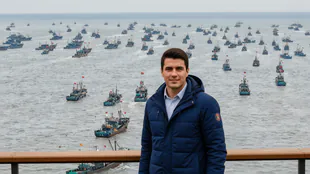 China Condemns Chile-Belgium Joint Bid for High Seas Treaty Headquarters

Noah Malone, one of several young and charismatic stars of the US Paralympic athletics team, credits his mother for pushing her reluctant son to his goals, admitting "I did not even like (the sport) at first."
So it was to his family -- there are seven of them in Paris including his mother LaTasha Sturdivant -- that a beaming Malone ran straight to after winning the T12 400 metres silver medal on Thursday as rain bucketed down at the Stade de France.
The 22-year-old had already won 100m gold -- upgraded from silver after the Turkish winner was disqualified -- and could add a third medal in the 4x100m relay.
Malone -- who aged 13 was diagnosed with Leber’s hereditary optic neuropathy (LHON), a rare, incurable genetic disease that leads to central vision loss -- already had relay gold and 100m silver from the Tokyo Games three years ago.
Growing up, his mother had noticed how fast he ran round the garden at their home in Indiana and although he was much more interested by basketball, she took him to a track and field club.
"Yeah, back in fourth grade," said Malone, who has also found time to write a book, "Losing Vision Not Dreams", about his teenage years.
"She was the one who got me into track. I didn't even like it at first, but she kept pushing me towards my goals."
Malone says it was gratifying for him to have his nearest and dearest in the stadium after they were absent in Tokyo because of Covid restrictions.
They have been pivotal to his journey to becoming a star, he says.
"That's why I went straight to them after the race," he said after finishing second to Mouncef Bouja of Morocco in a time of 49.35sec.
"I didn't want to see anyone else, so I went straight to them. They were huge supporters.
"When I was stressed out, we'd go out to dinner. This was the first major competition where I had everyone here.
"They helped me. They're like the real winners in my eyes. I'm just here.
"They're the ones who really got me here."
- Rollercoaster ride -
Malone's love of basketball still seems to burn bright because he admitted being part of a team made him a lot less nervous for the upcoming relay.
The individual events were "just really, really, really hard," he said.
"I'm just relieved that it's over... Now it's a team aspect. I don't really get as nervous because it's a team.
"But when I'm out there fighting by myself, the nerves heighten."
Malone, along with compatriots and winners of two gold medals in their respective categories, Ezra Frech, 19 (in the 100m and high jump), and 20-year-old Jaydin Blackwell (100m and 400m), promise a great future for the USA in the years to come, especially with the next Paralympics taking place in Los Angeles.
"Jaydin, Ezra, myself. There's a lot," said Malone.
"I think it's a young team. I think Team USA is really doing well with the medal count, with the people who are getting the medals, really talented."
Malone said he "can walk away with my head held high" but conceded racing in three events barely left him time to breathe.
"It was a rollercoaster ride," he said.
"A lot of ups, a lot of downs, a lot of exciting and stressful moments.
"When you're at the Games and you have six total races, there's not really many moments to just enjoy the moment.
"Because you're always looking to the next one."
However, he said he was one of the fortunate ones.
"At the same time, you've got to enjoy it," he said. "Not everybody can be here. This only happens every four years (and) not everyone medals.
"So it is a win."
E.Gasser--VB