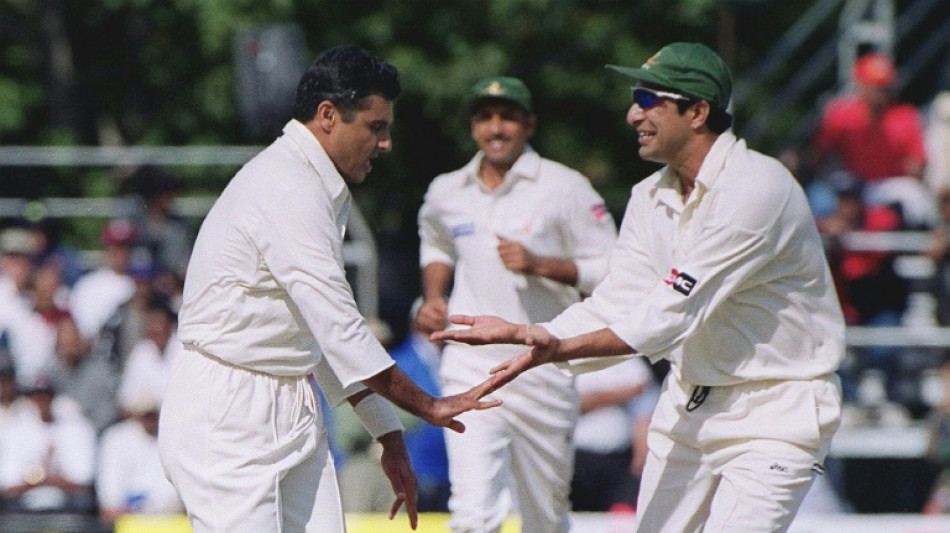
Best of enemies: England-Pakistan cricket flashpoints / Photo: © AFP

 Waze rejects Malaysia's data security claims after civil servant ban

 'Call of Duty' seeks to win back fans with warfare spectacle

 Volvo Cars shares plunge on losses, job cuts

 France braces for new protests as Macron seeks to restore order

 Kering shares tumble as Gucci fails to reassure investors

 West Bank attack wounds 5 as Israel PM cancels events
 Ahead of APEC summit, Trump comes knocking on Kim's door

 Emergency nurseries rescue DR Congo's Ebola orphans

 Bezzecchi tops Australian MotoGP practice as wallaby hops onto track
 Under-threat Ospreys bet on new ground and Australian 'stardust'

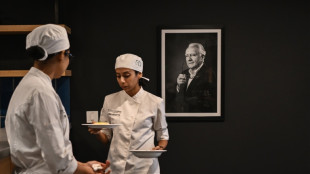 India stirs up its gastronomy with French cooking schools

 Williams, Santos lead Bears over Patriots
 China's first AI film hits cinemas but ticket sales lag

 Barcelona aiming to put Real Madrid out of sight in Clasico

 Taiwan shuts down as Typhoon Champi approaches

 370 books in 20 months: S.African author defends her use of AI

 76ers rally to stun Cavs in James's first home game for Philadelphia

 How are Ukraine strikes, Mideast war driving US fuel prices?

 Colombia's Indigenous Guard up in arms over new president's agenda

 From tech giants to anonymous nonprofits, the biggest donors in US midterms

 Israel's far-right Ben Gvir seeks new ground in election

 Trump slams NBA's LeBron James for national anthem actions

 Australia sanctions North Koreans over 'fraudulent' IT work, cybercrime
 UK singer-songwriter Raye wins Mercury Prize for second album

 Antonelli needs ‘perfect weekend’ to realise title dream

Cricket matches between England and Pakistan have often been fraught affairs, with rows over umpiring, allegations of ball-tampering, abandoned fixtures, court cases and a spot-fixing scandal all contributing to a tense relationship.
Below AFP Sport looks back at some of the biggest rows ahead of the teams' World Cup clash in Kolkata on Saturday:
1956: The umpire and the bucket of water
Pakistani umpire Idris Baig was 'kidnapped' by England players, taken to the team hotel in Peshawar and doused with buckets of water.
The late Donald Carr, the England captain, dismissed the incident as a prank in the light of what the tourists thought were some questionable decisions.
But what was intended as a joke has often been cited as the root cause of many subsequent rows.
1982: Constant complaints
At a time when international cricket fixtures were still controlled by just two home-appointed on-field officials, Pakistan objected to umpire David Constant on their 1982 tour of England.
Pakistan were then particularly upset by his decision to give Sikander Baht out caught in a series decider at Headingley where England squeezed home by three wickets.
"I don't want to give an excuse for us losing the series but Constant made what, for us, were some costly mistakes in this match," said Pakistan captain Imran Khan.
Pakistan also complained about the experienced Constant on their 1987 tour and his Test career finished the following year.
1987: Mike Gatting and Shakoor Rana
The Faisalabad Test of 1987 became infamous for perhaps the most heated of all on-field arguments when Pakistani umpire Shakoor Rana accused England captain Mike Gatting of illegally moving a fielder late on the second day.
Gatting, adamant he had done nothing wrong, responded to being a called a "cheat" by Rana by confronting the square-leg umpire and the two men were soon pointing fingers at each other.
Rana refused to stand on the third day, meaning there was no play, but after a rest day and shortly ahead of the fourth day's play, Gatting presented the umpire with a scribbled apology.
1992: Swing into action
Reverse swing, still a relatively new concept in English cricket, was deployed to great effect by touring Pakistan fast bowlers Wasim Akram and Waqar Younis.
But their success, which England failed to match, attracted suspicions of illegal ball-tampering and matters came to a head during a one-day international at Lord's.
Bad weather meant the game went into a second day, when a trio of English officials -- on-field umpires Ken Palmer and John Hampshire together with third umpire Don Oslear -- ordered the ball be changed under Law 42, which deals with the condition of the ball.
Administrators, horrified by a possible scandal, refused to announce publicly why the ball had been changed -- something that angered Pakistan, who then had to confront numerous allegations.
Meanwhile, home batsman Allan Lamb gave an interview to Britain's Daily Mirror headlined "How Pakistan Cheat at Cricket".
1996: Imran bowls over Botham in court
Having competed fiercely against England's Ian Botham when the duo were two of the world's leading all-rounders in the 1980s, Imran then got the better of his old rival in court.
He won a libel case in London after Botham and Lamb accused him of calling them uneducated racists during a newspaper interview with India Today journalist Shekhar Gupta.
"I've been vindicated," said Imran after the verdict. "I never called anyone a racist, under-class and a cheat.
"I am also happy that Pakistani cricketers have been vindicated. They had been called cheats throughout," added Imran, who later became Pakistan's prime minister.
2006: Forfeit at The Oval
England were bystanders as Pakistan became the first team in 129 years and 1,814 fixtures to forfeit a Test match.
The incident began on the fourth afternoon at The Oval when experienced Australian umpire Darrell Hair tapped his shoulder to indicate five penalty runs, signalling he had found Pakistan guilty of ball-tampering.
The angry tourists refused to take the field after tea and Hair, together with West Indian umpire Billy Doctrove, took that to mean they had forfeited the match which, following hours of uncertainty, was awarded to England.
This Test marked the beginning of the end of Hair's time as a top umpire after it later emerged he had offered to resign in exchange for $500,000.
2010: Spot fixing at Lord's
Pakistan's tour was mired in controversy following a spot-fixing scandal in the Lord's Test when, in a newspaper sting operation, then captain Salman Butt instructed pacemen Mohammad Amir and Mohammad Asif to bowl deliberate no-balls.
The trio were all later banned and jailed.
When the teams returned to Lord's for a one-day international, England's Jonathan Trott, now coaching Afghanistan at the World Cup, and Pakistan's Wahab Riaz had to be separated in the nets after exchanging angry words.
A.Kunz--VB