Emergency nurseries rescue DR Congo's Ebola orphans / Photo: © AFP

 Ukraine's young figure skaters twizzle on despite Russian threat

 Asian football endorses Infantino re-election as FIFA president

 Complete Kane hopes for 'special night' as Ballon d'Or rumours swirl

 Rooney calls United squad 'selfish babies' after Fernandes criticism

 Teddy Wilson, son of World Cup-winner David, gets Wallabies call-up

 New Zealand military chief resigns over 'inappropriate relationship'

 Man Utd's Carrick on borrowed time, free-scoring Brighton face Liverpool
 Asian stocks head into weekend on a low as tech extends losses

 'Generational rage': Young Europeans fight to be heard

 Lula, Bolsonaro to clash once more before Brazil vote
 Dressed to kill: Haircuts cap menacing look of Japan's yakuza
 Napa Valley's wineries feel Trump's tariff squeeze

 Venezuela protests demand return of Nobel winning leader Machado

 Marquez tops incident-packed opening practice for Australian MotoGP

 New York votes to ban Central Park horse carriages after decades of debate

 Australia face selection headaches after 'shambolic' South Africa defeat

 Around 150,000 rally in Belgrade as Serbia heads to pivotal poll

 Hamilton sets sights on racing in African grand prix
 Bournemouth hammer 10-man Milan, Juventus denied at the death

 Judge orders Trump to give deposition in BBC lawsuit by Dec 11

 'Fake' pollsters hit US midterms

 Global markets retreat as tech mood sours, oil prices jump

 Juventus denied at the death, Sunderland make point in Poland in Europa League

 Tens of thousands rally as Serbia heads to pivotal poll
 Monet's 'Iris' fetches 50 mn euros at Paris auction

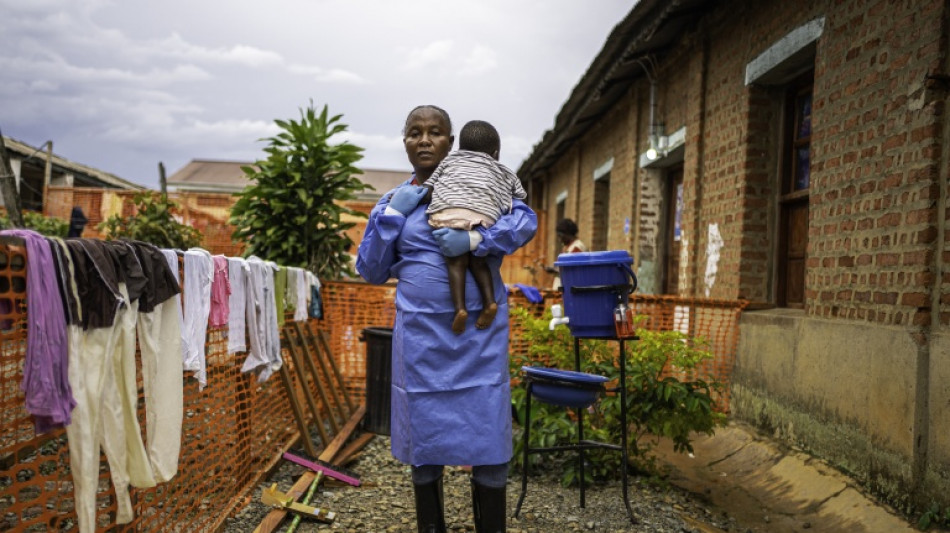
A caregiver wore a protective gown and gloves as she bottle-fed a baby -- one of hundreds of children orphaned by the Democratic Republic of Congo's Ebola outbreak.
With the disease still spreading five months into the epidemic, the nursery in the remote east is one of 12 receiving the children of those killed by the highly contagious haemorrhagic fever.
"Many children have lost both their father and mother because of Ebola," Marie Bakikula, a caregiver at a UNICEF-supported nursery in Mongbwalu, told AFP.
The mining town in Ituri province near the Uganda border is considered the epicentre of the outbreak.
Children account for about one-third of deaths and more than one-quarter of infections in the current crisis -- more than 2,000 cases, according to UNICEF.
A short distance from the nursery, workers in white protective suits loaded a child-sized coffin into the back of a pickup truck.
Others survive but lose their families. Ebola orphans arriving at the emergency nurseries have seen their parents die and burial teams in protective suits come to remove the bodies.
Others were separated from their families after their parents, infected with the virus, were transferred to Ebola treatment centres.
"They all believe that by coming here they will never see their parents again," said Monique Ndjangosi, a psychologist at the Mongbwalu nursery.
- Disinfected toys -
Nearby, a young girl and three boys played among stuffed toys recently disinfected with chlorine. Their mothers had tested positive for the virus.
The children will remain under observation for 21 days, the disease's incubation period, in case they develop symptoms.
"One of them showed symptoms seven days after arriving and was admitted to the Ebola treatment centre," said Bakikula, who volunteered to work at the facility after surviving Ebola herself.
The only contact many children maintain with their infected parents comes through photographs and videos taken by healthcare workers.
"We cannot take them inside the treatment centre to visit their parents. It's too risky," Ndjangosi said.
- Unidentified children -
In some cases, child protection teams succeed in locating relatives, even distant family members, who can care for orphaned children. In others, this proves impossible.
"We still have children we have not been able to identify because they are too young and their parents arrived in a coma," said Celine Lusinde, head of provincial child protection services.
Her office has registered 8,200 newly orphaned children since the outbreak began.
Marie-Therese Tsesi, a 63-year-old nurse, has taken in five Ebola orphans at her modest mud-brick home near Mongbwalu hospital.
"Their father was the only parent they had left. He died of Ebola," she said.
"They were sleeping outside and showing signs of malnutrition."
- Thousands killed -
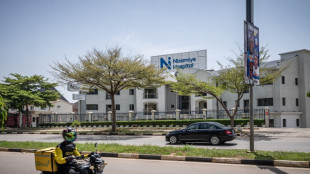
The current Ebola epidemic, the DRC's 17th, quickly became the deadliest ever recorded in the central African country and remains uncontrolled despite months of efforts. Cases have also been detected in Uganda, Kenya and Nigeria.
The disease, which spreads through contact with bodily fluids and causes severe haemorrhagic fever, has infected 9,704 people and killed 4,687 in the DRC, according to the latest health authority figures, giving it a fatality rate of nearly 50 percent.
A clinical trial is under way, but there is currently no approved vaccine or specific treatment for the Bundibugyo strain behind the outbreak.
Health authorities continue to face shortages of resources, while insecurity caused by armed groups in Ituri province, the area hardest hit by the epidemic, restricts access to some communities.
Many deaths occurring outside health facilities are believed to go unreported.
T.Ziegler--VB