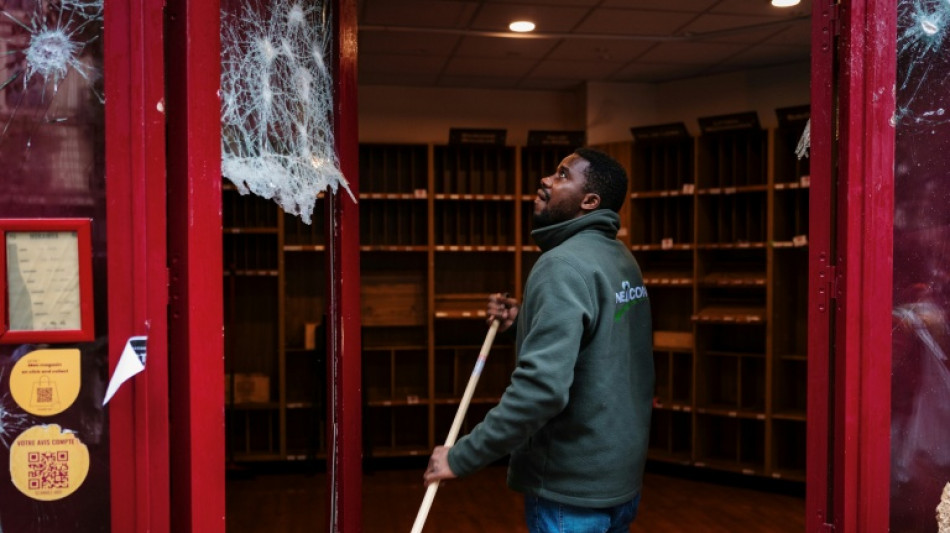
France announces curfews as government grapples with unrest / Photo: © AFP

 Ronaldo handed 30-day suspension: Portuguese federation
 France announces curfews as government grapples with unrest

 Boland sets pace as South Africa struggle
 Ukraine on back foot as Kremlin moots US, China meeting
 'Stay home!': Tourists find themselves in a France convulsed by protests
 Kenyan cult leader guilty on all charges over 191 starvation deaths
 Eagles star Hurts to miss rest of NFL season: reports
 Oil-rich Alberta votes on Canada breakup
 Israel announces arrests after West Bank settler attacks on Westerners
 Guehi insists players have 'trust and belief' in Man City after charges
 UN climate panel head wants swift end to deadlock over key scientific report
 PM calls for curfews in France as govt grapples with unrest
 Man City's Semenyo out for up to eight weeks

 Australian lawmaker critically hurt in 'violent' vehicle attack
 England women's coach Wiegman signs two-year contract extension
 Louvre blocked as France grapples with unrest
 Bollywood actor Tiger Shroff shot at in Mumbai, three suspects held: police
 UN biodiversity summit opens with nature goals off track
 'Physical hell': Hong Kong hosts gruelling underwater hockey tournament
 Police 'lost control' during French protests, says interior minister
 Australia's new Ghost Shark submarines grow some 'teeth'
 'I call it a bribe': Pennsylvania residents spurn $10,000 data center checks
 In a former US steel city, ordinary people struggle to get by
 'Liar,' 'clown': Lula and Bolsonaro spar in Brazil poll debate
 Record El Nino? Depends who's counting
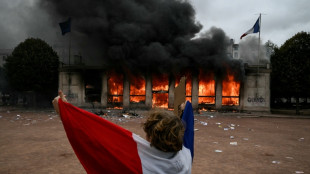
France announced partial curfews in Paris and other cities on Monday after weekend demonstrations over soaring prices degenerated into some of the worst street violence in recent years.
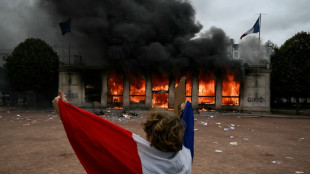
Prime Minister Sebastien Lecornu did not rule out imposing a state of emergency after the interior minister said police had "lost control".
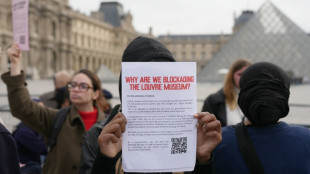
Tourists in Paris had a taste of the disruption on Monday when they found the Louvre closed because of a small group of student protesters.
Facing accusations that it failed to anticipate and respond to the violence, the government has vowed to re-establish order, while officials scrambled to contain public anger.
The unrest, erupting just six months before France elects a successor to President Emmanuel Macron, threatened to continue, with organisers calling for a new round of protests next Saturday.
Authorities said partial curfews would be enforced from Monday evening to Tuesday morning in a number of cities including Paris, Lille and Lyon, to protect businesses.
In the capital, a curfew was ordered from 11:00 pm (2100 GMT), while demonstrations were banned from 8:00 pm.
"I'm absolutely determined to restore public order", Lecornu said.
Other European countries have also seen demonstrations over rising prices, with smaller clashes breaking out in Milan and Belgium over the weekend and protests simmering in Spain and Portugal.
Some half a million people turned out across France on Saturday to denounce the surging cost of living, a culmination of four weeks of protests that began with students demanding better conditions at high schools.
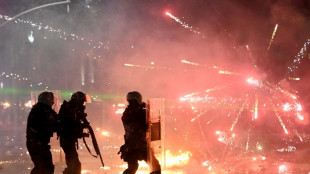
What started as peaceful demonstrations descended into violence in many cities, as masked groups attacked law enforcement, broke into public buildings and set some ablaze, looted shops, and set fire to cars, bicycles and scooters.
- Listings for 'stolen goods' -
On Monday, France's digital minister, Anne Le Henanff, urged online resale platforms to remove listings for "stolen items" following Saturday's looting and summoned representatives of companies including Vinted and eBay.
After the weekend scenes of chaos, Interior Minister Laurent Nunez offered his resignation, but Macron refused to accept it.
More than 2,500 people were arrested and nearly 1,000 members of the security forces injured. Protesters were also hurt, with one demonstrator's hand blown off by a police crowd-control grenade.
Macron acknowledged failures in the government response, which had seen 60,000 law enforcement personnel deployed on Saturday.
Nationwide, more than 2,513 people have been taken into police custody since the weekend, Justice Minister Gerald Darmanin said. He added that 67 had been jailed and "dozens" of criminal cases opened.
Darmanin also said authorities would use facial recognition on social media to identify perpetrators.
At least 3,000 shops were damaged, with the cost running into hundreds of millions of euros.
In an address to the nation Sunday, Macron slammed the "unbridled" violence.
The European Union called the violence "unacceptable" but warned that the right to peaceful protest "must be protected" in France.
Germany condemned the violence and updated its travel advice for France, saying "further outbreaks of violence in the coming days cannot be ruled out".
China has warned citizens travelling to France to be aware of risks and take safety precautions, state broadcaster CCTV reported.
- Louvre blocked -
In Paris on Monday, a dozen demonstrators blocked the entrance to the Louvre, the most visited museum in the world, while bewildered tourists looked on.
"We don't want to get involved. We want to stand back and get away from them," Pat Boland, a tourist from Australia, said of the protests.
The pensioner, 73, spoke to AFP outside barricades that had been erected at the Louvre, which was closed because a small group of protesters stood by its famed glass pyramid entrance.
The unrest has flared before presidential elections in April and May that will elect a new French president after a decade of centrist Macron.
Marine Le Pen, the far-right presidential candidate, is riding high in the polls.
The government has accused ultra-left groups of stoking the violence to boost the chances of the far-left firebrand Jean-Luc Melenchon in the presidential polls.
The interior minister and intelligence services were to meet late Monday to discuss the violence.
- Europe -
During the weekend, clashes broke out on the sidelines of a cost-of-living demonstration in Milan.
"I'm very worried because it's a new phenomenon, which also originates from an international scenario and therefore feeds itself," mayor Giuseppe Sala said.
In Spain protesters have set up tents in the heart of Madrid to denounce soaring housing costs, with similar encampments going up in neighbouring Portugal's main cities of Lisbon and Porto.
burs/as/rmb/rh
H.Weber--VB