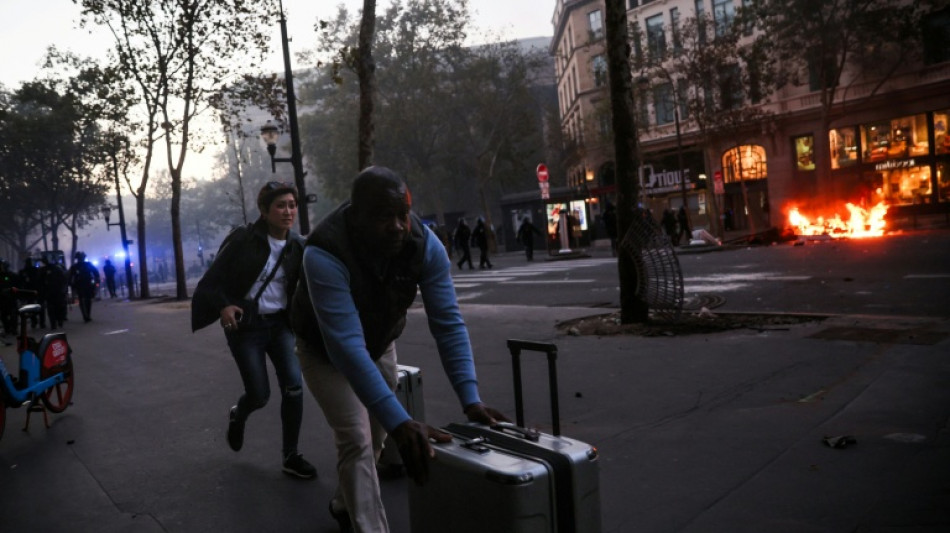
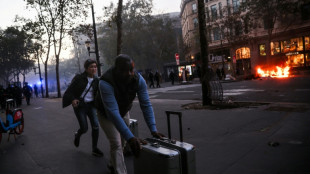
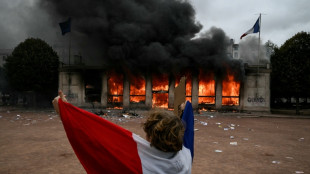
'Stay home!': Tourists find themselves in a France convulsed by protests / Photo: © AFP

 Saudi airport closure disrupts life in kingdom's capital

 Ramaphosa tells South Africa to prepare for loss of US-Africa trade deal
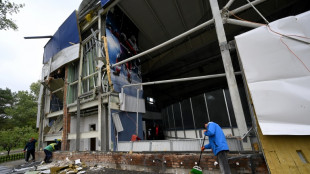
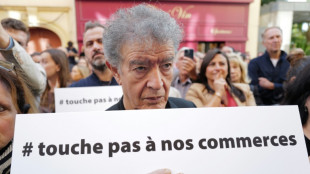 France presses resale platforms to remove 'stolen' goods after unrest
 Yamal v PSG: Ballon d'Or backdrop to Champions League showdown

 Araujo says too soon to talk about permanent Liverpool move

 US wants to be 'strong partner' for central Asia: Rubio
 'Special' to face friend Perez in Champions League, says Liverpool's Iraola
 Monitor says Indonesia fires have burned nearly two million hectares

 French PM says could declare state of emergency over unrest 'if needed'
 Albanian PM warns of 'red line' after days of unrest
 Putin, Xi and Trump could meet at APEC summit: Kremlin
 Microsoft exits data centre deal in blow to UK AI ambitions

 European stocks retreat as France violence spreads

 North Korea warns 'grave situation' prevailing along border
 Raya proud of Arsenal's 'incredible' reaction after third straight win

 Indonesia fires have burned nearly two million hectares: monitor
 Australian lawmaker 'critically' hurt in attack, officials say

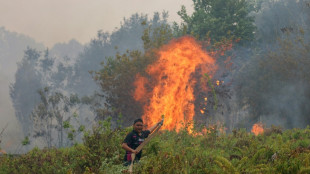 Indonesia fires burned over 1.9 mn hectares through September: monitor
 Asian tech stocks mixed after Wall St losses, eyes on earnings

 China's third-quarter growth narrowly beats forecasts
 Asian stocks start week on back foot, tracking tech-led Wall St losses
 China growth narrowly beats forecasts

 Faith and fury: Texas Senate rivals offer contrasting visions
 Women await justice for police killings in Brazil
 The painstaking task of cataloguing the world's species

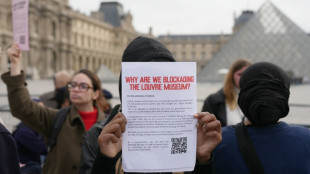
Upon arriving at a blockaded and closed Louvre after a more than 20-hour plane journey from Australia, Anne Boland had advice for tourists planning to visit Paris.
"Stay home!" the 73-year-old pensioner told AFP on Monday outside the world's most visited museum, after a weekend of unrest that rocked some of the French capital's most iconic streets and squares.
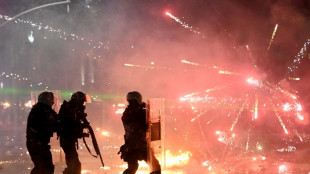
She was one of thousands of visitors scrambling to navigate the City of Light as marches, traffic delays and wafting tear gas snarl the capital's 14-billion-euro ($16-billion) tourism industry.
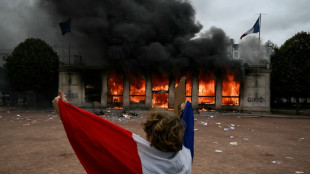
A small group of protesters was blocking the entrance to the Louvre's famous glass pyramid, following days of mass protests that also spilled into some of the worst street violence France has seen in recent years.
Cycling through the city the day before, expecting charming Haussmann buildings, mansard roofs and corner cafes, Peter, a Dutch tourist, found himself touring a "war zone".
"It was terrible -- debris from fires everywhere, glass on the pavement," the 63-year-old, who declined to give his last name, said.
Some shrugged off the disruptions. But almost all seemed caught off guard upon arriving at the Louvre, their plans suddenly cancelled.
Turned away, many resorted to selfies and photos in front of the former palace.
Roughly half a million people turned out across France on Saturday to denounce the surging cost of living, a culmination of earlier protests led by high school students demanding better conditions at their schools.
The Yellow Vests movement, which organised the weekend's rallies, has called for more protests this coming Saturday, as the government mulls partial, targeted curfews.
- 'A disaster' -
The closure of the Louvre meant just one more detour for Anne and her husband Pat Boland, also 73, whose airline lost their luggage during the voyage.
"It's just a disaster," said Pat with a laugh.
"We were here at this exact spot seven years ago, and the queues were too long," said Anne.
Having visited the museum twice, she's yet to go inside.
"We don't want to get involved. We want to stand back and get away from them," Pat said of the protests.
"But we don't want to go against them either," Anne hastened to add, noting a trend of cost-of-living protests cropping up across the world recently, including in Ireland and Australia.
At the weekend, taxi drivers at Charles de Gaulle international airport warned arriving passengers that they might not be able to make it to their destination if protesters blocked their routes.
A headline in a newspaper in Wales, in the UK, wondered if France would be safe for families to visit for the upcoming school holiday, and the US embassy called on its nationals to exercise caution.
But many in the city carried on in typical Parisian style: a video broadcast by America's CBS news showed a couple drinking on a city terrace, unfazed by a nearby fire in the road.
"We haven't seen anything concerning," said Glenda Manna, 62, a university professor in town from the United States.
But as the protests capture the attention of news channels -- and politicians -- around the world, there are incessant messages from family members back home pleading with them to "tell me you're safe," added her mother, Dorothy Hill, 82.
R.Braegger--VB