Top World Bank official 'extremely concerned' by fallout of Iran war / Photo: © AFP

 Putin rules out imminent Zelensky meeting

 Zverev eases past Mensik to reach second French Open final

 England collapse gives New Zealand hope in first Test
 Argentine rock legend Carlos 'Indio' Solari dies at 77

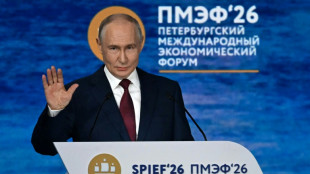 Russian economy has not collapsed, Putin says at key forum
 AI fever spreads, but are markets masking economic cracks?

 MEXC Lists YOM (YOM) with 200,000 YOM and 40,000 USDT in Airdrop+ Rewards

 Strong US job growth beats expectations in May, firming recent gains

 'No hope': Indian crew stranded off Turkey for months
 From Siberia to French Open final, Andreeva living 'dream'

 Leclerc beats Hamilton as Ferrari shine in Monaco F1 practice

 Lawsuit seeks to stop US 'third-country' deportations to Eq.Guinea

 Celtic fans oppose potential Keane move over Israel stay
 Feared global hunger crisis 'coming to pass' as Mideast war lingers: UN
 Macron blasts 'unacceptable' lapses over girl's suspected murder

 Sea drone explodes in the Romanian port of Constanta, no casualties

 Nearly 1.5 million displaced in Haiti: UN

 Former France rugby coach Saint-Andre eyes making history with Aix

 France probes judicial 'dysfunction' after girl's suspected murder
 Serena Williams' comeback to continue in Berlin
 Norway crown princess put on waitlist for lung transplant
 US Senate approves $70 billion for Trump immigration crackdown

 France questions judicial system after girl's suspected murder

 Israel strikes Lebanese village after warning to several areas

 UN doubles appeal for Lebanon aid to nearly $640 mn amid Israel war

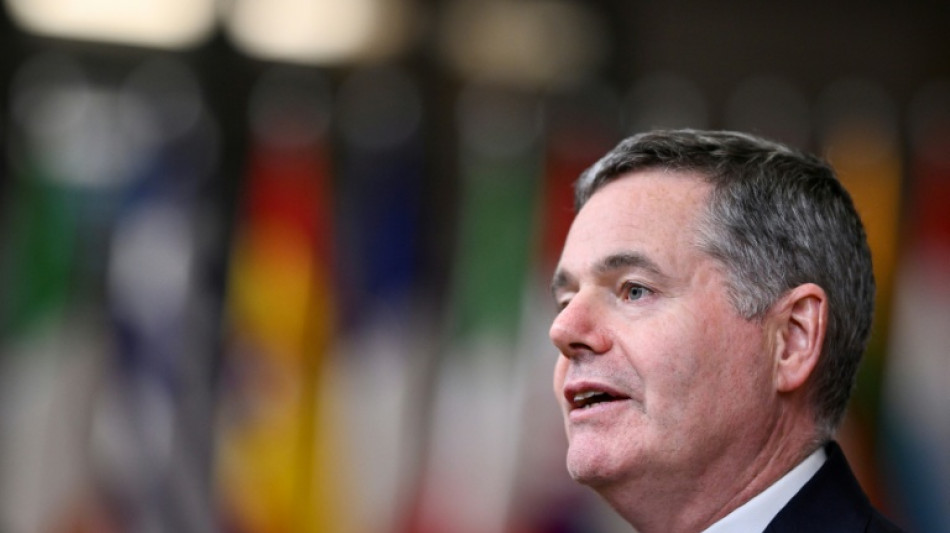
The World Bank is "extremely concerned" about the effect the war on Iran will have on inflation, jobs and food security, and is in talks with member states on how to address immediate needs in the crisis, a top official told AFP on Wednesday.
Managing Director Paschal Donohoe's comments came as his organization announced a new partnership with the International Monetary Fund (IMF) and International Energy Agency (IEA) to coordinate aid responses to the war.
Donohoe flagged that countries in Asia and Africa were particularly vulnerable to the energy, price and supply-side shocks of the crisis.
"At the moment, we are consulting with many governments and countries in relation to what their needs will be, and I would anticipate within the next number of weeks that will become far clearer," Donohoe said.
The United States and Israel launched strikes on Iran on February 28, igniting a war that has engulfed the Middle East, snarled key supply chains and sent energy prices soaring.
The World Bank offers development assistance and immediate budgetary support to member nations in the form of loans and technical assistance.
Donohoe said the organization was currently offering both forms of support in talks with countries in need.
"We are extremely concerned regarding the effect that this will have on inflation, on jobs and on food security," he said. "That is why we will put in place responses that have a financing element and a policy element that can and will be of support.”
Discussions regarding financial options -- which could take the form of immediate loans -- were "underway," but were not expected to conclude for "a number of weeks."
On the policy advice front, Donohoe expected talks to wrap up "in a few days' time."
- Risks go beyond energy -
Since the start of the war, Tehran has virtually blocked the key Strait of Hormuz, through which roughly a fifth of the world's crude oil and liquefied natural gas -- and one-third of its fertilizers -- pass.
Much of that is bound for Asian countries, which have seen energy flows abruptly dry up, as prices spike and supplies shrink.
Several countries -- including top World Bank borrowers Pakistan, Indonesia and Bangladesh -- have implemented widespread fuel-saving measures to address the crisis, saving what they have for use in key industries and sectors.
Vulnerable countries in Asia and Africa have flagged several issues of concern to the bank.
"They're calling out the income shock that will be created due to rising prices, what that will mean for households and businesses," said Donohoe.
In addition to the shock of lower energy availability -- which can lead to a drop in economic output -- there are also concerns about food security related to fertilizer supply chains being frozen.
Earlier this week, the IMF flagged that the war could have a serious effect on low-income countries if food prices rise significantly.
"People in low‑income countries are most at risk when prices rise because food accounts for about 36 percent of consumption on average, compared with 20 percent in emerging market economies and nine percent in advanced economies," said an IMF report.
In Africa, South Asia and the Middle East, the IMF warned that a number of countries were already struggling with meager foreign reserves and "limited market access," making them vulnerable to "dangerous" debt shocks.
Donohoe, of the World Bank, said the lender was "well positioned to assist countries in their economic response" and was engaged in "intense" talks with member states.
"While this challenge is going to begin in energy, it really has the ability to have consequences that go across entire economies," he said.
K.Hofmann--VB