Feared global hunger crisis 'coming to pass' as Mideast war lingers: UN / Photo: © AFP

 Evenepoel wins Tour de France individual time-trial

 Tropical Storm Bertha strengthens, threatening Gulf coast of US

 Microsoft strikes deal for Mistral's AI computing power

 Dutch students unveil 'world-first' solar-powered ambulance

 French lawmakers set to ban social media for under-15s in European first

 UK PM Burnham unveils energy tax cut, tells ministers to cut living costs

 Pharma heavyweights clash over anti-obesity drug ads

 Hungary raids Orban's Fidesz party servers in graft probe

 General Motors lifts 2026 outlook despite hit from electric retreat

 Uproar in France over reintroduction of bee-harming pesticides

 Kuwaitis ration electricity as Iran hits power grid

 Former Man Utd boss Ferguson salutes old rival Keegan

 UK PM Burnham's new cabinet to meet as he announces tax cut
 Former MotoGP champion Quartararo to make Honda switch

 Oleksandr Syrsky, Ukraine's under-fire commander-in-chief

 New UK govt tackles cost of living with energy tax cut

 China summons Philippine ambassador over clash in disputed waters

 Panama, China renew maritime port agreement

 De Gaulle returns to unite the French -- at the cinema

 North Korea reaffirms support for Moscow over Ukraine

 South China Sea rivalry looms over ASEAN meeting

 Arrogance or pride? Argentina grapples with World Cup villain label

 Fires in Brazil's Amazon dropped to historic low in 2025

 French youth social media ban meets age check conundrum

 Lebanon's Aoun to meet Trump as pressure builds to disarm Hezbollah
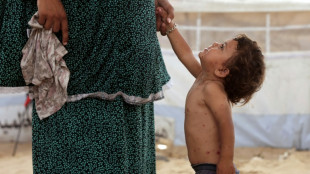
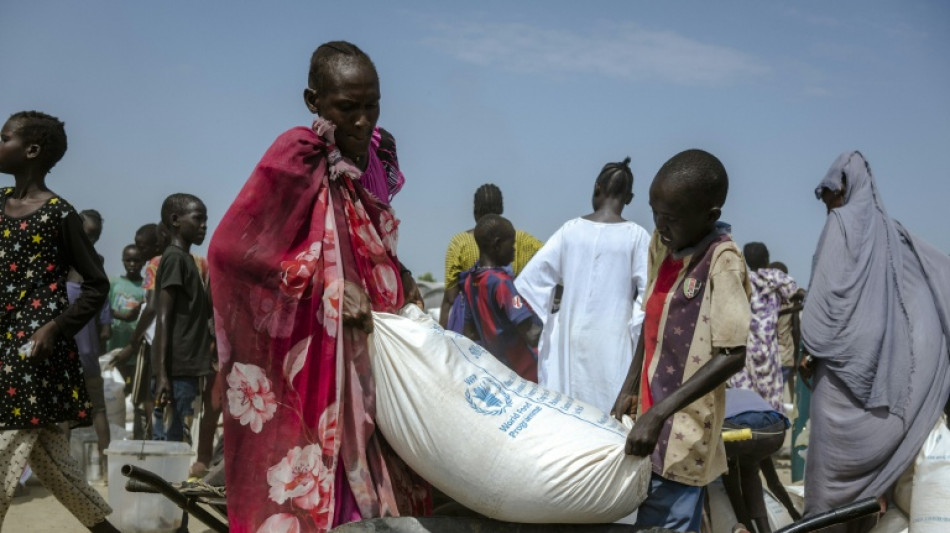
"Pessimistic" predictions that the Middle East war could push tens of millions more people into acute hunger if drawn out are being proven right, the United Nations said Friday.
A few weeks after the US-Israeli strikes against Iran on February 28 sparked the conflict and plunged world energy markets into turmoil, the UN's World Food Programme warned that soaring oil prices were devastating global food security.
If oil prices were to remain around $100 per barrel until the end of June, an estimated 45 million more people worldwide would face acute hunger, the WFP warned in March.
They would come in addition to the nearly 320 million people considered acutely food insecure at the start of the year, it said.
Weeks of complicated talks marked by sharp rhetoric and flare-ups of violence have not managed to reach a deal to end the war and reopen the Strait of Hormuz, which is critical to oil supplies.
And now, nearly three months into the conflict, "the negative scenario is unfortunately materialising", Jean-Martin Bauer, the director of WFP's food and nutrition analysis service, told AFP.
"The closure of Hormuz is translating into increased hunger," he said, pointing to soaring costs for staples like rice and wheat.
"Unfortunately, the pessimistic projections that were made earlier this year are coming to pass, and we need to act."
- Millions could lose assistance -
According to the WFP's analysis, "the crisis is generating significant spillovers", which were being felt far beyond the Middle East, "particularly through fuel, food price and income shocks and trade disruptions".
"As these factors interact with pre-existing vulnerabilities they quickly translate into visible impacts on food security and livelihoods," it said.
The analysis looked at the situations in several countries with different levels of exposure to the crisis, including Somalia, where six million people are currently considered acutely food insecure.
It projected that 2.5 million more people would be unable to afford basic foodstuffs by the end of the year.
And nearly 60 percent of households in the unstable Horn of Africa nation would be unable to afford essential needs, up from 47 percent in 2025, the agency said.
"What's shaping up is the return of a global cost of living crisis of the likes that we experienced in 2022," after the start of Russia's full-scale invasion of Ukraine, Bauer warned.
But this time, the humanitarian system that jumped into action back then has been hard-hit by dramatic cuts to global aid funding, especially since US President Donald Trump's return to the White House.
In 2022, "humanitarian programmes were better funded. Humanitarians were in places where they are no longer", Bauer said.
On top of that, logistical challenges and price inflation linked to the Middle East war have put a strain on aid efforts worldwide.
"The humanitarian system faces a double squeeze: rising needs and rising delivery costs, implying coverage gaps," the WFP analysis warned.
The agency estimated that it would now serve 1.5 million fewer people in 2026 than originally planned.
It cautioned that if the conflict lasted six months, more than nine million people could lose assistance.
- 'Running out of food' -
For instance, the WFP risks basically "running out of food" to distribute in Somalia in a few months, Bauer said.
Speaking to reporters in Geneva on Friday, he said the agency was bracing for a "pipeline break" next month, meaning no food will be available for distribution.
"The ones who will experience the impact of this are going to be very vulnerable children under the age of five," he cautioned, also pointing out that there was already a risk of famine in one Somali district.
"This is a very serious situation that requires immediate attention," he said.
With no clear end in sight to the Middle East war, Bauer acknowledged that the global food security situation could worsen further.
And the impact of that war "is not the only cloud on the horizon", he said, pointing in particular to the high risk of a warming El Nino supercharging climate instability.
That could "also disrupt food markets and cause additional need and additional stress going into 2027", he warned.
F.Mueller--VB