
-
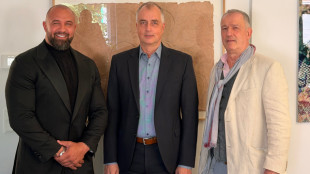 알렉스 보디와 슈테판 하우프트 교수, 루마니아의 전설적인 미술품 컬렉션을 위한 협력 합의
-
Forex Expo Dubai 2026 Breaks Guinness World Record Again With 23,816 Attendees

-
 BaazEX Enters the Asian Trading Market With a New Approach to Online Forex Trading.
-
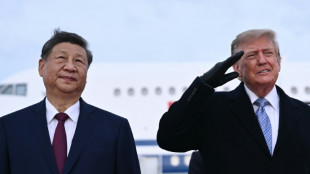
Beijingers eye Xi-Trump summit for trade relief, stable ties
-
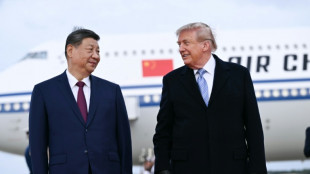 Asian markets fall on US-China jitters as leaders meet
-
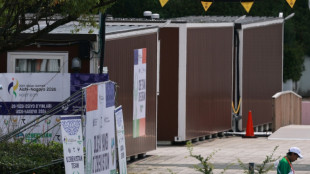
'Failing, chaotic, musical chairs': Teams slam Asian Games organisers
-
 Thais hail teen rocker Nene for 'America's Got Talent' win
-
Trump to fete Xi with lavish White House welcome
-
 Zverev, Agassi defend 'spectacular' Laver Cup
-
Pakistan deploys thousands of security forces ahead of planned protest

-
 Eel-powered Japan whizz-kid, 11, dominates in historic Games debut
-
Sao Tome voters want to stop exodus of 'neglected' youth

-
 Madagascar's Gen Z 'betrayed' after ushering in new rule
-
Bulgaria's battery boom pays off as drought hits power plants
-
 As Moscow steps up attacks, Kyiv residents brace for harsh winter
-
Mexican cartels target Australia with their African meth

-
 Comic inspires unlikely kabaddi dreams for Japan's Asian Games amateurs
-
Swim sensation Yu, 13, set for Olympic take-off after golden Asian Games

-
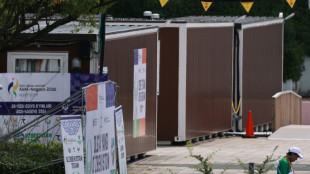 Thailand slams chaotic Asian Games organisation as 'musical chairs'
-
Ex-NFL star Brown to take plea deal in shooting case: lawyer

-
 North Korea to keep nuclear weapons 'forever': foreign minister
-
Malaysia's migrant return plan chills Myanmar Rohingya

-
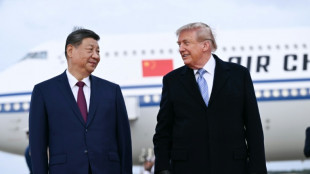 Markets mixed as China's Xi arrives for US talks
-
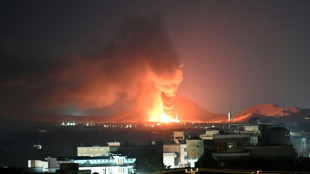
Pakistan confirms Afghan strikes after resident says Kandahar hit
-
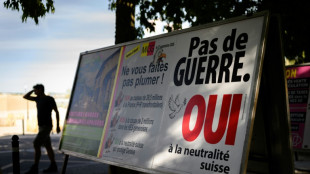 Swiss voters expected to shun stricter neutrality
-
Thousands missing, aid needs mount one month after Nepal's deadly floods
-
 Rapper-turned-PM faces first big test after Nepal disaster
-
Nepal flood victims look to PM Shah to press climate case at UN
-
 Tuchel seeks tonic to England World Cup 'scar' in Spain showdown
-
Trump admin says there were 8 suicide attempts on US aircraft carrier

-
 'Helps me cope': Catholic baptisms rise among French youth
-
Iranian satire 'Head to Head' draws a veil over the men
-
 Colombians in Santa Marta stay inside after violence wracks the city
-
Archaeological 'breakthrough' could confirm origins of Paris

-
 Iran airlines cancel flights as US sanctions hit
-
Morocco elects new parliament with lowest turnout in nearly two decades
-
 Meta launches camera-free AI glasses amid privacy pushback
-
North Korean IT contractor found remote work in New Zealand: agency
-
 Australian PM says OpenAI hacked government health website
-
Anthropic touts AI-led biology discovery

-
 Xi arrives in US to personal Trump welcome
-
Giants QB Dart to have season-ending surgery
-
 Morocco elects new parliament amid social frustration, youth discontent
-
Venezuelan shot by ICE needs urgent surgery, mother tells AFP

-
 Scheffler and Burns to face Im and Lee in Presidents Cup opener
-
Giants QB Dart to have season-ending surgery: reports
-
 Crushing wins for Lyon and Barca in women's Champions League
-
Judge urged to lift Trump's White House ban on media outlets
-
 Rio breaks record for rainiest September amid powerful El Nino
-
Stocks fall on soaring bond yields, higher oil prices
Irish slump drags eurozone economy into red
The eurozone economy recorded an unexpected contraction in the first quarter, dragged down by a sharp fall in Irish gross domestic product -- a recurring distortion linked to the accounting practices of the many multinationals based in the country.
According to new data from the EU's statistics agency, GDP in the 21-country single currency area fell by 0.2 percent in the first three months of the year compared with the previous quarter -- sharply lower than its initial estimate of 0.1 percent growth.
The unusually large downward revision was due to a steeper-than-estimated drop in activity in Ireland -- now put at 12.1 percent, far beyond an initial two-percent forecast.
Ireland's Central Statistics Office said Thursday the exceptional revision was due to the inclusion of data linked to multinationals, which carry enormous weight in the Irish economy.
It is not the first time eurozone figures have been skewed by sharp movements in Irish GDP.
Last year, the same phenomenon occurred in reverse: the eurozone posted growth of 0.6 percent in the first quarter, half of which was explained by a 9.7 percent surge in Irish output over the same period.
- Unpredictable effects -
The large swings are not tied to underlying economic activity but are purely the result of accounting operations by multinationals that have chosen the country as their European base to benefit from its very low corporate tax rates.
They include major pharmaceutical and chemical groups and, increasingly, US tech giants such as Apple, Google and Meta.
This reliance on multinationals with unpredictable effects was dubbed "leprechaun economics" by economist Paul Krugman a decade ago -- in reference to the mischievous elf of Irish folklore, said to hide pots of gold at the end of a rainbow.
While not exactly treasure, multinationals receive licensing revenues from their subsidiaries in other countries as part of tax optimisation strategies.
As the European Central Bank noted in a 2023 study, the "associated transactions in these intangible assets are often unrelated to euro area business cycle dynamics."
"Such transactions can be sizeable, irregular and instantaneous," the study said.
These erratic financial operations which are very large relative to Ireland's domestic economy thus generate heightened volatility in national and European statistics.
- Middle East war -
Rory Fennessy of Oxford Economics noted that "excluding the effect of Irish GDP, eurozone growth remains remarkably steady at around 0.2 percent per quarter."
But France's performance was also revised down at the end of May, with GDP falling by 0.1 percent in the eurozone's second-largest economy instead of the flat reading previously reported by statistics agency Insee.
And the outlook for the eurozone remained lacklustre as the Middle East war and subsequent energy shock take their toll on the region's economy, with no end in sight.
All indications are "that the worst of the impact on growth from the current supply and inflation shock is yet to come," Fennessy wrote.
The analyst noted that first quarter growth was likely boosted by companies "frontloading" purchases to try to get ahead of supply disruptions due to the conflict, as well as by defence spending.
And he predicted that effect to dissipate in the second quarter, leading eurozone GDP excluding Ireland to stagnate in the spring.
A.Kunz--VB