
-
 Six Georgians jailed for theft of rare Russian books in France
-
Net twice and chill: US star Balogun relaxed after brace

-
 US police probe theft of England training equipment
-
An Astronaut, movie stars and a knight: US brings glitz for WC opener

-
 World Cup underway in United States and the winner is Freddy
-
US beat Paraguay 4-1 in dream start for World Cup co-hosts

-
 US betting firm sponsorships spark election integrity fears
-
NSW Waratahs centre O'Donnell suspended for doping violation

-
 Mboko to miss Wimbledon, hopes to play doubles with Serena again
-
USGA aims to keep control as US Open returns to Shinnecock

-
 Scheffler seeks career Slam with US Open win at Shinnecock
-
Crusaders coach Penney admits 'magnificent' Chiefs too good
-
 World Cup begins in USA with Hollywood-style opening ceremony
-
'Narco-terrorist' the new 'communist,' says Guatemalan Nobel laureate

-
 World Cup venues scrub branding, get new names for tournament
-
Newly minted trillionaire Musk under fire over Belfast riots

-
 SpaceX: Five key moments, from first launch to Starship megarocket
-
US clears Paramount's $111 bn Warner Bros. takeover

-
 US deportation flight carrying Iranians lands in C.African Republic
-
Ohtani held out of Dodgers lineup with sore knee
-
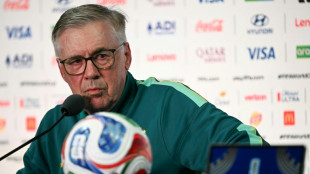 Ancelotti warns Brazil can compete with anyone at World Cup
-
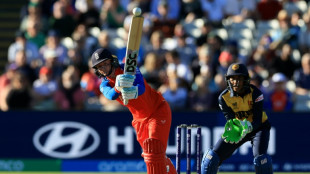
Wyatt-Hodge inspires England rout of Sri Lanka in Women's T20 World Cup opener
-
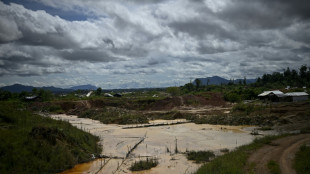 Venezuelan mining towns devoid of life after army operation
-
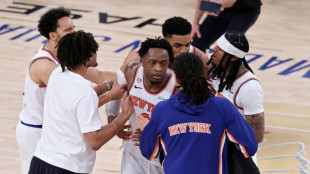
'Really cool' - Anunoby's low-key response to tip-in frenzy
-
 Canada draw with Bosnia-Herzegovina to earn first ever World Cup point
-
What World Cup? New York gripped by Knicks frenzy

-
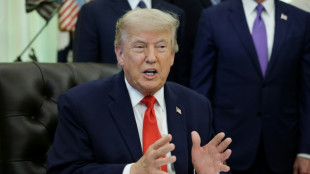 Iran and US say deal closer than ever
-
David Beckham gets Hollywood star as World Cup begins in US

-
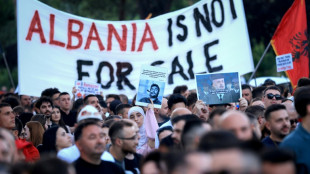 Albanian PM rallies support as Trump-linked resort row festers
-
Spain are World Cup 'favourites' despite knockout woes, says Grimaldo

-
 Boulter stuns Rybakina to reach Queen's Club semi-finals
-
After historic rally, Knicks aim to subdue Spurs early

-
 When Hockney told AFP about his lockdown 'blessing' in France
-
In partial victory, Blake Lively wins legal fees from Justin Baldoni

-
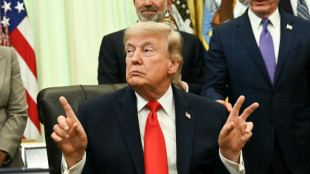 Trump calls US World Cup team before first match
-
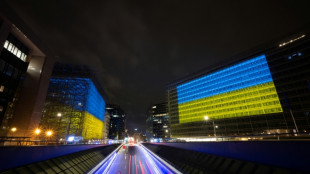
EU says to resume membership talks with Ukraine on Monday
-
 'We're over it': Wemby says Spurs focused on game five after historic loss
-
Bruce Springsteen music center set to open in New Jersey

-
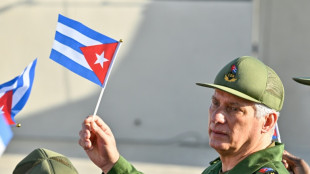 Cuba opens more sectors to private business
-
McTominay 'ready to go' for Scotland World Cup opener

-
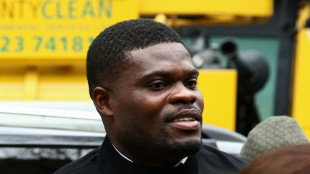 Ghana World Cup player Partey, facing rape trial in UK, denied Canada visa: FIFA
-
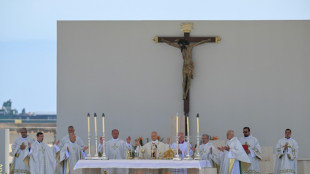
Plane trouble delays pope's return after migrant-focused Spain visit
-
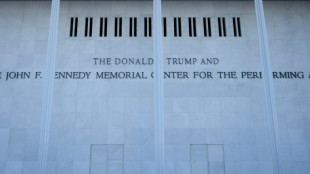 Judge rejects bid to halt removal of Trump name from Kennedy Center
-
Canada's World Cup moment arrives at home

-
 World's first gig economy treaty adopted at the ILO
-
Ireland-Israel football fixture to be played at neutral venue

-
 World Cup struggles to ignite US excitement
-
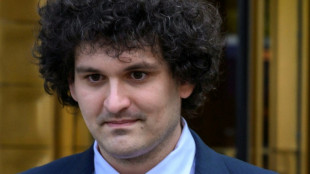
US appellate court upholds Sam Bankman-Fried criminal sentence
-
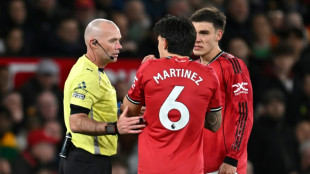 Premier League changes hair-pulling punishment for new season
-
World amateur No.1 golfer Koivun to turn pro after US Open

Houthis missile attacks on Israel widen Middle East war
Yemen's Iran-backed Houthi rebels joined the month-old Middle East war, claiming two missile attacks on Israel that raised concern on Sunday about the war spreading to the Red Sea.
Fears of a widening conflict came as the Washington Post reported that the Pentagon was preparing plans for weeks of US ground operations in Iran -- though it said President Donald Trump has yet to approve any deployment.
The involvement of Houthi rebels has added a new complexity to a conflict that has already impacted a wide swathe of the Middle East.
During Israel's recent war in Gaza, the Houthis, claiming solidarity with Palestinians, attacked shipping in the Red Sea and Gulf of Aden, forcing companies to take costly detours.
Until Saturday, they had sat out the latest conflict, even as the Red Sea grew more vital.
A Houthi spokesman on Saturday said the group fired "a barrage of cruise missiles and drones targeting several vital and military sites" in Israel.
Since the launch of hostilities, Saudi Arabia has rerouted much of its oil exports via the Red Sea to avoid the Strait of Hormuz, which Iran says it has closed to shipping from hostile powers.
- Iran threatens US universities -
The attacks on Iran continued Saturday as Israel's military said it struck the headquarters of Iran's Marine Industries Organisation in Tehran, saying the facility developed "a wide range of naval weaponry."
On Saturday evening, a wave of blasts rang out in the capital for several minutes, with no immediate word on what was targeted.
An Israeli military spokesman said attacks on Iranian military industry had intensified and "within a few days, we will complete attacks on all critical components."
"I miss a peaceful night's sleep," an artist in Tehran told AFP, saying the previous night's strikes were "so intense it felt like all of Tehran was shaking."
Iran's Revolutionary Guard meanwhile threatened Sunday to strike US university campuses in the Middle East unless Washington officially condemned US-Israeli attacks on two Iranian universities.
Several American institutions operate campuses across the Gulf region, including Texas A&M in Qatar and New York University in the UAE.
- Pakistan mediation -
The conflict began when the United States and Israel launched airstrikes across Iran that killed supreme leader Ayatollah Ali Khamenei, engulfing the region in conflict, sending energy prices soaring and prompting diplomatic efforts to halt the fighting.
Pakistan, acting as a go-between for Washington and Tehran, will host foreign ministers from Saudi Arabia, Turkey and Egypt in Islamabad on Monday for talks on the crisis.
Iran's President Masoud Pezeshkian thanked Islamabad "for its mediation efforts to stop the aggression," while Germany's Foreign Minister Johann Wadephul said Friday he expected a direct US-Iran meeting in Pakistan "very soon."
Trump's special envoy Steve Witkoff said such a meeting could take place this week, and promoted a 15-point plan that Washington says "could solve it all."
Still, the USS Tripoli, an amphibious assault ship carrying around 3,500 Marines and sailors, arrived in the Middle East on Friday amid speculation over a possible US ground deployment in Iran.
The Washington Post reported late Saturday that the Pentagon is preparing plans for weeks of ground operations in Iran -- potentially including raids on Kharg Island and sites near the Strait of Hormuz -- though President Trump has yet to approve any deployment.
- Red Sea shipping -
The economic fallout of the war remained critical with Hormuz still all but impassable and attacks on infrastructure still frequent in the region.
Many Gulf shipments have been rerouted through Oman's Salalah port on the Arabian Sea, but Danish shipping giant Maersk said operations there were temporarily suspended after a drone attack.
Fire broke out after Iranian missiles and drones struck the Khalifa Economic Zone in Abu Dhabi, injuring six people. Emirates Global Aluminium reported significant damage.
Air travel has also been disrupted, with authorities in Kuwait and Erbil in Iraqi Kurdistan reporting airport facilities hit in strikes by Iran.
The United States condemned a drone attack on the residence of Kurdish regional leader Nechirvan Barzani, blaming Iranian militia proxies in Iraq and calling it "a direct assault on Iraq's sovereignty."
Elsewhere in Iraq, a former paramilitary coalition, integrated into the armed forces but containing pro-Iran factions, said three fighters were killed in a strike near Kirkuk, while the interior ministry said two police officers died in another in Mosul.
Both were blamed on the United States and Israel.
Ukraine's President Volodymyr Zelensky offered his military's expertise to help defend against Iranian strikes as left his war-torn country for the region to sign anti-drone cooperation agreements with Saudi Arabia, Qatar and the UAE.
- Three journalists killed -
Attacks continued in Lebanon, which was drawn into the conflict when Tehran-backed Hezbollah fired rockets at Israel on March 2.
On Saturday, the Israeli military killed three journalists in the south, including Al Manar correspondent Ali Shoeib, one of the network's most prominent war correspondents, who had covered Israeli attacks on Lebanon for decades.
The Israeli military accused him of operating within Hezbollah "under the guise of a journalist."
Lebanese authorities, including President Joseph Aoun and Prime Minister Nawaf Salam, condemned the killings as war crimes.
Israel also carried out raids in southern Lebanon that killed nine paramedics, according to the health ministry.
burs-arp/msp
A.Ammann--VB