
-
 Wahi denied Canadian visa for Ivory Coast World Cup clash with Germany
-
Swiss central bank holds interest rates, with eye on currency risks
-
 S.African sentenced in 'world's largest' rhino trafficking case
-
Bank of England follows Fed in holding interest rate
-
 Bittersweet World Cup for Gaza's football fans
-
Trump defends Iran deal from critics he calls 'fools'
-
 New heatwave disrupts trains, schools in France
-
German chemical company to cut 3,200 jobs as crisis worsens

-
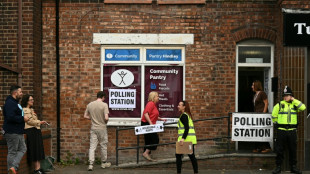 Starmer's Labour rival eyes win in UK poll key to PM's fate
-
Oil falls further on Mideast deal, but Fed outlook knocks equities
-
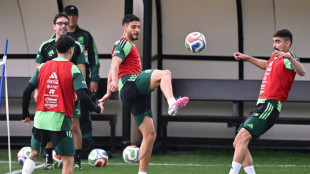 Mexico, Korea eye World Cup knockout berths
-
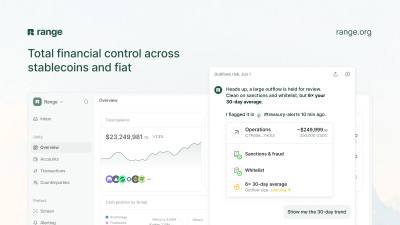
Range raises $8.3M Series A to unify treasury, risk and compliance across stablecoins and fiat
-
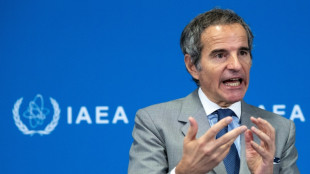 IAEA ready to help define 'concrete steps' to implement US-Iran deal
-
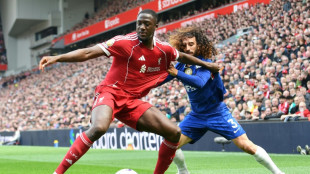
Ibrahima Konate signs four-year deal with Real Madrid
-
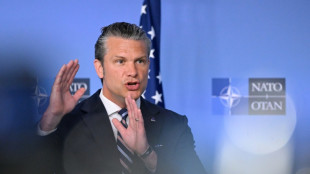 Hegseth tells NATO US will review force presence in Europe
-
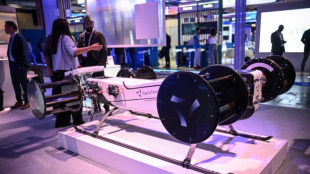
Innovations on show at Paris Vivatech fest
-
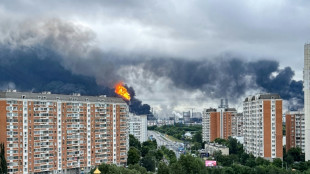 Ukraine sets Moscow refinery ablaze in biggest attack in years
-
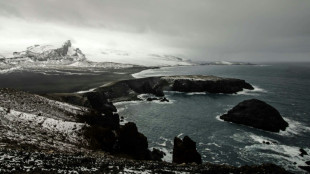
Bird flu kills 13,000 seal pups on remote Australian island
-
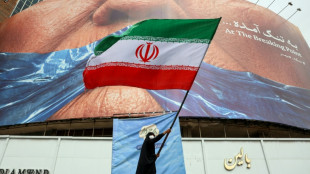 Oil prices sink further as Trump signs deal to reopen Hormuz
-
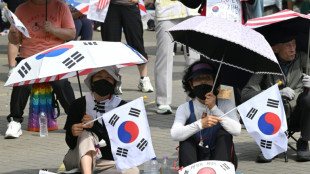
South Korean lawmakers launch probe into ballot paper shortages
-
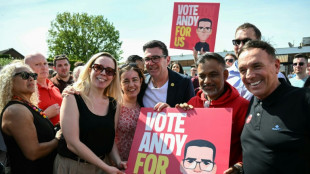 Starmer rival seeks win in UK poll pivotal to PM's fate
-
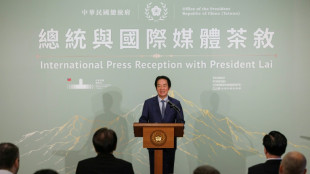
Taiwan president says hopes for $14 bn US arms sale 'as soon as possible'
-
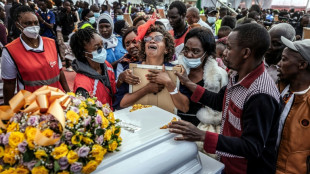 Why are Kenyan kids burning schools and killing their classmates?
-
New wave of anti-LGBTQ laws sweeps Africa

-
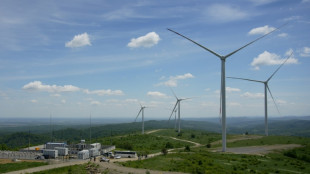 Ukraine hopes renewables can Russia-proof power grid
-
Jubilant New York on guard for Knicks parade

-
 What we learned after the first round of World Cup games
-
New Zealander Manu has 'no fear' of Toulouse before Top 14 semi
-
 Drastic restrictions on public transport take effect in Cuba
-
Pain-riddled South Korean man fights for right to die

-
 Cuba approves economic reforms to boost private sector, investment: state TV
-
India learns to live with hotter summers
-
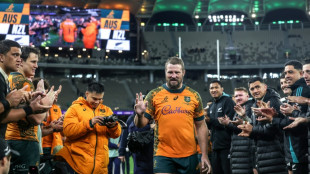 'Retired' Wallaby Slipper, 37, set for shock international comeback
-
EU wrestles over how to tackle China export flood
-
 Tartan Army takes over Boston as Scotland fans relish World Cup return
-
Comedian Jordan Klepper wishes satire was harder in age of Trump
-
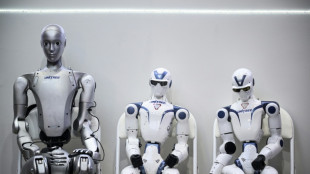 Robots pour cocktails and run marathons, but still can't multitask
-
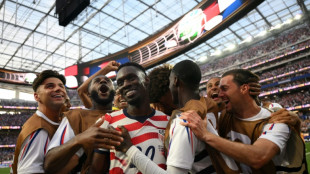
Birthright citizenship helps spark US World Cup run
-
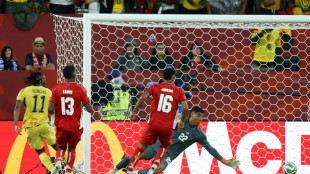 Ghana beat Panama 1-0 in World Cup opener after injury-time winner
-
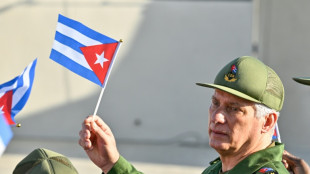
Castro gives crucial backing to Cuba reforms
-
 U.S. Polo Assn. Unveils Spring-Summer 2027 Collection at the 110th Edition of Pitti Immagine Uomo
-
Tuchel team talk transformed 'nervy' England in World Cup win

-
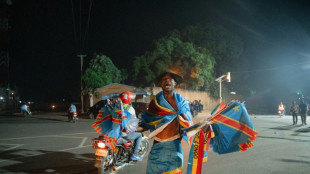 Historic World Cup goal brings rare joy to DR Congo Ebola epicentre
-
Korea coach slams 'unfortunate' drone incident at training
-
 Trump, Iran's president sign deal to end Mideast war
-
Kane double fires England World Cup bid as Ronaldo's Portugal stumble
-
 Casemiro, Ancelotti's lieutenant and symbol of Brazil troubles
-
Qantas to launch non-stop Sydney-London flights in October 2027
-
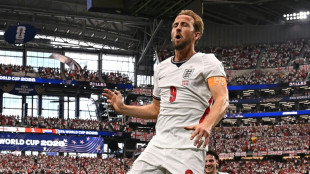 Kane scores twice as England beat Croatia to launch World Cup charge
-
Danilo backs Brazil to get over World Cup 'fright'
NYSE - LSE
Iran may believe it has the upper hand as Trump seeks talks
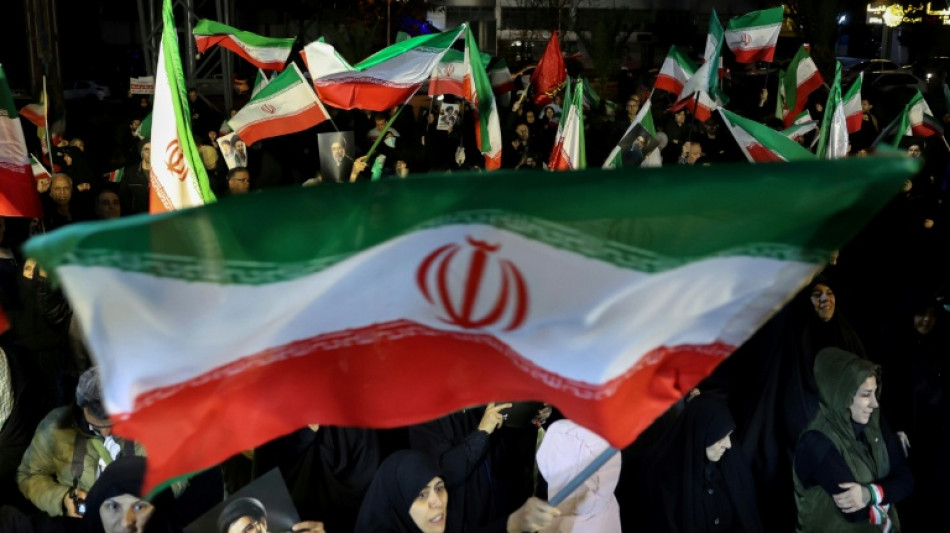
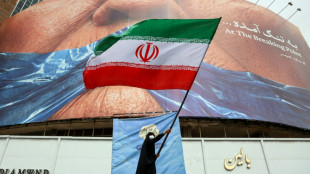
Iran's decision to rebuff a 15-point peace proposal from US President Donald Trump and outline its own conditions for a ceasefire reflects growing confidence in its negotiating position after nearly four weeks of war, analysts say.
Despite US-Israeli airstrikes that have killed its top leaders and inflicted huge material damage, Iran's governing system remains in place and it retains the ability to fire missiles and drones at its neighbours and Israel.
Above all, it has demonstrated its ability to choke off the Strait of Hormuz shipping route, spiking oil and gas prices and underlining how it has a sizeable part of the world economy at its mercy.
Trump sprung a surprise on Monday by announcing "very good" talks with Tehran, but Iranian officials have insisted all week that no negotiations are taking place, even mocking the US leader for "negotiating with himself".
"At present, our policy is the continuation of resistance," Foreign Minister Abbas Araghchi said on state TV late on Wednesday, adding: "Speaking of negotiations now is an admission of defeat."
Iran's Revolutionary Guards, the ideological wing of the armed forces that has seen its influence grow thanks to the war, has insisted in various statements that they will determine when the fighting ends -- not Trump or Israeli Prime Minister Benjamin Netanyahu.
The US leader warned Thursday that Iran "better get serious soon" with regards to talks or face unspecified consequences.
- Deterrence -
Ross Harrison, a senior fellow at the Middle East Institute think tank and author of "Decoding Iran's Foreign Policy", said he detected that Iranian leaders "are getting quite confident in themselves right now in some ways".
Given their utter distrust of Trump, who has bombed Iran twice amid ongoing negotiations in the last year, Tehran is naturally sceptical about talks and looking to create deterrence against another attack, he said.
That would come in the form of inflicting "enough pain" on the United States, and the global economy more broadly, that Trump or Israel would think twice about bombing Iran again in the future.
Iran's strategy "is much simpler than it is for the Americans: it's regime survival and recreating deterrence so that this is not going to happen again six months from now, a year from now, two years from now," Harrison told AFP.
But he noted that there's "a lot of bravado going on on all the sides" at the moment, and cautioned that the Iranians "should worry about overplaying their hand".
Another factor driving Iran's response is the promotion of hardliners in Tehran power circles during the war, including the new supreme leader Mojtaba Khamenei and new security chief Mohammad Bagher Zolghadr.
The appointment of Zolghadr, a hawkish veteran of the 1980s Iran-Iraq war, signalled "a much more aggressive Iranian posture", wrote Vali Nasr, a prominent Iranian-American author and academic.
- Struggle -
Guillaume Lasconjarias, a Middle East expert at the Sorbonne University in Paris, noted how Trump had gone from demanding "unconditional surrender" to proposing a 15-point peace plan.
"In negotiations, the one who extends their hand first appears to be in the weaker position," Lasconjarias told AFP, referring to Trump.
"Appearances are probably deceiving, however, because Iran has been very much weakened," he added, warning about the risk of miscalculation by Tehran.
A large part of its political and military elite has been assassinated, while its missile sites, nuclear programme, domestic security forces and navy have been relentlessly targeted with airstrikes.
Its economy, already suffering from sky-high inflation and sanctions before the war, is at a near-standstill.
The outcome may boil down to how badly Trump wants a quick exit from a war that is unpopular at home, and how long Iran estimates it can hold out, even in the event of further escalation from the US.
The US leader set a five-day deadline that will expire on Saturday, threatening to "unleash hell" unless Iran met his demands on its nuclear and missile programmes, as well as re-opening the Strait of Hormuz.
Robert Pape, a political science and military expert at the University of Chicago, believes the talks are a smokescreen as Trump moves thousands of airborne troops and marines to the Gulf for a possible ground offensive.
"If you want to understand where this war is going, ignore what is said. Watch what moves," he wrote on his Substack.
An Iranian military official, quoted by state media, signalled Wednesday that Tehran would retaliate to a ground invasion by activating its Houthi rebels in Yemen to attack shipping in the Red Sea, dramatically widening the conflict.
B.Baumann--VB