
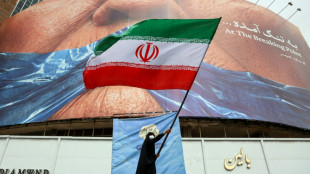
Iran likely behind attacks sowing fear among Europe's Jews: experts / Photo: © AFP

 Novelist Kundera and wife buried in Czech home city
 Cuban economy needs 'urgent changes' to overcome crisis: president

 US Open resumes after two-hour fog delay
 Spanish king to visit Mexican president on June 25 as ties improve

 Wahi denied Canadian visa for Ivory Coast World Cup clash with Germany

 S.African sentenced in 'world's largest' rhino trafficking case

 Bittersweet World Cup for Gaza's football fans

 New heatwave disrupts trains, schools in France

 Starmer's Labour rival eyes win in UK poll key to PM's fate
 Mexico, Korea eye World Cup knockout berths

 IAEA ready to help define 'concrete steps' to implement US-Iran deal

 Hegseth tells NATO US will review force presence in Europe

 Ukraine sets Moscow refinery ablaze in biggest attack in years

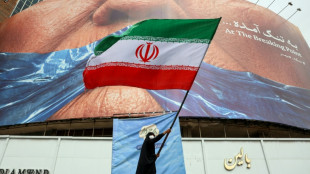 Oil prices sink further as Trump signs deal to reopen Hormuz
 Starmer rival seeks win in UK poll pivotal to PM's fate

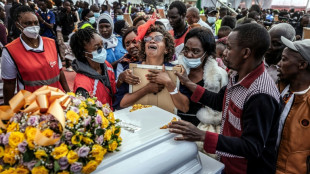 Why are Kenyan kids burning schools and killing their classmates?

 Ukraine hopes renewables can Russia-proof power grid

 What we learned after the first round of World Cup games

 Drastic restrictions on public transport take effect in Cuba

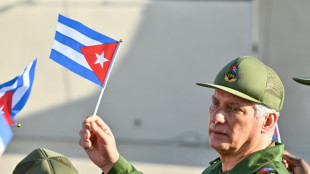 Cuba approves economic reforms to boost private sector, investment: state TV
 'Retired' Wallaby Slipper, 37, set for shock international comeback

 Tartan Army takes over Boston as Scotland fans relish World Cup return

 Robots pour cocktails and run marathons, but still can't multitask

 Ghana beat Panama 1-0 in World Cup opener after injury-time winner
 Driving the World's Leading Supply Chains: 9 OMP Customers Named to The 2026 Gartner Top 25

An obscure group has claimed to have carried out a clutch of low-level attacks which have rattled the Jewish community in several European cities.
But experts question whether the group, which has called itself Harakat Ashab al-Yamin al-Islamiya (HAYI) in online posts, really exists or is just a front for Iranian intelligence.
Jewish communities in Belgium, Britain and the Netherlands have each been targeted since the US-Israeli war with Iran began in late February.
Ambulances run by Jewish volunteers were set on fire in London, a car was torched in Antwerp, synagogues hit with explosives in Liege and Rotterdam, and a Jewish school targeted in Amsterdam.
Although police have generally been careful not to ascribe motives, pro-Iran social media accounts have posted footage and said the HAYI group carried out the attacks.
A European security source who requested anonymity because of the sensitive nature of the topic pointed out that the HAYI group was unknown before the war.
"So it is indeed likely at this stage that it is a front group," the source said.
Laurence Bindner, a specialist in online radicalisation, said the group was first mentioned after the Liege attack on March 9.
She told AFP the logo used by the group shared similarities with that of the so-called axis of resistance, an informal Iran-led military alliance.
- 'A facade' -
Julian Lanches, of the Dutch ICCT research centre, also cast doubt on the group's authenticity in a research note on Monday.
After the Amsterdam attack on March 16, claims of responsibility were published first on pro-Iranian accounts before making it onto a supposedly official HAYI account on Telegram.
Yet the official account had only a few dozen followers at the time.
Lanches also wrote that the group had claimed responsibility for attacks that do not seem to have happened, calling these messages "likely disinformation".
All of which raised the question, he wrote, of "whether HAYI is a genuine terrorist group or merely serves as a facade for Iranian hybrid operations".
The Israeli authorities are in no doubt about the nature of the attacks and the group.
Diaspora Affairs Minister Amichai Chikli said the attack on ambulances in London's Golders Green area was "the latest link in the terror chain" involving HAYI, which he labelled "an Iranian-backed proxy".
"From Liege and Rotterdam to Golders Green, Tehran deploys local cells to terrorise Jewish communities," he posted on social media site X on Monday.
- Child recruitment? -
Bindner said it was a "credible hypothesis" that the attacks had been outsourced to young operatives who may not even know who is employing them.
"They recruit operatives, sometimes minors, sometimes in criminal networks," she said.
"They instruct them to act, to film themselves, to send the video, which is then formatted with the group's graphics and logo."
European intelligence agencies have long accused Iran of using criminal networks to conduct clandestine operations in Europe.
"We are probably looking at a dual logic of a front group and subcontracting," Bindner said, allowing "plausible deniability on the part of the masterminds".
K.Hofmann--VB