Mideast war sparks long queues at Kinshasa petrol stations / Photo: © AFP/File

 Novelist Kundera and wife buried in Czech home city
 Cuban economy needs 'urgent changes' to overcome crisis: president
 US Open resumes after two-hour fog delay
 Spanish king to visit Mexican president on June 25 as ties improve
 Wahi denied Canadian visa for Ivory Coast World Cup clash with Germany
 S.African sentenced in 'world's largest' rhino trafficking case
 Bittersweet World Cup for Gaza's football fans

 New heatwave disrupts trains, schools in France

 Starmer's Labour rival eyes win in UK poll key to PM's fate
 Mexico, Korea eye World Cup knockout berths
 IAEA ready to help define 'concrete steps' to implement US-Iran deal

 Hegseth tells NATO US will review force presence in Europe
 Ukraine sets Moscow refinery ablaze in biggest attack in years
 Oil prices sink further as Trump signs deal to reopen Hormuz
 Starmer rival seeks win in UK poll pivotal to PM's fate
 Why are Kenyan kids burning schools and killing their classmates?

 Ukraine hopes renewables can Russia-proof power grid

 What we learned after the first round of World Cup games

 Drastic restrictions on public transport take effect in Cuba

 Cuba approves economic reforms to boost private sector, investment: state TV
 'Retired' Wallaby Slipper, 37, set for shock international comeback
 Tartan Army takes over Boston as Scotland fans relish World Cup return

 Robots pour cocktails and run marathons, but still can't multitask

 Ghana beat Panama 1-0 in World Cup opener after injury-time winner
 Driving the World's Leading Supply Chains: 9 OMP Customers Named to The 2026 Gartner Top 25

Long queues of cars and motorcycles have built up at petrol stations in DR Congo's sprawling capital Kinshasa over fears of shortages and price hikes after Iran's blockade of a crucial shipping conduit.
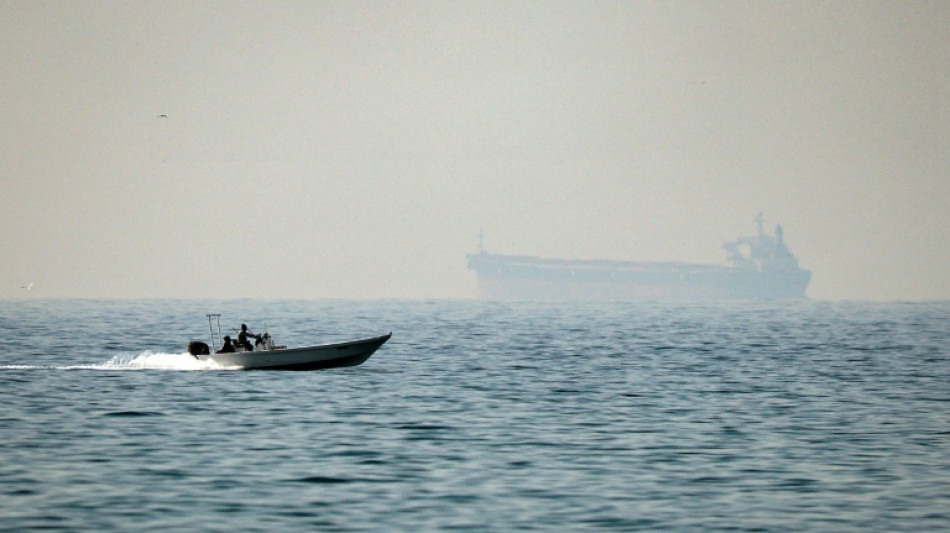
In retaliation for US and Israeli strikes that began more than three weeks ago, Tehran virtually closed the strategic Strait of Hormuz through which one-fifth of the world's oil passes, sending global energy prices soaring.
The Democratic Republic of Congo (DRC) imports nearly all the oil needed for its more than 100 million people and a shortage would risk paralysing the economy, which relies on the transport of goods by road.
The vast central African country has only a single overland pipeline, which carries imported oil from the Atlantic port of Matadi in the west to Kinshasa.
The Congolese economics ministry on Monday said in a statement that there was "no fuel shortage and stocks of petroleum products are available and sufficient to supply the entire country".
Seeking to ease the situation at the petrol pumps, it announced customs duty exemptions and the "strengthening" of advances to oil companies "in a context of tensions linked to the geopolitical situation in the Middle East". It did not provide details on the sources of the oil supply to the country.
Yet, on a main city artery, motorcyclists gripping their handlebars have been jostling for days, shouting to make themselves heard and trying to carve out a space in the crowd to secure a few litres of the scant fuel.
"There are colleagues who have been here for four hours," said Emmanuel Gedeon Nzunzi, who drives one of the motorcycle taxis that are essential in the overcrowded and congested city of around 17 million people.
With its outdated infrastructure, the impoverished DRC is no stranger to temporary fuel shortages. But this time, the threat originates far away.
"We saw on social media that people are talking about the war in Iran," Marcel said, standing by his motorcycle.
- 'Pressure' -
"We don't have any stocks?" asked motorbike taxi driver Moise Ilunga, not hiding his annoyance. "We have to put an end to this war, we have to negotiate with Iran, we're suffering," he said.
Fuel distributors, caught between the fear of seeing barrel prices skyrocket and the regulation of prices at the pump, are being singled out as responsible for the sudden shortage.
The government regulates pump prices, which are the equivalent of around $1 (2,440 CFA francs) a litre in the region around Kinshasa.
It pays subsidies to those involved in the petroleum sector to cover the difference with the actual price.
Emery Mbasthi, vice president of the Congo Oil Association, told AFP that he was worried about "depleting reserves without being able to replenish them".
He has called on the authorities to raise the price per litre at the pump or increase the subsidies.
Oil prices have already gone up since the start of the war in Iran and "oil companies are used to putting pressure on the government to review fuel prices" by holding onto their stocks," Jacques Mukena, a researcher at the DRC-based Ebuteli institute, told AFP.
But the government "will not immediately increase this shortfall", he added.
Increasing subsidies to fuel distributors would be a heavy drag on the state budget, while raising pump prices would have "a political and social impact", Mukena said.
The DRC, one of the poorest countries in the world, is particularly vulnerable to global oil price fluctuations.
Ilunga, the motorbike taxi driver, said that bikers like him now had to pay 1,000 CFA francs in bribes to be able to fill up on fuel at the pumps.
"With these costs, I'm going to have to ask for more money from customers" for the ride, said Marcel, amid the habitual din of engines and horns blaring in the Kinshasa sunshine.
The prime minister's office said on Tuesday that the DRC had stocks to supply the country until June and promised, for the time being, to limit the increase in the pump price.
S.Spengler--VB