Costa Rica: Central America's democratic eco paradise / Photo: © AFP

 Ronaldo delights in silencing 'attacks' after making World Cup history

 'Paris in this heat is awful': Tourists change plans as sites close early
 'I'm back': Ronaldo scores at sixth World Cup as Portugal run riot
 US TV news host begs for info after kidnap note says mother is dead

 Ronaldo scores at sixth World Cup as Portugal run riot

 Portugal's Ronaldo first man to score at six World Cups
 Rubio says US will not accept Iranian tolls on Hormuz

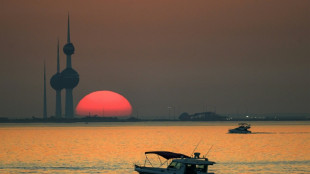 Marco Rubio in Gulf to reassure allies hit hard by Mideast war
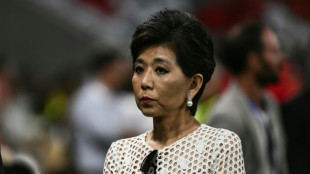 American Michele Kang agrees deal to buy French club Lyon

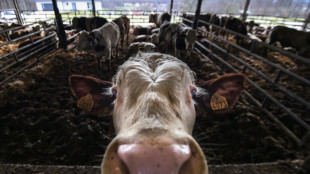 French farmers suffer arid crops, heat-stricken animals

 Scorching heat shuts Paris landmarks early as France swelters
 Ipswich hire Gary O'Neil as manager
 Lake wins Wales captaincy race ahead of Morgan
 Tech names drag down world stocks, oil dips on supply hopes

 Reports of Dupont inclusion in France squad 'bordering on annoying' says Galthie

 England coach McCullum denies rift with 'good friend' Stokes
 Taliban officials hold EU migration talks in Brussels

 Kenya halts US Ebola facility: health minister tells court

 Zelensky to skip key Ukraine conference in Poland over WWII row

 Europe heatwave closes schools, threatens health
 Germany eyes longer working lives in pension reform plan

 Iran says won't allow UN inspectors at bombed nuclear sites

 Banned Vondrousova insists she has 'never doped'
 UN chief urges AI firms to 'come clean' over environmental footprint

 More records set to fall as deadly Europe heatwave drags on
A favorite tourist destination for its stunning beaches and rich natural beauty, Costa Rica has recently seen its tranquility shattered by the impacts of drug trafficking.
Here are five things to know about the small Central American country of 5.2 million inhabitants, which goes to the polls Sunday to elect a new president and lawmakers.
- No military -
Despite is location at the heart of a violent and conflict-ridden region, Costa Rica has long clung on to a stable democracy since its only civil war, which lasted 44 days in 1948.
That year, it abolished its military -- a rarity in Latin America.
In the 1980s, when several other Central American countries were mired in civil wars, neutral Costa Rica acted as peace broker, earning then-president Oscar Arias Sanchez the Nobel Peace Prize in 1987.
In recent years, the country has seen an increase in organized crime. Drug trafficking has infiltrated even into spheres of the state, tarnishing Costa Rica's image with high-profile corruption cases.
Long considered one of the safest countries in Latin America, Costa Rica ended 2025 with a rate of 17 homicides per 100,000 inhabitants -- nearly triple the global average.
The country has a long tradition of welcoming asylum seekers and hosts hundreds of thousands of Nicaraguans who have fled repression across the border.
- Green paradise -
With its striking Pacific and Caribbean beaches, lush rainforests and imposing volcanoes, Costa Rica is considered a global leader for its environmental policies.
Nature reserves cover a quarter of Costa Rica's 51,000 square kilometers (19,700 square miles) -- territory that hosts six percent of the world's biodiversity, according to official figures.
Ninety-nine percent of its electricity generation comes from renewable sources, primarily water, geothermal, and wind.
- Happy people -
Costa Rica ranks in sixth place on the World Happiness Report, and its people are rated the happiest in Latin America.
The local expression "Pura vida!" (Pure life) has become a national motto -- an expression of optimism that is also used to greet people or give thanks.
The country's northern Nicoya Peninsula hosts one of the world's so-called "Blue Zones" -- places where people live exceptionally long, healthy lives.
- Rich but unequal -
Ecotourism is a key economic engine, with some 2.9 million people visiting Costa Rica in 2025, mainly from the United States, according to the tourism institute.
It is a member of the Organisation for Economic Co-operation and Development (OECD) group of high-income countries, with GDP growth of 3.6 percent forecast for 2026.
While poverty fell from 18 percent of the population in 2024 to 15.2 percent in 2025, Costa Rica is among the six most unequal Latin American countries on the Gini Index, and is the second most expensive after Uruguay.
- Human rights backsliding -
Roman Catholicism is Costa Rica's state religion, but the country has shown itself to be progressive on social and civil rights.
It was the first country in Central America to legalize same-sex marriage, in 2020.
Activists point to backsliding over the past four years of conservative government, during which Costa Rica restricted abortion to cases in which a woman's life is at risk. Previously it could also be performed if a pregnancy put a woman's health in peril.
The government has also eliminated sex education programs in schools.
Last year, Costa Rica agreed to receive 200 migrants deported by the United States under conditions decried by human rights groups.
S.Leonhard--VB