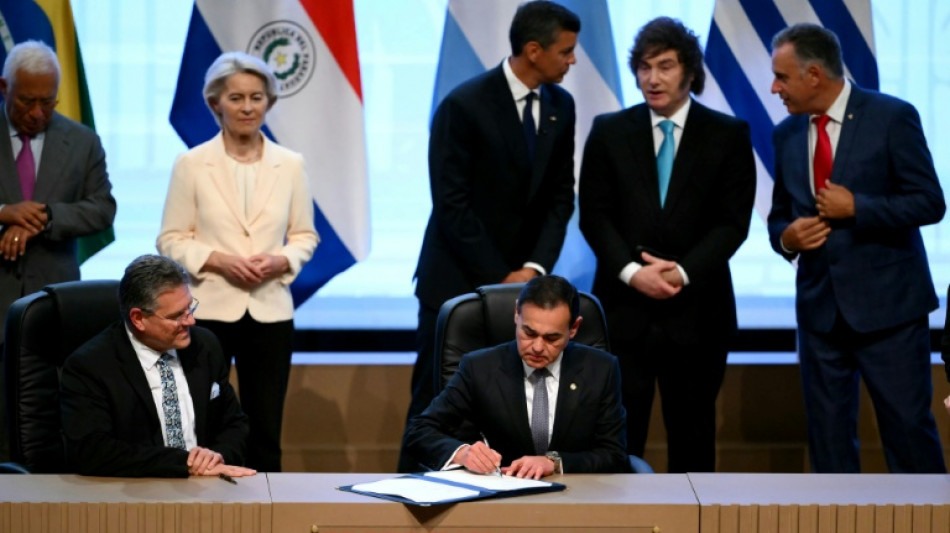
EU, Mercosur bloc ink major trade deal, reject 'tariffs' and 'isolation' / Photo: © AFP

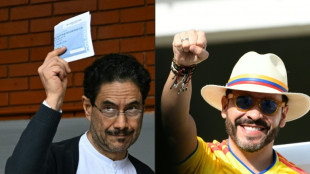 Left-wing candidate concedes tight Colombia election
 Stocks rebound after tech rout, Brent falls below $75
 Berlin unveils monument to Jehovah's Witnesses murdered by Nazis
 'Fingerprints' of black hole's event horizon detected for first time
 Verstappen seeking home boost with Red Bull upgrades
 'You have to work': Riders brave Rome heat for survival
 France detects first Ebola case outside Africa in current outbreak
 'GTA VI' preorders mark first test for biggest game of 2026
 Stocks rebound after tech rout, oil prices drop
 Australia spy chief warns of Iran terror threat
 Heatwave-hit Europe must adapt healthcare: WHO
 Euclid telescope snaps best photo yet of Milky Way's heart

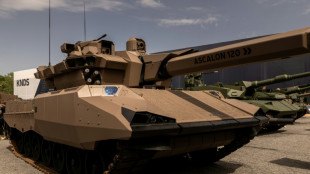 French-German tank maker KNDS fires starting gun on mega-IPO
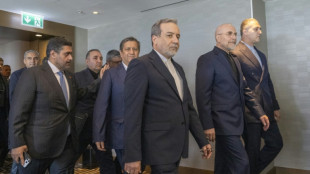
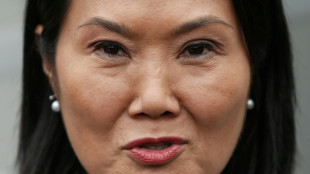 Right-winger Fujimori poised to win Peru president runoff
 Major power outage in France as Europe wilts under record heat
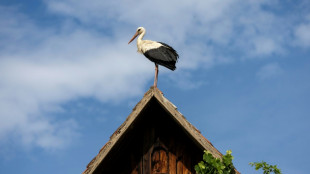 Back in stork: returning birds bring joy to Croatian village
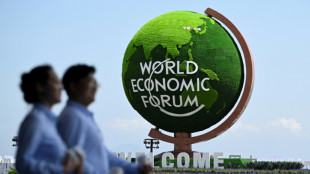 China premier urges AI governance to avoid 'losing control'
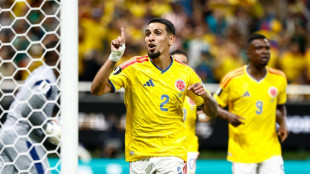 Colombia beat DR Congo 1-0 to reach World Cup knockouts
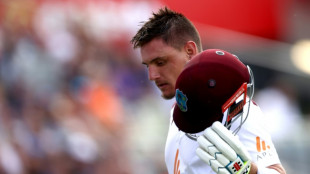 West Indies brace for Sri Lanka challenge as Da Silva returns
 Stokes urged to use curfew controversy as fuel to beat New Zealand
 Seoul bounces as Asian markets look to recover from rout
 North Korea's Kim unveils plans for 10,000-tonne warships, nuclear navy
 Ghosts of Gijon linger as new World Cup format encourages collusion
 Panama out of World Cup after defeat to Croatia

 Wizards choose teenage talent Dybantsa with No.1 pick in NBA Draft
South American and European Union officials on Saturday signed a major trade deal, which they hailed as sending a powerful message at a time of tariff threats, global uncertainty and protectionism.
The deal between the 27-nation European Union and Mercosur bloc members Brazil, Argentina, Uruguay and Paraguay creates one of the world's largest free trade areas after 25 years of tricky negotiations.
It was given fresh impetus amid the sweeping use of tariffs and trade threats by US President Donald Trump's administration, which has sent countries scrambling for new partnerships.
Trump on Saturday threatened multiple European nations with tariffs of up to 25 percent until he manages to gain control of the Danish territory Greenland.
"We choose fair trade over tariffs, we choose a productive long-term partnership over isolation," EU chief Ursula Von der Leyen said at the signing ceremony in Asuncion, Paraguay.
Paraguay's President Santiago Pena also praised the treaty as sending "a clear signal in favor of international trade" in "a global scenario marked by tensions."
European Council head Antonio Costa said the deal stood in contrast to "the use of trade as a geopolitical weapon."
And Brazil's Foreign Minister Mauro Vieira said the deal was a "bulwark ... in the face of a world battered by unpredictability, protectionism, and coercion."
Brazil's President Luiz Inacio Lula da Silva -- a key architect of the accord -- was unable to attend the ceremony due to scheduling conflicts, and met with Von der Leyen in Rio de Janeiro on Friday where he praised it as a victory for multilateralism.
In Paraguay, leaders said the treaty would bring jobs, prosperity, and opportunities to people on both sides of the Atlantic.
- 'It's not fair' -
Together, the EU and Mercosur account for 30 percent of global GDP and more than 700 million consumers.
The treaty -- which still needs to be approved by the EU parliament and ratified by each Mercosur nation -- eliminates tariffs on more than 90 percent of bilateral trade.
It is expected to come into force by the end of 2026.
The deal will favor European exports of cars, wine and cheese, while making it easier for South American beef, poultry, sugar, rice, honey and soybeans to enter Europe.
This has angered European farmers, who have rolled tractors into cities like Paris, Brussels and Warsaw to protest a feared influx of cheaper goods produced with lower standards and banned pesticides.
"We have good quality Irish beef and good standards here, and they don't have the same standards in South American countries," said Trisha Chatterton, a 50-year-old farmer at a protest in Ireland earlier this month.
"It's not fair," said Luis, a 24-year-old Belgian cattle farmer who took part in a December protest that turned ugly, as demonstrators set piles of tires on fire and hurled potatoes at police.
Key power Germany, as well as Spain and the Nordic countries, strongly support the pact, eager to boost exports as Europe grapples with Chinese competition and a tariff-happy administration in the White House.
Some in South America are also wary about the impact of the treaty.
In Argentina, it is estimated that there could be a loss of 200,000 jobs just from the dismantling of the local automotive industry, trade and investment researcher Luciana Ghiotto told AFP.
- Safeguard and quotas -
In a bid to allay fears, the European Commission announced a crisis fund and safeguards allowing for the suspension of preferential tariffs in case of a damaging surge in imports.
However Argentina's libertarian President Javier Milei warned against quotas and safeguard which "will significantly reduce the economic impact of the agreement and will go against its essential objective."
According to EU estimates, European exports to Mercosur are expected to rise by 39 percent, while Mercosur exports to the EU could increase by 17 percent.
By 2040, the agreement is projected to boost EU GDP by 77.6 billion euros and Mercosur GDP by 9.4 billion euros.
T.Zimmermann--VB