-
 Ryu takes one-shot lead over Henderson at Women's PGA Championship
-
Hovland seizes one-shot PGA Travelers lead over Scheffler
-
 Jangoo and Chase put West Indies in control against Sri Lanka
-
Mauvaka double inspires Toulouse to fourth-straight Top 14 in storm-impacted final

-
 World Cup star Gakpo requests privacy after death of unborn son
-
Solidarity, sadness among Venezuelans made destitute by quake
-
 Aid planes landing at partially reopened Venezuela airport after quakes
-
Iran says US violated peace deal as both sides attack
-
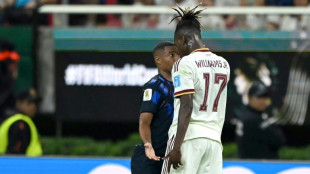 Spain's Williams hits out at Uruguay over World Cup injury
-
'We need help': Venezuelans furious at slow official response to quakes
-
 World's largest particle smasher halts for upgrade to boost hunt for dark matter
-
Venus Williams relishes 'very special' Wimbledon reunion with sister Serena
-
 Ex-Olympic medallist Canderloro elected French Ice Sports chief
-
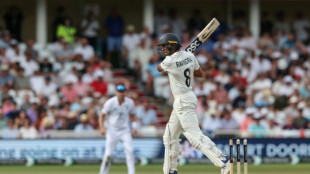
Ravindra leads New Zealand rally in England finale after Archer's double strike
-
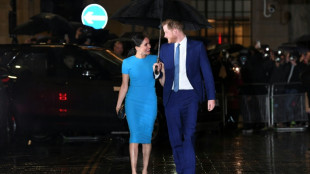 Prince Harry and family to stay at royal residences on UK visit
-
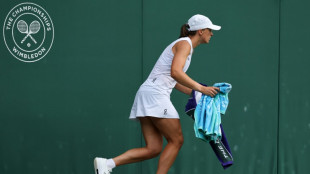
Wimbledon 'towel thief' Swiatek back on the trophy hunt
-
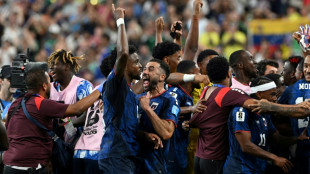 'Why not?': Cape Verde eye seismic World Cup shock against Argentina
-
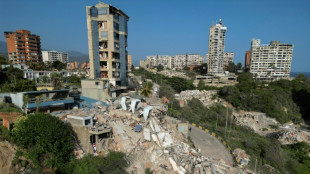
Venezuela earthquake deaths near 1,000, with millions more in need
-
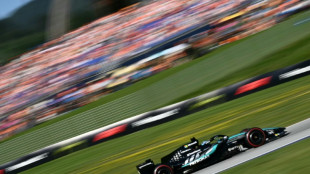 Russell snatches controversial pole in Austria after Verstappen crash
-
French Open champs head to Wimbledon wrestling with new-found status
-
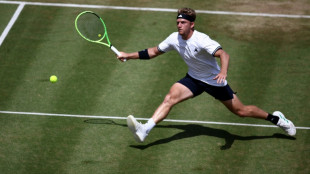 Davidovich Fokina wins in Mallorca for first ATP title
-
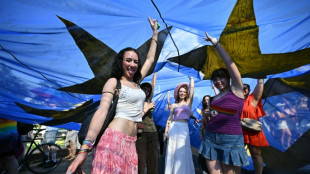
Budapest Pride marchers push for equality after reversed ban
-
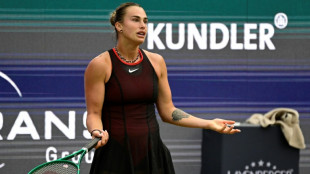 Sabalenka urges Grand Slams to 'get it done' in prize money boycott row
-
Russell snatches pole, Antonelli fourth for Austria GP grid
-
 Russell snatches pole as Verstappen, Antonelli fourth for Austria GP grid
-
Broos smiles and snarls before South Africa's historic World Cup match
-
 Smith and supersub Foulkes strike for New Zealand in England finale
-
Newborn baby rescued from rubble of Venezuela quake

-
 Supersub Foulkes strike for New Zealand in England finale
-
Raducanu halts practice session to put Wimbledon bid in doubt
-
 Wolff says Russell will be at Mercedes next season
-
Keys beats Maria to clinch third Eastbourne title
-
 Djokovic inspired by Serena as he targets history at Wimbledon
-
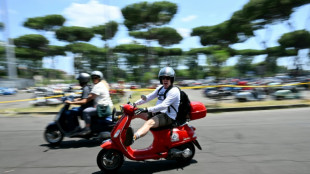
Thousands ride through Rome as Vespa celebrates 80 years
-
 Stokes falls cheaply as England collapse in New Zealand decider
-
Sinner ready for Wimbledon defence despite lack of time on grass
-
 Russell bounces back to beat Antonelli in final practice
-
Records tumble as European heatwave moves east
-
 Iran says US violated peace deal as both sides trade fire
-
England, Portugal eye top spots as World Cup group stages wrap up
-
 Injured Australian pair Leckie, Italiano out of World Cup
-
US, Iran trade strikes putting new strain on Middle East truce
-
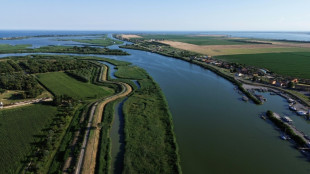 Farmers fear drought as Italy's longest river runs dry
-
Thousands expected as Vespa celebrates 80 years in Rome
-
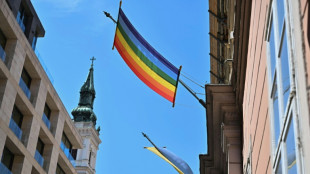 Budapest Pride to push for equality after reversed ban
-
Pino, Williams injuries mar Spain's World Cup progress
-
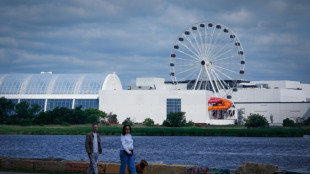 World Cup fans get taste of American life -- at the mall
-
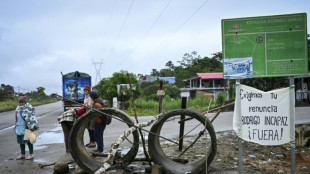
'Struggle continues' in Bolivia's Morales heartland
-
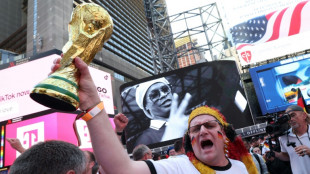 World Cup turns New York's Times Square into global fan hub
-
Bielsa accepts blame for World Cup exit, but says Uruguay deserved more
Far-right and centrists neck-and-neck in Dutch election: estimates
The far-right party of Dutch firebrand Geert Wilders was running neck-and-neck with a pro-European centrist party in a nailbiting election, according to an estimate Thursday with more than 90 percent of votes counted.
The D66 party of Rob Jetten and the PVV Freedom Party of Wilders were both on 26 seats with nearly 95 percent of votes counted, according to the second provisional estimate by the local ANP news agency.
An earlier IPSOS exit poll had suggested Jetten was on course to win the election with 27 seats out of the 150 in parliament, estimating Wilders at 25 seats.
The ANP forecast put the D66 fractionally ahead, but with a lead of only a few thousand votes. A final estimate is expected later Thursday.
With far-right parties topping the polls in Britain, France and Germany, the Dutch election was seen as a bellwether of the strength of the far right in Europe.
If the estimate is confirmed, the PVV lost 11 seats compared to its stunning 2023 election win.
"The Dutch election really mirrors trends across Western Europe," Sarah de Lange, Professor of Dutch Politics at Leiden University, told AFP before the exit poll.
Whatever the final result, Wilders was virtually certain not to be prime minister, as all other parties had ruled out joining a coalition with him.
Analysts said that whoever came in second was likely to form the next government -- putting Jetten on course to lead the European Union's fifth-largest economy.
The ANP estimate predicted the centre-right liberal VVD party to win 22 seats, and the left-wing Green/Labour bloc to gain 20.
When the exit poll was released, D66 supporters exploded with joy at their election party in Leiden, waving Dutch and European flags.
"We've done it," said a jubilant Jetten, in pole position to become the country's youngest and first openly gay prime minister, subject to coalition talks.
"This is an historic election result because we've shown not only to the Netherlands but also to the world that it is possible to beat populist and extreme-right movements," Jetten told reporters.
Wilders, sometimes known as the "Dutch Trump", had collapsed the previous government, complaining progress was too slow to achieve "the strictest asylum policy ever".
"The voter has spoken. We had hoped for a different outcome but we stuck to our guns," said the anti-Islam, anti-immigration, Wilders on social media.
When the result is finalised, there will be a prolonged period of haggling between the parties to see who wants to work with whom, a process that could take months.
The fragmented Dutch political system means no party can reach the 76 seats needed to govern alone, so consensus and coalition-building are essential.
"It will certainly take time for the Netherlands to reach stability and a new coalition," De Lange told AFP.
"The parties are ideologically very, very diverse, which will make compromising very challenging."
- 'Heart of Europe' -
Dutch voters had a bewildering range of 27 parties to choose from, meaning they each had to grapple with a huge A3 sheet of paper listing the candidates.
The main issues were immigration and a housing crisis that especially affects young people in the densely populated country.
Jetten shot up the polls in the final days of the campaign thanks to strong media performances and an optimistic message.
"I want to bring the Netherlands back to the heart of Europe because without European cooperation, we are nowhere," he told AFP after casting his vote in The Hague.
Frans Timmermans, an experienced former European Commission vice-president, threw in the towel after a disappointing result for his left-wing bloc.
"With pain in my heart, I step down as your party leader," the 64-year-old told supporters.
- 'Not that aggressive' -
Violence and disinformation marred the campaign.
Until a new government is formed, outgoing Prime Minister Dick Schoof will run the country -- reluctantly. "I wouldn't wish it on you," he told one MP in parliament.
Voters appeared to yearn for a return to less polarising politics.
"I think society should be more positive and less negative," Bart Paalman, a 53-year-old baker, told AFP, as he cast his vote at the Anne Frank House, converted into a polling station for election day.
E.Burkhard--VB