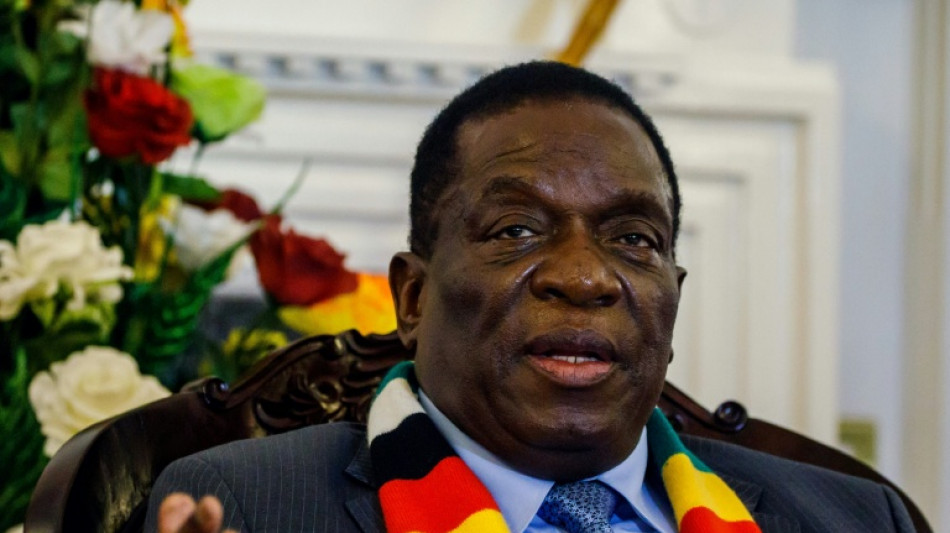
Storm brews over Zimbabwe presidential extension plan / Photo: © AFP

 Scotland boss Clarke resigns after World Cup exit confirmed

 Kane, Bellingham on target as England win World Cup group

 Croatia battle past Ghana to sew up World Cup Last 32 spot

 US, Iran clash, putting fragile deal under growing strain

 Ryu takes one-shot lead over Henderson at Women's PGA Championship

 Jangoo and Chase put West Indies in control against Sri Lanka

 World Cup star Gakpo requests privacy after death of unborn son

 Aid planes landing at partially reopened Venezuela airport after quakes
 Spain's Williams hits out at Uruguay over World Cup injury
 World's largest particle smasher halts for upgrade to boost hunt for dark matter

 Ex-Olympic medallist Canderloro elected French Ice Sports chief
 Prince Harry and family to stay at royal residences on UK visit

 'Why not?': Cape Verde eye seismic World Cup shock against Argentina

 Russell snatches controversial pole in Austria after Verstappen crash

 Davidovich Fokina wins in Mallorca for first ATP title

 Sabalenka urges Grand Slams to 'get it done' in prize money boycott row

 Russell snatches pole as Verstappen, Antonelli fourth for Austria GP grid
 Smith and supersub Foulkes strike for New Zealand in England finale

 Supersub Foulkes strike for New Zealand in England finale

 Wolff says Russell will be at Mercedes next season

 Djokovic inspired by Serena as he targets history at Wimbledon

 Stokes falls cheaply as England collapse in New Zealand decider

 Russell bounces back to beat Antonelli in final practice

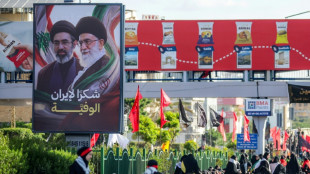 Iran says US violated peace deal as both sides trade fire

 Injured Australian pair Leckie, Italiano out of World Cup
The Zimbabwe ruling party's backing of a term extension for President Emmerson Mnangagwa, which requires a change to the constitution, has fuelled anger and fears of deepening authoritarianism.
Zanu-PF, accused of corruption and misrule during its 45 years in power, announced a week ago that its annual congress supported moves to keep Mnangagwa in office until 2030, and required legislative amendments would be initiated.
Prominent lawyer Tendai Biti immediately pledged to "defend the constitution against its capture" while opposition figures called a press conference for Tuesday to respond to the "constitutional crisis".
Mnangagwa, 83, came to power in 2017 in a military-backed coup that ousted Robert Mugabe, who was president for 30 years.
Elected in 2018 and re-elected in 2023, Mnangagwa has been accused of allowing rampant corruption and suppressing human rights, while ordinary Zimbabweans endure hardship even though the economy is growing.
Moves to keep him on were "a huge scandal", said Moses Msipa, a former soldier living in the second largest city of Bulawayo.
"As Zimbabweans, we must say 'no' to this," the 48-year-old told AFP. "One of the main reasons Mugabe became reviled is because he became a dictator and overstayed, and now they want to take us back to that."
Zanu-PF's "2030 agenda" had been on the cards for months before it was announced as the party position on October 18.
Attempts over the past months to demonstrate against the plan were met with a harsh police crackdown that put scores of people in jail.
"Only mass popular expression of dissent may change course, but prospects of such are low at the moment on account of weak grassroots organising and mobilising," said Musa Kika, director of the Institute for Human Rights and Development in Africa.
"Resistance is highly unlikely under such circumstances, notwithstanding the public anger that they harbour," political analyst and university professor Eldred Masunungure told AFP.
- 'No Kings' -
The constitutional limit of two five-year presidential terms was introduced in 2013. Any change would require a series of legal steps, including the approval of two-thirds of both houses of parliament and a national referendum.
"If the term extension agenda was put to a referendum, it would be defeated," said Stephen Chan, a professor at the School of Oriental and African Studies in London.
"The Zimbabwean people also want No Kings," he said, referring to rallies in the United States this month critical of President Donald Trump.
Resistance within the Zanu-PF could see a faction backing Vice President Constantino Chiwenga join forces with the opposition to block any constitutional amendment, he said.
The analysts warned that the party that has governed since independence in 1980 would not be above bypassing constitutional safeguards.
"Zanu-PF uses the law as a tool to achieve its ends, never as a boundary for compliance and accountability,” said Kika. The party is "good at manipulating the institutions that operationalise the law through coercion and capture."
Efforts to keep Mnangagwa in office were led by "self-serving" party elites seeking "immunity from accountability for past and present wrongs, and assurance for continued accumulation of wealth," he said.
Mnangagwa was useful for party members who "abuse state power and its resources more or less unhindered,” added Masunungure.
With the opposition splintered and weak after years of repression, unemployed Bulawayo university graduate Tafadzwa Moyo told AFP he understood the nervousness about standing up to the government.
Still, the 29-year-old said, it was time for citizens to unite across political divisions and "fight to reclaim democracy".
B.Wyler--VB