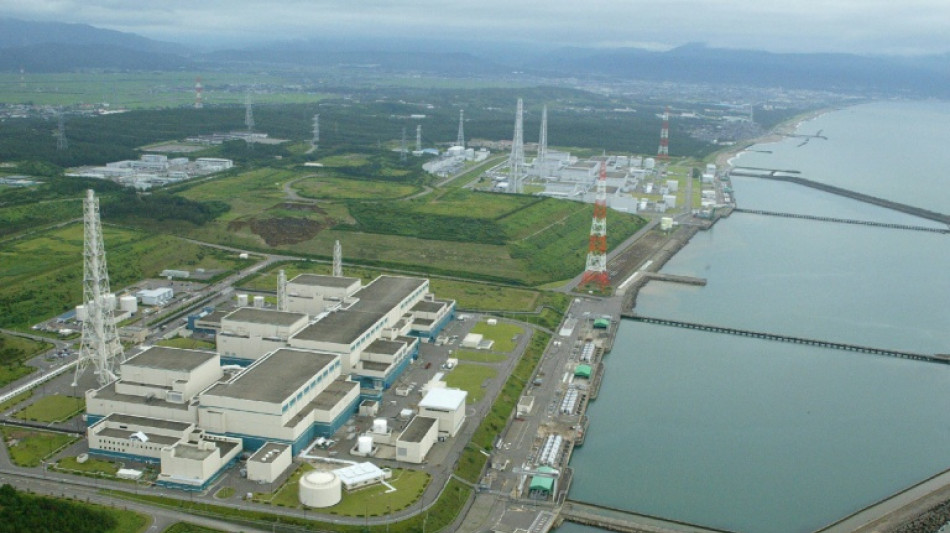
Japan suspends restart of world's biggest nuclear plant / Photo: © JIJI PRESS/AFP

 Japan organisers 'not satisfied' as empty seats blight Asian Games

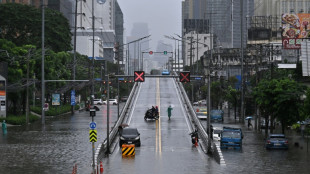
 Canals full, roads submerged as Bangkok declares flood disaster

 China, US to open AI 'communication channel' after summit
 Nepal tunnel survivor wants to help post-flood rebuild

 New China sprint star, 17, vows 'no limits' after Asian Games gold
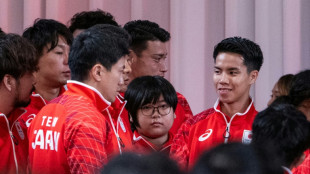 Japanese 11-year-old wins Asian Games eSports gold

 TikTok agrees to teen limits in US settlement following Meta

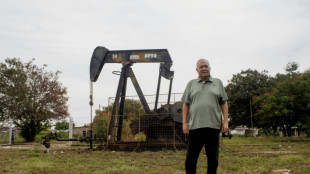 Venezuela's oil cradle pins hopes on US energy deals

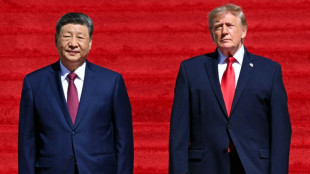 US, China buy time with trade truce as pressure builds

 'Leo, Leo': Young Catholics give pope rockstar welcome in France

 Lula bans sports betting days ahead of Brazil's election

 Guatemala ensures survival of vulnerable 'fossil' fish
 Mancini finds positives in Italy loss, accepts fans' jeers

 Alcaraz helps Europe into Laver Cup lead

 Six missing after building collapses in historic Athens district

 Mbappe scores but suffers knee injury as Zidane gets debut France win

 Mancini's Italy return spoiled by Belgium defeat

 Rodri confident in Man City innocence despite reported charges

 Jay-Z rape accuser says she made 'false accusations'
 Senegal draw first match under Vieira and Nigeria survive scare
 Trump, Xi end summit long on pomp, but short on progress

 Russia not preparing for conflict with Europe, Putin says

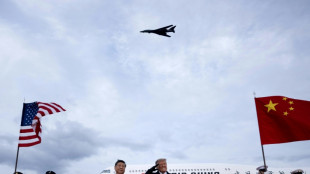 Trump's photo of Xi greeting carries signs of AI

 Six missing after building blast in historic Athens district

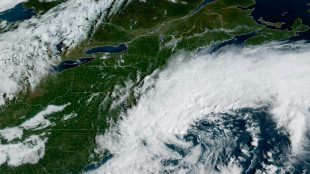 Millions in US northeast brace for powerful storm

The restart of the world's largest nuclear power plant was suspended in Japan Thursday just hours after the process began, its operator said, but the reactor remains "stable".
Operations to relaunch a reactor at the Kashiwazaki-Kariwa plant in Niigata province, closed since the 2011 Fukushima disaster, began late Wednesday after it received the final green light from the nuclear regulator despite divided public opinion.
But its operator the Tokyo Electric Power Company (TEPCO) said that "an alarm from the monitoring system... sounded during the reactor startup procedures", causing them to suspend operations.
"We were investigating the malfunctioning electrical equipment," spokesperson Takashi Kobayashi told AFP, and "once it became clear that it would take time, we decided to reinsert the control rods in a planned manner".
The reactor "is stable and there is no radioactive impact outside", he said.
Control rods are a device used to control the nuclear chain reaction in the reactor core, which can be accelerated by slightly withdrawing them, or slowed down or stopped completely by inserting them deeper.
The restart, initially scheduled for Tuesday, had been pushed back after another technical issue related to the rods' removal was detected last weekend -- a problem that was resolved on Sunday, according to TEPCO.
Kashiwazaki-Kariwa is the world's biggest nuclear power plant by potential capacity, although just one reactor of seven was restarted.
The facility was taken offline when Japan pulled the plug on nuclear power after a colossal earthquake and tsunami sent three reactors at the Fukushima atomic plant into meltdown in 2011.
However, resource-poor Japan now wants to revive atomic energy to reduce its reliance on fossil fuels, achieve carbon neutrality by 2050 and meet growing energy needs from artificial intelligence.
Kashiwazaki-Kariwa is the first TEPCO-run unit to restart since 2011. The company also operates the stricken Fukushima Daiichi plant, now being decommissioned.
Public opinion in Niigata is deeply divided: Around 60 percent of residents oppose the restart, while 37 percent support it, according to a survey conducted in September.
"It's Tokyo's electricity that is produced in Kashiwazaki, so why should the people here be put at risk? That makes no sense," Yumiko Abe, a 73-year-old resident, told AFP this week during a protest in front of the plant.
Earlier this month, seven groups opposing the restart submitted a petition signed by nearly 40,000 people to TEPCO and Japan's Nuclear Regulation Authority, saying that the plant sits on an active seismic fault zone and noted it was struck by a strong quake in 2007.
D.Schlegel--VB