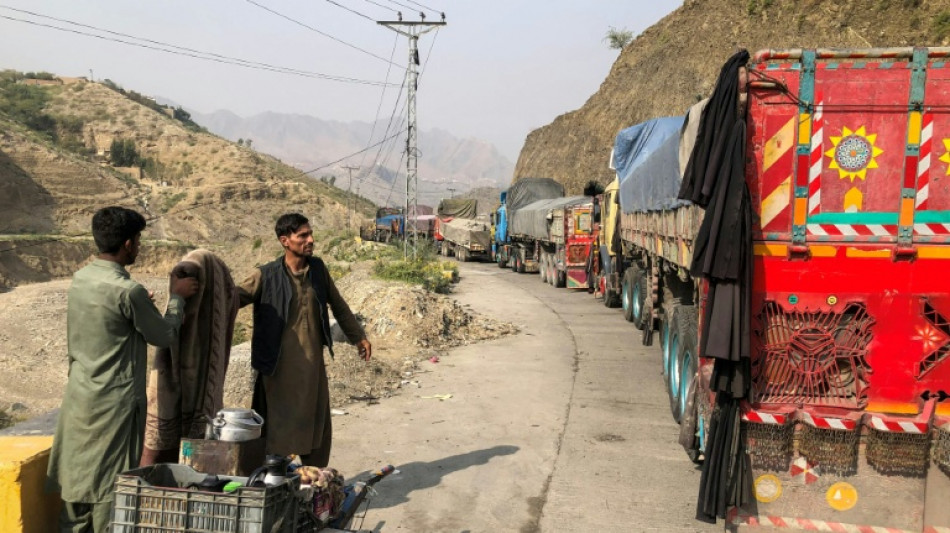
Afghanistan, Pakistan seek to firm up truce in Istanbul talks / Photo: © AFP/File

 England top group to set up DR Congo World Cup clash, Portugal held
 England moving on at World Cup but questions linger
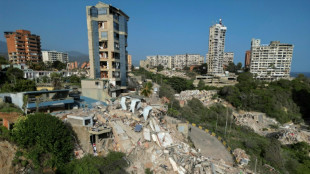 Venezuela quakes kill 1,400 as time running out to find survivors
 Australia World Cup goalkeeper Patrick Beach has beach named after him
 Take brutally hot weather seriously, heatstroke survivor warns

 Australia boosts shark-spotting drone coverage at Sydney beaches
 Scotland boss Clarke resigns after World Cup exit confirmed

 Kane, Bellingham on target as England win World Cup group
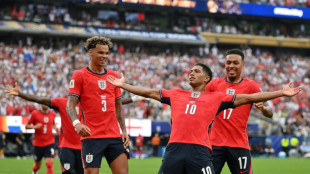
 Croatia battle past Ghana to sew up World Cup Last 32 spot
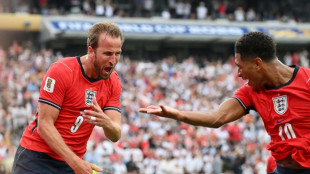
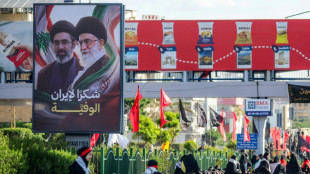 US, Iran clash, putting fragile deal under growing strain

 Ryu takes one-shot lead over Henderson at Women's PGA Championship

 Jangoo and Chase put West Indies in control against Sri Lanka

 World Cup star Gakpo requests privacy after death of unborn son
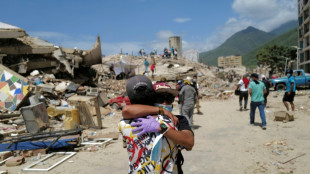
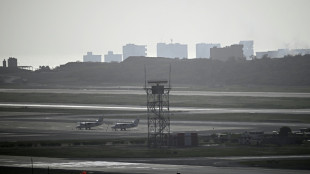 Aid planes landing at partially reopened Venezuela airport after quakes
 Spain's Williams hits out at Uruguay over World Cup injury
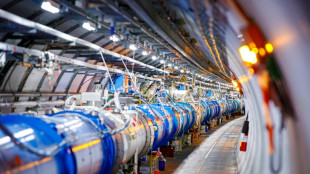 World's largest particle smasher halts for upgrade to boost hunt for dark matter
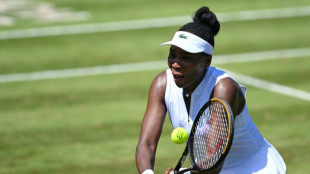
 Ex-Olympic medallist Canderloro elected French Ice Sports chief
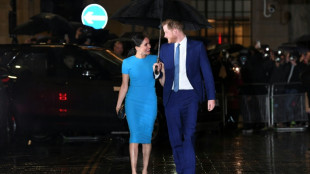 Prince Harry and family to stay at royal residences on UK visit

 'Why not?': Cape Verde eye seismic World Cup shock against Argentina
 Russell snatches controversial pole in Austria after Verstappen crash

 Davidovich Fokina wins in Mallorca for first ATP title

 Sabalenka urges Grand Slams to 'get it done' in prize money boycott row

 Russell snatches pole as Verstappen, Antonelli fourth for Austria GP grid
 Smith and supersub Foulkes strike for New Zealand in England finale

 Supersub Foulkes strike for New Zealand in England finale
Afghan and Pakistani negotiators were locked in talks to hammer out a lasting ceasefire Saturday, with Islamabad warning that if the Istanbul talks failed it could lead to "open war".
Two weeks ago, the Taliban government launched an border offensive following explosions in Kabul which it blamed on its Pakistani neighbour, triggering an outbreak of unexpectedly intense clashes that left dozens dead, among them civilians.
Vowing a strong response, Islamabad then carried out "precision strikes" against armed groups on Afghan soil which are at the heart of the dispute, security sources said.
After further clashes that left soldiers and civilians dead, both sides declared an initial 48-hour ceasefire which collapsed two days later, with Kabul blaming Islamabad.
A second truce took shape last weekend following talks in Doha thanks to mediation by Qatar and Turkey, although the terms remained unclear.
In Istanbul, negotiators were expected to detail the "mechanisms" announced in Doha that would ensure a return to stability.
“The (Istanbul) talks are going on," Pakistan's Defence Minister Khawaja Asif told reporters in the eastern city of Sialkot on Saturday, while warning that if they "do not yield a positive outcome, there will be an open war with Afghanistan".
It was not clear where exactly the negotiators were meeting in Turkey's largest city, nor how long the talks would continue.
The Afghan delegation is led by its deputy interior minister, Haji Najib. Islamabad has not said who it has sent to the talks.
For the Taliban government, the goal is to ensure Afghanistan's territorial integrity.
For Islamabad, the negotiations must address "the menace of terrorism emanating from Afghan soil towards Pakistan," its foreign ministry spokesman Tahir Hussain Andrabi said on Friday.
- 'Essential' meeting -
Security issues are at the heart of recurring bilateral tensions.
Facing a resurgence of attacks against its security forces, Islamabad has repeatedly accused its Afghan neighbour of "harbouring" groups it views as "terrorist", primarily the Pakistani Taliban (TTP) -- a charge Kabul denies.
Throughout the confrontation, Islamabad demanded that the Taliban authorities "regain control" over fighters present on Afghan soil.
From the Pakistani perspective, this would be key to the Istanbul talks, explained Ibraheem Bahiss, an International Crisis Group analyst in Afghanistan.
"The meeting in Istanbul is going to be quite essential because that's where the so-called mechanism would be agreed on in terms of when Pakistan has concerns that anti-Pakistan elements inside Afghanistan are doing things against Pakistan," he told AFP.
He said such "mechanisms" could involve intelligence sharing on armed groups.
"For example, Pakistan would give coordinates of where they suspect TTP fighters or commanders are, and instead of carrying out strikes, Afghanistan would be expected to carry out action against them," he said.
But it was unclear if that would end the problem.
"I'm not so hopeful that a technical mechanism will really address the fundamental drivers of this escalatory cycle," he admitted.
Before the latest skirmishes, Pakistan had long been the Taliban's biggest supporter, bolstering them in Afghanistan for so-called strategic depth against arch-rival India.
Two weeks ago, the initial explosions in Kabul -- which triggered the escalation -- took place as the Taliban foreign minister was making an unprecedented visit to India.
Turkey has not commented on Saturday's meeting beyond hailing the sides' joint decision in Doha "to establish mechanisms to strengthen peace and stability" and pledging to "continue to support the efforts" to achieve that.
S.Spengler--VB