Glitter and Soviet nostalgia: Russia revives Eurovision rival contest / Photo: © AFP

 Top US court upholds $5mn Trump sex assault judgment
 Sinner survives scare to reach Wimbledon second round

 Six killed in German 'family tragedy' shooting: police
 Osaka makes spectacular Wimbledon arrival in kimono-inspired dress

 Bolivia removes 15-year dollar peg in bid to revive economy
 Russia jails veteran who threatened Putin with mutiny
 Five shot dead at German youth welfare site, two suspects arrested
 New Zealand thrash England to deny Stokes a fairytale finish
 Tour de France 'ready to adapt' amid extreme heatwave

 Stocks rise, oil climbs after US-Iran clashes
 Man City hire Maresca to start new era after Guardiola
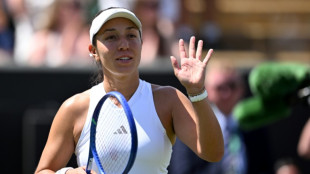 Pegula slams Vondrousova's 'harsh' doping ban

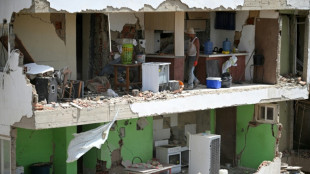 Chavez-era housing complex in ruins after Venezuela quakes

 Sinner, Djokovic set to start Wimbledon title charge
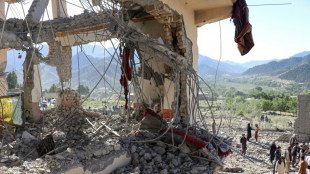 Pakistan launches deadliest attack on Afghanistan in months
 Strauss 'dumbfounded' by timing of Stokes's England exit

 Monza turn to Juric for return to Serie A

 Stocks mixed, oil edges up after US-Iran clashes

 Catholic traditionalists risk schism in Church
 Europe's deadly heatwave scorches eastern flank, takes aim at Ukraine

 PSG in talks with Leipzig to buy Ivory Coast star Diomande
 Venezuela search teams scramble as hope fades of finding quake survivors
 Bondi Beach attack survivor tells of 'trauma' of online AI images
 Pakistan strikes on eastern Afghanistan kill dozens
 Cape Verde, Africa's outlier in LGBTQ tolerance
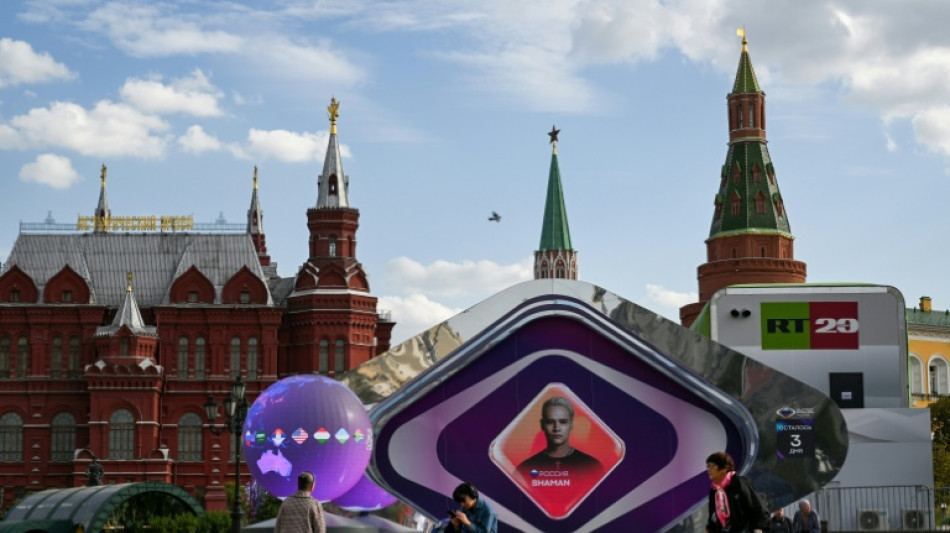
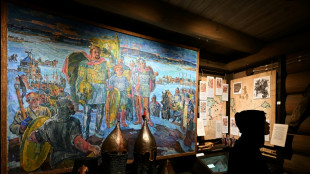
With artists from 23 countries, hopes for a billion-plus viewers and a generous sprinkle of glitter, Russia hosts Intervision on Saturday, a song contest championed by Moscow as a rival to Eurovision.
Originally a festival for the Soviet Union and its satellite states, Intervision is returning as a soft-power tool, heavy on anti-Western narratives with Moscow banished from Eurovision over its Ukraine offensive and striving for new cultural and political alliances.
Traditional allies Brazil, India and China, as well as former Soviet republics Uzbekistan and Kazakhstan are despatching artists to Moscow for the spectacle, which is being hyped with installations in central Moscow.
The United States is also set to be represented -- Vasiliki Karagiorgos, known as Vassy, an Australian pop singer and songwriter will perform for the US on Saturday night.
Revelling in stoking tensions with Washington, Russian state television paid for an Intervision advert to be blared on a giant screen in New York's Times Square.
- 'Traditional values' -
First organised in 1965 in Prague, the competition was suspended after the anti-Soviet uprising in Czechoslovakia three years later.
It was then revived in Poland in the 1970s and held across various cities of the former Communist bloc.
President Vladimir Putin first proposed rebooting the initiative in the 2000s.
The revived Intervision is now more than ever a vehicle for promoting geopolitical interests and Russia's cultural soft power.
The organisers have promised a "true celebration of music" during the show -- but also one that promotes "national identity", echoing official Russian narratives.
Russian officials have for years been castigating what they decry as the "decadent" West, who slapped sanctions against Moscow over its offensive in Ukraine.
Despite being rebooted as a rival, Russian officials have touted Intervision as an antidote to Eurovision, having spent years railing against its pomp.
Hinting at the 2014 victory of Austrian drag queen Conchita Wurst, Foreign Minister Sergei Lavrov said he did not dispute "the right of the Eurovision jury and viewers to vote for a man with a beard, in a woman's dress."
"I guarantee that there will be no perversions or abuses of human nature," he said earlier this year.
President Vladimir Putin has held Russia up as a standard-bearer for "traditional values" in the face of what he considers the moral "decadence" of the West, including equality for LGBTQ people.
Russia's Supreme Court in late 2023 banned the "international LGBT movement" as "extremist", vague terminology that opens the door to members of the LGBTQ community or rights defenders being handed lengthy prison sentences.
- Billions of viewers? -
"Relaunching Intervision means countering Western entertainment and picking up the threads of a typical Cold War competition," French researcher Cyrille Bret told AFP.
Since being excluded from Eurovision, Russia has been seeking "platforms and channels of influence."
It "contributes to the reorientation of Russian influence from the West to the East, Eurasia, and the Global South," he added.
At the event on Saturday, near Moscow, each artist will sing in their mother tongue -- "unlike Eurovision, where most songs are often sung in English," the organisers said.
They will include the likes of Qatari singer Dana Al Meer and Madagascan duo Denise & D-Lain.
No performers from an EU country will take part.
Moscow has high hopes for the competition's possible impact.
The participating countries represent "4.334 billion people -- or more than half of the planet's population," Sergei Kiriyenko, a senior Kremlin official and chairman of the contest's supervisory board, said at a pre-competition press conference.
Another difference from Eurovision? No public vote. An international jury alone will decide the winner.
T.Ziegler--VB